Soul Searching Under the Spell of Shadow Magic

October 14, 2024

Sitting under a wide, cloud-streaked sky, it’s easy to see dragons protecting fair maidens—shapes forming and dissolving like ideas half-formed. This is soul searching, a turn of the dial hoping to find clarity amidst static. That’s why I’ve come here, to the quiet of the countryside, away from the city’s endless grind. Winter’s chill creeps in, but perhaps the soul thaws when freed from its corporate chains.

Still, the absurdity of it all strikes me. My 1960s stripes are showing, but that’s okay—it’s the 2020s now. What once felt raw, visceral, and alive has been packaged and sold back to us as curated content. Rebellion itself is now a lifestyle brand. You can buy a $60 band tee, a protest-themed candle, or an algorithmically curated playlist of “protest anthems.”

Sex sells, they say—cars, perfumes, ideologies, even people. The marketplace has commodified humanity itself. The icons of individuality—once untouchable, electrifying forces—have been domesticated and rebranded as influencers. These influencers don’t just sell products; they sell the illusion of a life you think you should be living. It’s a polished performance, a constant reminder that you’re incomplete.

Advertisers and influencers are the shadow magicians of our age. No, they don’t conjure fireballs or brew potions, but their craft is no less insidious. They convince us we lack something intrinsic, something we already possess, and then sell us fragments of our wholeness at a markup. They turn rebellion into product lines, package freedom in cans, and sell identity at a discount.

We’ve entered the era of the psychic supermarket. Neon lights, slick branding, and shiny apps promise “insight,” “transcendence,” “authenticity”—but all they deliver is distraction. The spiritual hunger that once drove revolutions now fuels workshops, weekend retreats, and life-coaching apps. Gurus with trademarks stamped on their third eyes sell “enlightenment,” but their products are more like chains than keys.

What does all this have to do with shadow magic? Everything. In the Renaissance, magicians were acknowledged as such. Rasputin helped bring down the Romanovs; today’s digital influencers and ad-tech sorcerers are just as powerful, spinning illusions that shape entire nations. Their methods are subtler now, cloaked in data analytics, viral trends, and algorithms optimized to hijack the soul. It’s not just conditioning—it’s enchantment.

Take rebellion, for instance. Once, it meant something. It had a pulse, a fight, a fire. Now, rebellion is a glossy ad campaign for sneakers or energy drinks. The ethos of “sex, drugs, and rock ’n’ roll” has become “sleaze, addiction, and mindless consumerism.” Even awakening itself has been commodified, sold back to us in mindfulness apps and wellness retreats. Choose the blue pill, and you stay plugged into a world of viral dances, curated feeds, and endless scrolling. Choose the red pill, and you wake up—only to realize that even enlightenment comes with a subscription fee.

Advertisers don’t just sell products—they sell people. The stars of the golden age of cinema have been replaced by viral TikTok influencers and Instagram idols. They are brands, and we consume them as eagerly as we consume their endorsements. The human soul has been commodified, packaged into likes, swipes, and carefully curated feeds. The smile of the influencer is a product, optimized by algorithms to sell us something—beauty, status, belonging, or just the faint promise of being seen.

And behind it all, the shadow magicians profit. They don’t just take our money—they take our attention, our dignity, and, worst of all, our sense of self. The tragedy isn’t in enjoying a good streaming series or the latest tech gadget; it’s in losing the capacity to see beyond them. We’ve traded pieces of our souls for branded personas, and the worst part is, we hardly even notice.

Yes, this is heavy stuff. It might sound extreme to say advertisers profit from souls, but consider it: they convince us to buy not just things, but meaning, identity, and purpose. They replace the shared wisdom of communities with synthetic substitutes—neatly packaged remedies for the emptiness they themselves create. Each product promises to fill a void, but the more we consume, the emptier we feel.

As we rise up the modern pyramid—a fusion of Instagram stories, YouTube ads, and AI-generated content—we witness a Tower of Babel built from distraction and desire. The shadow magicians have sold us illusions of ourselves, and in doing so, they’ve blinded us to what we already are. The battle isn’t just for our wallets—it’s for our souls.

But here’s the thing: the spell only works if we believe in it. We’re not powerless. What’s the way out? Maybe it’s as simple as returning to awareness. The images we cultivate in our minds shape the world we create. Will they be pyramids to ego, or bridges to collective responsibility? Love must move beyond the self—beyond the petty “me”—to embrace stewardship of our planet and its people.

The shadow magicians won’t stop. They’ll repackage even this message, selling “save the planet” kits with a monthly subscription fee. Awareness requires vigilance, a willingness to question even the noblest calls to action. The battle isn’t fought in boardrooms or markets—it’s fought within. It’s a fight to reclaim the soul from those who would sell it back to us in pieces.

So, here I scribble—seeking clarity, exorcising spells, and reclaiming the space I almost lost. Perhaps this is just an exorcism, a way to break the spell over me. But I hope it’s more than that. There is a battle going on—inner and outer. For too long, our eyes have been closed to the inner world, the world that contains the outer one like a Madonna and child. This psychic terrain is populated by forces—good and evil—and it’s up to us to choose sides.

The choice is simple: shadow magic or light, me or we, destruction or renewal. This time, let’s break the spell. And let’s get it right.


Predicting Election Results with Astrology

April 1, 2016

The chances of accurately predicting an election by pollsters and journalists are pretty dismal. If I toss a coin, there’s a 50:50 chance of being right. That’s not bad compared to some political commentators’ predictions.

A few years ago I came across an interesting article that said nearly 80% of astrologers who attempted, accurately predicted the 2012 USA Election outcome at least 3 months and one 26 years before hand! In his 1976 book “The Astrological Chart of the United States, from 1776 to 2141” Gar Osten wrote that the year 2012 would see the “re-election of the incumbent president”.

Intrigued I looked further into it because an 80% correct result is not bad considering most mainstream media had written Obama off before the election. A prediction 26 years beforehand is mind blowing.

I looked into each of the astrologers’ forecasting methods and predictive techniques. I wanted to filter out all approaches that were foreign to my approach and/or would require a level of expertise I didn’t have. By the end of this looking I found one I could adapt to my approach.

It was the simplest.

Now, I’m aware that most of you reading this have a critical and sceptical view on astrology.

For this reason, I’ve wracked my brains over how to structure what I want to say about the coming election because I use astrology as a tool for understanding life. If I wasn’t using this tool to make sense of current political atmospherics and wrote an opinion piece instead, I’d have no worries. For some reason the mention of astrology gets peoples’ backs up and they immediately throw an Art that works with Time into the recycle bin.

Most people are happy to read opinions and commentary based on other biased opinions and commentary churned out in mainstream media. An opinion based on astronomical data ie number, generated by an active imaginative interpretation of this is “superstitious”. However, an opinion based from within a Press Gallery Reality Bubble is not. Is the Press Gallery commentary scientific? No, just an opinion embalmed in a mainstream media consensus reality.

The stars and planets I’m concerned with are archetypal forces (Carl Jung), mytho-poetic currents within humanity. Astrology for me is a means of exploring the edges of rational thought as it touches the unknown. The horoscope is like a semi permeable membrane, it can suspend the ordinary associative processes of the mind and allow a different kind of attention to manifest. This attention, striking off from the symbolic elements of the horoscope gives a different kind of mind environment. Psychologists call it imagination.

JUng collective unconscious

Diagram from: http://uregina.ca/~lawlorda/jung/jung.htm

This way of looking at astrology is not accepted by most astrologers because it banishes star forces, energies, vibrations etc of the external planets and stars. This way of looking at astrology is troublesome for many because it says there is NO intrinsic meaning to the planets. It also points the way to divination. Divinatory astrology puts it on par with other mantic arts – like Tarot and the I Ching. To many astrologers this is anathema because they like to consider it as a “science”.

Some have referred to this kind of astrology as Hermeneutic Astrology:

Hermeneutics is the study of meaning, of how we arrive at our interpretations of things. In the context of astrology the term implies a turning away from the common assumption that a fixed astrological meaning is simply “there”, in front of us, as some sort of fact of nature. The hermeneutic inquiry in astrology reveals the essential dependency of the meaning of symbols on the act of interpretation of that meaning. Seen in this way, horoscope interpretation involves something other than a supposed pre-existent meaning waiting to be decoded, and depends both on the context in which meaning is sought, as well as on the intentionality of the one making the interpretation.” (Cornelius, Geoffrey, C. 1994. “The Moment of Astrology: Origins in Divination”)

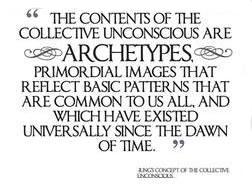
jung archetypes

I like to consider this way of looking at astrology as a poetic interpretation of astronomical data. Poetry from numbers and geometry – active imagination in action. The calculations and the process of symbolising are just a pretext to occupy the conscious mind. The complexity of nuance and context for symbolising engages the rational mind while the REAL work is done by the broader and more holistic unconscious. This unconscious insinuates “meaning” beyond the logical limits of rational “complexity”. So, my manner of working these “complexities” is to treat them as a long Zen Koan and the Sky Map – Horoscope as a Yantra.

One can explore consciousness and imagination deeper and look at the structures of mind and the material that appears as is done in various and diverse ways by Phenomenology. I just like to play on the edge of reason, that spot between sanity and insanity, where all the wild creatures are 😉

Sometimes, in flickering moments, astrologising can be vision. A “vision – feeling” into another world that is holographic in structure, energetic and alive. In these rare glimpses, a human and the universe are seen as the same organism. As above so below, Hermes Trismegistus says. A different relationship exists between things – or at least that is what appears when astrological Sun glasses are worn.

Here are two articles by Geoffrey Cornelius that point to a way I look at Astrology Practice “Astrology as Divination” and “Is Astrology Divination and Does it Matter?”

Below are posts in my blog which give further insight into my approach:

Guerilla Ontology

An Experiment With Astrology and the I Ching 

Astromusings 

An Astrological Turning 

I’m reminded of a Zen saying, “Don’t look at the finger pointing to the Moon, look at the Moon.”

All this astrological stuff is just a pointing finger.


Reporters Without Media Mogul Borders

February 25, 2013

Citizen Journalist

I wrote Reporters Without Media Mogul Borders as a comment to a post by Sally Baxter Pity the poor journalist…  on the blog  Australians For Honest Politics. The blog is dedicated to Citizen Journalism.

Reporters Without Media Mogul Borders is an idea which takes into account the rapid move away from old media onto Social Media. The idea is an attempt to introduce participatory and democratic processes into journalism using the new mobile web technologies.

=====================================================================================

Readers by partnering with regional newspapers could be joint commissioners of stories forming a hub interconnected by the web. This hub can be across the country, indeed from across the planet, which can employ reporters to investigate issues of importance to local communities.

Readers would raise funds by crowd sourcing, perhaps using the model that GetUp uses to raise funds for advertisements in old media. Instead of using funds to pay for advertisements the funds would be used to pay for a reporter’s commission to write / investigate story. The local newspaper could provide the administrative infrastructure. There could also be a tiered system of influence in the choice of reporter by readers. For example, a donation of $100 ( or whatever amount) is made would allow the reader to help choose the reporter for the story. Reporters could send their CV / application which would be accessible to the donaters on the web and those who donated the prescribed amount could choose the reporter to do the job by online voting.

People who do not donate can still be engaged in the funding by buying the individual story that has been commissioned by readers like themselves.   The model of local action with global transmission already exists with organisations such as Avaaz. We can take the idea of Reporters Without Borders to its logical conclusion – Reporters Without Media Mogul Borders.