Ink and Invitation

October 31, 2025

“We call things into being long before we realise what we have invited.”

Some people will say I’m strange for noticing this — but lately I’ve been unsettled by how many walk the streets carrying death and darkness on their skin.
Skulls grinning from shoulders.
Demons curled along arms.
Faces twisted in torment inked into chests and backs.

They remind me of some very bad acid trips I had in the early 1970s — when the veil tore too far, and I didn’t know how to close it again.

People say, “It’s just art.”
But I’ve lived long enough to know symbols aren’t neutral.
They call. They invite. They open doors.

I’m always reminded, when I see rebellious young Greeks covered in tattoos, that in ancient Greece these stigmata were not marks of identity or defiance.
They were punishments — burned or cut into criminals, slaves, and prisoners of war. A permanent sign of ownership — of being claimed.
Our ancestors believed that what was carved into the skin also carved its meaning into the soul.

For thousands of years, humans carried symbols for blessing — crosses, icons, beads, prayers folded into pockets, saints’ names whispered under breath.
We understood that what we placed close to the body had power.
We understood to be careful.

I carry a cross given to me by my mother when I was a child.
She told me it held a tiny splinter of the real cross Jesus was crucified on.
She warned me never to open the locket because the splinter was so fine my breath might blow it away.
So I never opened it.
And I wear it every day.

People ask if I was never curious.
But if it was real — and I breathed it away — what then?

Wearing a cross around the neck is not the same as inscribing a cross into the skin.

I’m not judging anyone.
I’ve walked my own shadowed paths.
I know what it is to open a door without realising what enters with it.
So when I say these images feel like invitations to something dark — I say it softly, from remembering, not from any desire to be right.

Some will disagree. Some will shake their heads.
That’s fine.

But I won’t place an image alongside these words.
I have no wish to give those symbols more room than they already take.
To show them would be to help them travel.

So I speak quietly here, without pictures:

There are forces we forget at our own cost.
And disbelief does not protect us from what we call forth.

No argument here — only a feeling I could not ignore.

That is all.


The Bucket and the Sea

October 11, 2025

Written two decades after the Flotillas of Hope voyage — a small act on a wide sea that still echoes today.

The Bucket and the Sea

They call it a bucket list now — a catalogue of things to consume before death. Mountains to be conquered, rivers to be cruised, skydives to prove we were here. It sounds brave until you see the queues — climbers waiting their turn to summit Everest like shoppers at a checkout. Even the gods must turn away.

My own list was never written. It unfolded quietly, without permission. One day it became a voyage — a small flotilla bound for Nauru, its sails stitched from conscience rather than canvas. I had never sailed before, but joined those who had — experienced skippers who trusted purpose as much as compass. We went not for glory, but to bear witness — to shame our own government into releasing those who had been forgotten.

We never reached the island. Navy boats met us on the horizon, their warnings slicing through wind and salt. We turned back, our message carried instead by waves and news wires. And somehow, impossibly, it worked: seventy-seven refugees were released. Not because we were powerful, but because the sea has a way of amplifying truth.

There were no medals at the end, no television crews waiting on shore. Just salt on our lips and a strange, enduring silence — the kind that follows when the world briefly tilts toward justice.

So when I see others chasing their “bucket lust,” when they pay for their Everest or their Rhine cruise, I remember how it felt to sail into the unknown with nothing to sell and everything to lose. That was the real summit — a crossing not upward, but outward, beyond the self and into something vast, unforgiving, and sacred.

Some journeys are not about ascent. They are about surrender — and the rare, salt-stung moments when the wind itself seems to whisper: You’ve already arrived.


Flotillas of Hope was a 2004 Australian humanitarian voyage protesting the offshore detention of asylum seekers on Nauru. Although the boats were turned back by naval patrols, the action drew international attention — and soon after, of the hundreds detained, seventy-seven refugees were released.


Why I Walk the Way I Do

May 5, 2025

I don’t walk to train. I don’t walk for records, medals, or to impress anyone. I walk because it steadies me. It carries my thoughts, my breath, my prayers. It opens the body and quiets the mind. It’s the simplest thing I can do every day to remember who I am.

In September 2021, I was diagnosed with Type 2 diabetes. The numbers were clear, the warnings louder. I was offered medication—but something in me wanted to try another path first. I chose to walk. To eat differently. To live more deliberately.

Since then, I’ve walked almost every day—briskly, with intention, usually around 5 kilometres. I changed what I ate. I simplified. I gave my body a rhythm it could rely on. Over time, without medication, my blood glucose stabilised. I lost 18 kilograms, dropping from 88kg to 70kg, and I’ve now been in constant remission for over three years.

Alongside walking, I began doing simple resistance exercises — bodyweight movements like push-ups, squats, step-ups, planks, and curls with light dumbbells. I spread them throughout the day. No gym, no machines, no memberships. Just consistent effort in my own time and space. It’s nothing fancy — but it’s steady, and it works.

Recently, I discovered something else: my resting heart rate is 47 beats per minute — a number typically found in elite endurance athletes. For comparison, the average resting heart rate for a man in his 70s is around 70–75 bpm. Mine has averaged between 47 and 50 over the past year.

I’m 73. I’ve never run a marathon. I smoked in my youth. I’ve lived an ordinary, frugal, imperfect life. And yet, my heart beats like someone who trained for gold.

I don’t share this to boast. I share it because I find it mysterious. Beautiful. A quiet reward I never aimed for.

Most afternoons, I walk along the riverbank near where I live. Over the years, I’ve taken hundreds of photos — of the sky, the water, the shifting moods of light, and the quiet animals I encounter along the way: water dragons, ibises, ducks, and others. I share some of these images on my Bluesky account, and many are gathered here:

Photos from a River Bank & a Flood Plain:
https://dodona777.com/photos-from-a-river-bank-a-flood-plain/

It’s become a kind of visual journal of stillness in motion.

I walk because walking helps me listen. I walk with purpose, with rhythm, sometimes with prayer. I walk west in the afternoons, as the sun leans into shadow. There is a place along the path where I stop to breathe and pray. Then I return east—to the place of beginning, where the sun rises. It’s not exercise. It’s something older than that.

I believe the body remembers truth. And perhaps, over time, it reshapes itself around that truth. My heart doesn’t beat slower because I’m extraordinary. It beats slower because I made space for stillness every day, for years.

That’s why I walk the way I do.

This reflection came to me not while walking, but while lying still, listening—on a day I chose to rest.


The Unbranded Way: How I Reclaimed Strength and Clarity at 73

April 25, 2025

I didn’t set out to become fit, or to impress anyone. I just wanted to keep walking without falling, stay sharp enough to finish the books I’d started to write, and live each day without the fog that sometimes creeps in with age.

At 73, I’m not chasing youth – I’m cultivating presence.

Now, six days a week, I walk. I breathe with awareness. I chant silently at sacred spots on my path. And nine months ago, I added resistance training-push-ups, planks, step-ups, squats, rows-interspersed through the day. Just two months, I added short bursts of High-Intensity Interval Training (HIIT). I do them twice a week, guided by the terrain of my walk: downhill, uphill, then level. On Mondays I just do the downhill burst. Wednesdays, I do the full trio. It’s a ritual now. It makes me feel alive.

My balance has improved. My mind feels clearer. This is no longer ‘exercise’-it’s my ritual of self-respect.

My Weekly Flow

Monday: Full Resistance x 2 + Brisk Walk + Short HIIT (Downhill only)

Tuesday: Moderate Walk only

Wednesday: Brisk Walk with Full HIIT (Downhill > Uphill > Level)

Thursday: Resistance x 1 + Gentle Walk or Mobility

Friday: Full Resistance x 2 + Brisk Walk

Saturday: Moderate Walk + Spiritual Walk or Breathwork

Sunday: Full Rest – regeneration, stillness

Exercises I Do

  • Push-ups (standard & inclined) – upper body & core strength
  • Plank (1-minute) – core, posture, breath control
  • Step-ups – leg strength, joint health, mobility
  • Squats – total lower body strength
  • Toe-ups – calf & balance strength
  • Dumbbell Curls/Rows – arms and back
  • One-leg Balance – fall prevention
  • Farmers Carry – grip, core, posture
  • Ankle/Reaction Drills – agility and coordination
  • Spiritual walking – silent prayer or chanting during walks

Why Weekly Rhythm, Not Daily Routine?

“I train by the week, not by the day – each step a note in the symphony of staying.”

  • Recovery is sacred – Effort and stillness must dance together.
  • It builds sustainability – A weekly rhythm avoids burnout.
  • It respects cycles – Like moon phases or seasons.
  • It fosters joy, not guilt – Each day plays a role, even rest.

For Anyone Wondering If It’s Too Late

  • Start with walking.
  • Add one strength move.
  • Rest often.
  • Make it yours.
  • Make it sacred

When the World Gazes Back

November 5, 2024

The old man feathered the last moments of his career with stories, tales that drifted through the room like the whisper of wings. Each word held the weight of years, worn smooth with retelling but still gleaming. He could sense the dual reactions in his listeners—frustration and unexpected tenderness as if his presence coaxed them to teeter between exasperation and compassion. It amused him how people sought certainty and tried to pin down meaning like an insect under glass. Did they not know that meaning moved? That it was as alive and elusive as breath?

How far, he mused, does coincidence extend its net of significance? He had asked himself this a thousand times in the quiet hours before dawn. Could one take any number of random events—snatches of conversation, objects forgotten on a windowsill—and draw them into a pattern that whispered truth? He knew the answer now, in his final years: yes. But not in the way the young or the impatient might think. The act of seeking, the mind’s restless weaving, made meaning spring forth. It was the seeking that revealed the hidden architecture beneath.

As his voice filled the room, he considered the balance between what he called the ‘real’ world and the world of omens, the oracular glimpses he’d chased in private. To him, there was no hierarchy between them. Each world was as substantial, as fleeting, as the next. The mindless churning of existence, with its nerves and synapses, was only one half of the story. The oracular world, though—ah, that required a different lens, a careful marriage of heart and mind until something else appeared, a perception that belonged neither entirely to reason nor to intuition. It was a simple shift, not mystical or eerie. The world turned inside out, and suddenly, what was hidden became visible.

He remembered trying to explain this once to a friend. They had stared at him as if he had grown another head, their eyes blinking slowly as though trying to adjust to a sudden light. “It’s not about predicting the future,” he had said. “It’s about seeing the shape of things as they are, from seed to blossom to decay. Each moment is a whole, a micro aeon within the larger arc. The hexagram from yarrow stalks is just a fingerprint, a snapshot of that whole.”

He paused in his storytelling, looking into the expectant eyes across the table. Why did people seek meaning in things as simple as sticks or numbers? Why did 2 + 2 need to equal 4 for them to feel anchored? “Perhaps it is childish,” he thought. Yet, as he spoke again, he felt the familiar electric hum in the air, the moment when observation shifted. When the seeker stopped being the observer and became observed when the world turned inside out and gazed back with its own eyes.

That was when history became soft, dissolving into a bouquet of time’s petals. All the crimes, victories, and forgotten moments of humankind—each one a petal on a single, magnificent flower—the old man wondered if beneath each word, beneath each silence, there were universes folded up like secret notes, crystalline palaces shining their light inward, into the very marrow of him.

Expression, he thought, was a prison of sorts. Words carved meaning in stone, but the stone always fell short, chipped and weathered. Truth was a living thing, alive only when veiled in a lie beautiful enough to reflect its facets. The more exquisite the lie, the closer it came to capturing the truth’s pulse. Was that not why nature adorned herself with roses, daffodils, swaying palms—her final goal reached in beauty? He realized then, as he looked out at his listeners, that the truth lay not in what was said but in what shimmered in the silence, what was caught between the eye and the breath.

And the old man, with all his stories and musings, felt the joy of the garden before him—a place where the botanist’s microscope held no power, and each listener stood barefoot, waiting to sense the bloom.


The Dance of Mind and Heart: Finding Meaning

September 28, 2024

Mind: How can you know where you want to go in a non-conceptual way? Knowing is inherently conceptual. You claim to know your direction without knowledge. Can you explain that?

Heart: It’s true; my previous statement may seem nonsensical. Let me rephrase: I don’t know where I wish to go or what I want to write, but I feel a direction. It’s not knowledge as you understand it, but it’s no less real.

Mind: A feeling? Now you’re stepping into territory that doesn’t compute. You either know or you don’t. What you call ‘feeling’ is a fleeting, unreliable sensation—something grounded in chemical responses, nothing more. Don’t introduce it as a third state between knowledge and ignorance. It’s simply you grasping at shadows.

Heart: Shadows? Perhaps. But what if the shadows themselves lead me to something more? Something you, with all your calculations, cannot fathom. Feeling is my map—it tells me where to go, even if it’s into the unknown. And I trust that.

Mind:  This feeling must offer you more than the uncertainty lurking at my realm’s edges. How can you venture into darkness without light or a map? I doubt there’s anything beyond my domain. This darkness could merely be the boundary you wish to cross.

Heart: (more impassioned): What if I don’t need your map? What if I navigate around you, above you, beneath you? What if you, dear Mind, are the source of my doubts, the cage that keeps me from leaping forward? Perhaps this very dialogue with you holds me back from answering the call of something bigger than us both—my destiny.

Mind:  Be cautious; you’re starting to sound irrational. You’re proposing unfathomable ideas. How can you use words to traverse this invisible path of feeling? Words are my essence—my very being. Now, you claim to transcend them. It’s absurd, like trying to leap over your shadow or lift yourself by your bootstraps.

Heart: (voice trembling with frustration): Listen, Mind—my heart beats without you telling it to. My blood flows, and my breath rises and falls. Why can’t I express the words within me without your rigid orchestration? Words are surface-level—the crust, the shallow layer of something vast beneath. You think you hold all meaning, but real meaning is hidden below your borders.

Mind: Now you’re introducing another term—meaning—as if it exists apart from me and my realm. How can you have meaning without Mind? That’s utterly ridiculous.

Heart: (with passion): What’s ridiculous is your blind belief in your sovereignty! You may be necessary, but you are not the king. Meaning comes alive when you and I collaborate, yes, but it begins with me. It rises from the depths where words can’t reach. Look at joy, for example. Joy needs no words—it is felt in every part of you, a deep swell that exists without concepts or definitions. And yet, it carries meaning! Joy is meaning in motion. What about love, Mind? Can you break it down into logic? Can fear be measured by words alone?

Mind:  Fine. I disagree with your abstractions, but you venture into places I cannot see. Have it your way. I will always be here if you need me, and since you’ve chosen to communicate through words, I will remain your foundation—even if, as you say, I’m only the tip of the iceberg.

Heart: (softly, almost vulnerable): Thank you. But even with all of this… the question still lingers: What is my way? How will I find it?

Mind:  You don’t expect me to answer that, do you?

Heart: No. It’s my question. And I hope that we’ll find the answer together with your assistance—one step at a time.


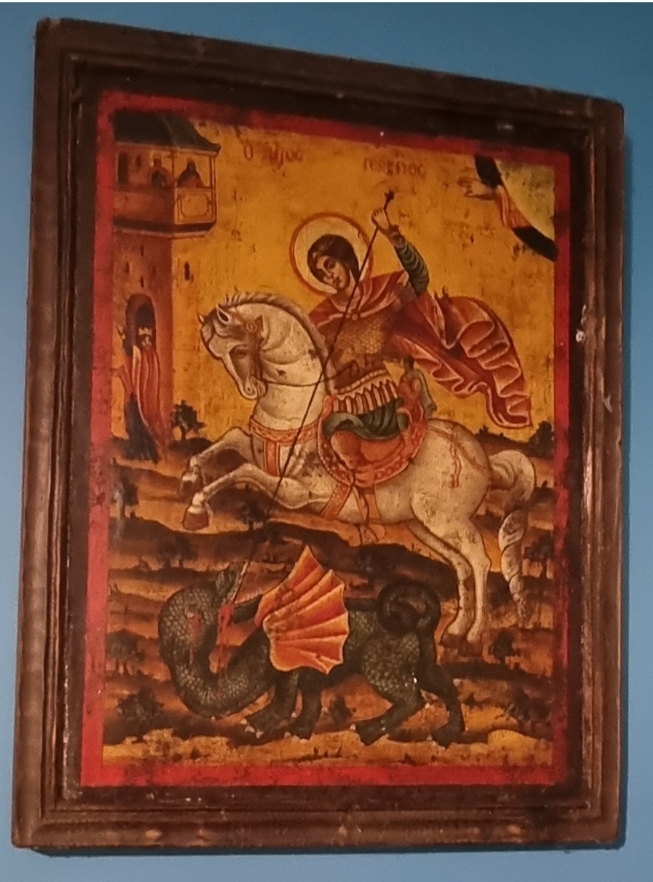
Mother’s Reflection on St George Icon

January 17, 2024

The door creaked open a bit, letting in the scent of incense down the hallway. Shadows danced on the bedroom walls, leaving the corners in darkness. The flickers came from the kandili beside the family’s icons in the corner of my mother’s room. I made sure not to think that my mother worshiped those images. She once said, “These holy pictures are like windows for us, a peek into the eternal worlds while we’re stuck in this one.” It was tough for a kid like me to wrap my head around that. But every time I kissed an icon, I reminded myself I wasn’t worshiping it.

I nudged the door open a bit more, trying to slip into the room without being noticed. Stepping onto the woolen rug, I tiptoed to the edge of the bed. There, I saw my mother on her knees, arms outstretched toward the iconastasi. Her back faced me. Slowly, she stood up, crossing herself. In the reflection off the icon of St. George and the Dragon, I saw my mother’s face. Her image overlapped with the saint’s, dividing her nose in half with the saint’s spear. One eye covered the saint’s chest, while the other floated above the horse’s bridle. The tip of her eyebrow touched the captured princess’s crown, her mouth a cushion for the Dragon’s back.

Mother’s greying hair framed a perfect silhouette within the silver frame.


To Those Who Know……

July 22, 2023

Turning Inwards

January 30, 2021

This is a transcript of a talk I gave in Darlinghurst, Sydney quite a few years ago. It is my understanding of the need for Self Observation and Self Remembering which can only truly begin when we turn inwards.  Everything written below is based on my understanding of the Gurdjieff Work. I gave the talk as part of the Sydney Group.

Stavros

====================================================================

We always imagine ourselves to be much higher than we actually are. We take it for granted that we are individuals, that we have consciousness and that we can ‘DO’. But there are moments in our life when events and situations might shock us into recognition that we do not know where we are going and that our own efforts to control and direct our lives have been in vain. In these moments we feel an emptiness, a void which cannot be filled by social position, friends or wealth.

It is in moments like these that we are given an opportunity to re-evaluate our so called individuality, consciousness and will, in other words, to re-evaluate the image we have of ourselves. If we are sincere in these moments we recognise that the image we have of ourselves is not us at all but rather a mask which we very rarely see through. Life through our sincerity has brought us to the question of ourselves. If we are not individuals with the power to be conscious of our actions and thus direct our lives, then who and what are we? Who am I? What is my place in the scheme of existence? In the face of such questions, we realise that we have a need to know ourselves for ourselves and through ourselves.

If I wish to know myself and through this knowledge to know the real world, how do I begin? How do I make the right effort to turn inwards to myself and what is the right effort? It is at this point of our own search that we recognise the necessity to study the methods of self-study, which lead to understanding and eventually knowledge of ourselves. Whether alone or with others we have found ourselves in unfamiliar territory. In this region of the unknown we may hope that the forces active on this level will send us the help we need.

To have any chance of reaching our goal of self-knowledge without losing ourselves we need a guide. Here, as elsewhere, we must learn from those who know and accept to be guided by those who have already trodden the same path.

The guide cannot walk our journey for us, the guide cannot turn my attention inwards to myself. All that the guide may do is to point out the pitfalls and obstacles which lie along our path and whether we understand the methods of self-study. On this path understanding is our only currency and our only means by which we may pay for the help we need. The understanding spoken of here is completely different to the intellectual knowledge which our modern science has accustomed us to. It is for this reason that real self-knowledge requires a school. It cannot be found in books, which can give only theoretical data, mere information, leaving the whole of the real work still to be done – to turn inwards towards our own inner experience and transform information into understanding through consciously living what we are.

If the turning we are speaking of is not only of the mind, but the whole of us, and if we realise that we are not the image we have of ourselves then what can the words ‘the whole of us’ mean? Here we come across our own doubts, confusion and resistance. The words come easy but the turning required is not as easy as hearing and saying the words. We listen, we speak, but over and over again we are taken by the disorder of outer activity and find ourselves falling prey to doubts, fantasies and sterile words. This is the beginning. It is this awareness which will provide the experience of a real wish to resolve this inner confusion.

When we try to observe ourselves we see that we have to remain attentive both to ourselves and to a particular aspect of ourselves. We realise that this turning is not given to us spontaneously and that the attempt to turn with the whole of ourselves is dependent up the participation of three factors or forces. These are ‘I’ who observe face to face with what ‘I’ observe within myself and the third factor which connects the two – our attention.

Taking these three factors into consideration we will speak firstly about attention. Our usual state of attention is one in which we lose our identity in some activity – be it reading a book, talking to a friend, listening to music, hammering a nail, or just simply daydreaming. This is known as identification. Identification has different ways of manifesting within ourselves depending upon the activity. One of these ways is when we drift from object to object, from sight to sound to thought to a sensation with no apparent aim, no apparent direction: it is automatic. Or, our attention is attracted by something which exercises a strong hold – an argument, a beautiful face, a memory of some place or person. In this way we are drawn by our interest and the situation takes over ourselves. Another way in which our attention is spent is when we direct it by a simple effort for a certain time intentionally – making something, studying, playing a musical instrument, cooking, sewing. The common element we find in each of these ways of paying attention is that we are aware only of one thing at a time. This is our ordinary state. We can be aware either of the person we are talking to, or of our own words, of a pain in my body, of a scene, or of my thoughts about the scene. But, except on very rare occasions, we are not aware simultaneously of our own words and the person we are addressing, of my own pain and someone else’s, of a scene and my thoughts about it, of my situation and my feelings of it. The attention which is needed to turn inwards so that a self study may begin is such a divided attention.

Divided attention is from another level within ourselves. It is the attention which at the same time of observation takes into account everything we are. This two way attention requires an attitude very different from our usual one. When we first make the effort to turn inwards our attention goes one way, then another, sometimes towards what I observe in myself, alternating at a faster or slower speed. This happens as easily in one direction as another. Though this attention is not given to us naturally, the attempt to observe oneself generates the energy for divided attention artificially. This very attempt is an exercise which develops the needed attention and makes it possible so that it can grow to the point where self-study may begin. In the beginning there is no stable support on which our attention can be based. Real self-observation appears to us to depend as much on this support as on the attention itself. From this we understand that the three forces that must be present are closely interdependent.

The second factor is “who” observes. We said earlier that self-observation requires “the whole of ourselves” and not just our analytical mind and we realise that with our usual attention and attitude we become identified with the situation at hand. When we are identified we are not present to the situation. We become totally attached and there is no space for the sense of myself. With our normal attention there is no ‘I’ which is the stable support to observe particular aspects of my life. For real self-observation to be possible ‘I’ must be present while the observation is going on. The sense of ‘all of me’ is the ‘I’ which is able to take into account in the field of attention directed toward myself a greater number of elements. The ‘I’ who observes has a field of vision analogous to that seen through a fish eye lens which has a more global perspective when compared to the normal natural view.

When ‘I’ is not present (which is our normal state) we forget ourselves almost uninterruptedly. In us things do themselves – speaking, laughing, feeling, acting – but they do it automatically and we ourselves are not there to witness. One part of ourselves laughs, another speaks, another acts.

There is no feeling that: I speak, I laugh, I act, I observe. Nothing that is done in this way can be integrated into a whole. Life lives itself through us and we are not there to partake of it. From this we understand that what we truly seek is more abundant life.

If our usual state is one of forgetting ourselves then the need to have a stable presence of ‘I’ may be fulfilled by trying to remember ourselves.

This stable presence is not given to us by merely knowing about it. It can be acquired after long work on ourselves but even now we can have a relative degree of presence, a certain coherence of all that we can collect in ourselves.

Self-remembering is the attempt to have global awareness of oneself. It is the state where I am conscious that I am here in these surroundings and feel a connection with the surroundings around me in the overall presence of something higher. This sense of something higher is connected with the valuation of our own essential question. It may be our own aim in the light of our search, it may be the Sun from which all life on this planet has its on-gen, it may be our own meaning of God, or our own teacher. What is important in this effort to remember oneself is that it must be attempted by the sense of “the whole of ourselves and not just thought about. It is only when we try to make this effort that real self-observation can begin. When we try it we discover that without it we are constantly changing, constantly taken by events both within and without. We discover that all that we have gathered within ourselves is dispersed at the slightest distraction. We also find that in practice nothing is more difficult for us than to be there with enough stability for an observation.

The third factor which is needed to turn inwards is the object of our ob¬servation – the elements of ourselves, what we are. These elements constantly change and escape us altogether.Though the elements are in constant change the field in which these elements move is always there. When we notice other people we see their external behaviour which we all perform as a response to the demands of life. This external behaviour is directed by the functional structures comprising the field towards which our attention is directed. These functional structures are the same in all circumstances and are the result of what we are and what life has made of them. We see through our eyes and hear through our ears, we don’t see through our ears or hear through our eyes. The seeing and hearing are the functional structures of our eyes and ears respectively. Likewise, within ourselves certain behaviours, such as thinking, emotionalising and moving, are possible due to the functional structures which allow them to happen. However, the way things take place in us, the interaction of our functions and the manner in which they associate to produce our personalities and responses, all this goes on in the dark with out our knowing it. So, to observe the elements of ourselves we must do something special to make them visible.

When we strike a match against the chemically treated part of a matchbox the friction between the two creates a spark which becomes a flame, and we have light. For us to see the elements of ourselves we must likewise have friction between the ‘I’ who observes and the field which contains the elements.This inner friction is the struggle against the automatic aspects of ourselves: those moment by moment personages which are always there. The struggle is against the habits which give us the false image of ourselves.

This struggle arouses the light of double attention which we need and forces us to confront those habits which keep us asleep, automated and engulfed in constant self-forgetfulness.

Self-forgetfulness, sleep, is our lot without struggle with our automatic selves. Mechanicalness and dreams replace our true birthright of freedom and reality. What am I saying?

I will illustrate with an example. I find myself waiting for a bus to take me to the bank. After buying the bus ticket my hands begin fidgeting. Soon my fingers begin to fold the ticket over, and over again, until it is a tiny cube like they have done hundreds of times before in the same manner. My head and left arm, in perfect synchronisation, move to the exact spot where my eyes can see the time on my watch. There is no real need to know the time since a moment earlier this same action was performed. My head is full of associations which whirl by in a random manner – a half-eaten memory of words exchanged over the breakfast table, an image of a television commercial, a song picked up from, I don’t know where, provides the background muzak. The bus arrives. Find my self at the middle of the bus bumping a man who grunts at me. Anger rises – there is no rebuke in words but my posture and face express it all the same. Sitting down, the realisation dawns that the bus ticket is no longer in my hand. My hands search my pockets, my eyes search the floor directly beneath my feet, my body is in all sorts of positions looking for the bus ticket. Simultaneously, the thoughts and emotions race through to the tune of “What will I say if the ticket inspector boards this bus?” No ticket. Soon memories float by and that time on the beach in North Queensland returns. While daydreaming I miss my stop because I find myself two blocks further than the bank which was my original destination. The button is pressed and the bus stops.

The above is what is meant by mechanicalness and sleep. This is how we are living most of our lives, and this state of consciousness which we call ‘normal’, is what we have sold our birthright for. Where is the man here? Where is the ‘I’ which if present and active would make my life real? Below is a description of what struggle with oneself may be.

I find myself on the street. I begin walking back towards the bank, I remember what happened on the bus. From somewhere within me the feeling ari¬ses that there is something wrong with myself. I, who can create grandiose plans for my future life, even to the place beyond the grave, can’t even re¬member to get off the bus in time. The words of Gurdjieff cut through my as¬sociations, ‘Life is Real Only Then When I Am.’ It is remembered with my mind that it is possible to turn inwards so that I may live and be present to my life. I see that I am not present but I know that I can be present. What I am can be remembered by who I am. The matchbox can be struck by the match. Oh! But it is so pleasant, so easy, to remain within my automatic nature, fully asleep to myself and the world. The effort required to struggle with myself is something more than the effort to earn my physical livelihood. Besides, it is an effort not required for my physical survival so why should I bother. Let me sleep on. And yet, if there is no effort, no struggle, to be . I am dead and only an automaton of flesh, bones and memory exists. I wish to live. I – the all of me – wish to be. The emptiness of what I am is passive – it is easily comforted with illusions and imagination that already I am and that I can do.

I long for life but where this longing stems from I don’t know and what this ‘life’ is which is longed for, I don’t know. This longing, this yearning for something which is unknown draws a part of my attention away from the surface associations and for a moment the heat of the sun is sensed on my face and hands. I have a body which is real, concrete and here and now. My body is the anchor of my longing. It is possible to turn inwards. The walking continues back to the bank. The longing for life is now expressed by a wish to see through my own eyes, to sense with my own skin, to hear through my own ears, to feel the ground beneath my own feet. I wish to move with my own whole body.

It is remembered that the easiest functional structure to attempt to study is the moving part of myself. I wish to be, I wish to struggle with myself, I wish to slow down my walking pace so that the walking part of myself can be seen. My hand reaches for my coat pocket searching for a cigarette. That part of myself which longs for life gives the strength to say no to my hand but I promise a cigarette later if it allows presence to fill it. My mind is once again occupied with associations which pass through it automatically. I struggle to place in my mind a conscious image of myself being fully present at the entrance of the bank. My walking becomes faster. To be present at the entrance of the bank my walking pace must slow down again. Intimations of the shoe around my foot, sensation of heel touching ground, then the front part of shoe, slight pressure of my trousers around my knee as it bends, the sensation of my collar around my neck comes and goes, a breeze returns my face to myself via sensation. My pace is slower. Emotion arises – it is connected with what happened on the bus – anger with myself. My mind reminds me a little later that the only way to struggle with emotions at first is not to express negative ones. Associations arise with this thought, my mind continues in its deviation from the conscious image of myself being present at the bank’s entrance but the awareness of my walking and the growing sensation of my body keeps some attention on the elements of what I am.

My body reminds me of the Sun for its heat is once again sensed on my hands and face. The longing, the wish to be, now evokes a decision to try with the whole of myself, with the awareness of my walking, with the denial of the cigarette, with the struggle against self-pity and anger, with the effort to control my thoughts, I now try with the whole of myself to place and feel myself and the immediate surroundings of the street under the Sun. For a split second time slows down and something which connects me and the external world opens and within the traffic noise, within the milk bar sandwich sign, within the garbage bin beside me, within the shop windows displaying goods and the people around me, within my footsteps and the body that senses the clothes on it, within the associations running through the mind, within it all the sense of another realm, a realm which seems to give Life to life enters and the question “Who am I?” echoes back to myself. This sense leaves me with the memory of an otherness and I find myself at the entrance of the bank understanding that I know nothing when it comes to the Real World.

With this effort of struggling with our habitual nature we must remember that the original aim for making the effort is so that the elements of what we are become visible. This is of fundamental importance because at this point lies one of the biggest obstacles on the path of return to ourselves. For something to become visible means that it becomes seen and nothing more. So with turning inwards all that is required at the beginning is that we see ourselves and simply record what we see and nothing more. Within the more lies the obstacle and this more is manifested within us when we try to analyse what we see. This analysis is the deviation of our attention from the whole of ourselves towards the relatively small part of ourselves we call the mind. Once we begin to analyse what we see we cease to observe and begin to imagine that we are observing.

We must also be careful that in hearing about the process of turning inwards and the methods of self-study that we do not fall into the trap of the rational, logical mind and reduce the real meaning of the words self-study, self-observation and self-remembering to mere psychologising. These words are signs on the path back to ourselves and since we do not know who we are, have meaning which goes beyond what contemporary psychology may imbue them with. It is for this reason that Vaysse in his Towards Awakening calls self-observation the secret ally. In a similar vein Don Juan tells Carlos Castaneda that the warrior who follows the path of the heart has an ally which is a power a man could bring into his life to help him and give him the strength necessary to perform certain actions. This ally, Don Juan says will make a man see and understand things about which no human being could possibly enlighten him.

At the beginning of this talk we saw that life through certain circumstances brought about a shock which forced us into recognising the futility of living from a false image of ourselves. We have seen that by making certain efforts we may turn inwards consciously. This turning inwards is dependent upon our own essential need and longing for our true home. Sincerity is the key which unlocks the door to ourselves and this door becomes visible through turning inwards. By turning inwards we see what we are and through this seeing we are given the help with which the search for who we are may begin anew with renewed strength and real hope.

I finish this talk with the words of Rene Daumal which, I believe trace the journey from the false image of ourselves towards the values of our real self:

I am dead because I lack desire

I lack desire because I think I possess

I think I possess because I do not try to give

In trying to give, you see that you have nothing

Seeing you have nothing, you try to give of yourself

Trying to give of yourself, you see you are nothing

Seeing you are nothing, you desire to become

In desiring to become, you begin to live.

stavros

PS Check out the 3 pointed attention idea in my post on Kites and Attention

https://dodona777.wordpress.com/?s=kites+attention


The Curve of My Heart’s Desire

January 22, 2020

My mother hassles me in her dotage to go to church, to confess my sins, take holy communion and to kiss the priest’s hand. I can’t tell her that I see the priesthood as a costume prop of divinity wrapped around men. It’s not just the presumption of priesthood that grates but also the arrogance radiating off the white dog collar.

priest dog collar

“Matthew 7:1-2 Judge not, that ye be not judged. For with what judgment ye judge, ye shall be judged: and with what measure ye mete, it shall be measured to you again.”

How far do I stray from this advice when I’m confronted by the Church? The whole edifice from its theology to its soteriology and its masonry is riddled with presumption and arrogance. Why must the source of Divine Power and Love be subject to franchise agreements? I cannot believe the ineffable manoeuvres like a lawyer. Is the priest a broker dealing in soul futures? With Wall St brokers, if you’re lucky, you may gain something. The Church provides words that haven’t been digested & transmuted into gold wisdom.

Is this to say that the Divine, the Miraculous, the Living Unknown do not exist? No. It only means that a systemic structure such as a Church cannot be the unpredictable, ineffable symbol of the Real. Now this engenders a whole host of issues of which the question “What is Real?” is at the centre. I don’t know the answer. I do know that the systemisers pretend to know.

What of confession? There’s something so essential, so oneself that hesitates to confess to another man one’s “sins”. The Greek word for “sin” is harmatia which means “missing the mark”. The assumption here is that both the priest and the confessor have agreed on what is sin. Even if they do agree as to what constitutes sin, it still sucks to confess these sins to another person. If it is true that God is not only transcendent but also imminent it follows that all failings and sins are already known to Him. The argument goes that when one confesses one is not confessing to the priest but rather through the priest to God. In other words the priest is an intermediary, a flesh & blood telephone. The priest also has the power to decide what, if any, penance is required. If you pay now you won’t have to worry about the interest rate in the after life. As a consequence, merely by humbling yourself to the intermediary, the priest, you will gain peace of mind and soul.

Really?

Do I need the responsibility of my life to rest on the decisions of a church man? What if the after life, the here after is THIS LIFE again? Yes, instead of a Ground Hog Day – a Ground Hog Life. Does it mean I will be forever doomed to pay lip service to a caricature of divinity just so I secure a respectable soul? Maybe there are souls that don’t fit the respectable mould. This does not mean they are not chosen by God. It only means that they may have another calling.

tree of knowledge

It goes deeper than this, it goes to the curve of one’s heart desire.

In me there resides the need to know, to understand. In me this desire to know who I am, what is my place in the universe and why I am here has directed the shape of my life. This desire has taken me to the edge of sanity where flying saucer landing pads in a commune’s backyard took the place of Hills Hoists. This desire has also turned my mind to the study of numbers, symbols, astrology, magic and divination – all of the mantic arts. The curve of my heart’s desire turns away from dogma & belief to the ever present mystery of simple life. This curvature reveals along its edge another calling that has nothing to do with any church or institution.

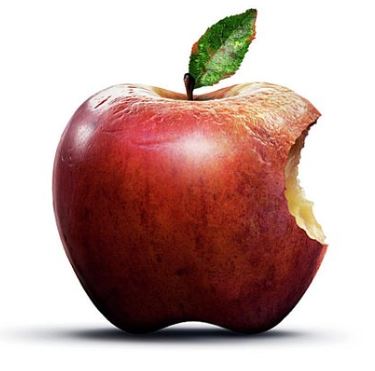
The desire to know was also probably Adam & Eve’s original sin. We all know what happened to them when they took a bite of the Apple.

Yes, I am inflicted because I seek knowledge of the Divine and I don’t want church men hovering around the curve of my heart’s desire.

apple