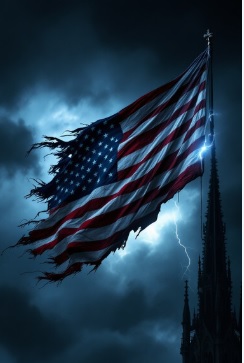
The Stone Seeker: A Myth of the Wandering Soul

October 2, 2025

A departure from my usual posts — this one takes the form of myth, an inner journey written as an allegory. I offer it as a companion to my ongoing stories.

He was called Stavros, which means Cross, and that was his burden — and his path.

One day, in a time that was no time, he heard the silent summons. Not from the sky, but from the pulse within the earth. He set out, carrying nothing but his breath and the ache of questions. He climbed the ancient spine of Sinai without sleep, ascending stone upon stone, as if walking up the ribs of a forgotten god. At the summit, the sun did not answer him — but it showed him he was not alone.

The descent was harder. That is the truth of all peaks. He reached the foot of the mountain and sat by the monastery of Katherine, where silence grows like lichen on old stone. There he met the Gatekeeper — a monk whose heart had fossilised into ritual. Stavros spoke the sacred tongue, but the Gatekeeper did not recognise him. He uttered the Word — “Yunan” — and dismissed him like a leaf blown against the stone walls.

So the Seeker left the sacred walls and returned to the road. It was on this road that he met the Trickster Guide — a Bedouin named Mohamed, who spoke through music and mischief. He offered herbs not for healing but for vision. He rolled a joint while guiding the chariot at great speed. Smoke curled like a serpent toward the heavens, and the desert began to shimmer.

Mohamed showed him the living map: dunes that were coastlines, mountains that were camels in repose. “This is Sinai,” he said, “and there is the Red Sea.” In that moment, the Seeker saw geography become prophecy. The land was not just land — it was a scroll unrolling.

Mohamed led him to a mosque, a café, a grove of planted trees. “We are of the 15 tribes,” the Guide said. “We plant what will shade the unborn.” The Seeker ate with him, drank the dark tea of mystery, and vanished into moonlit streets.

Then came the Labyrinth.

In the night city, he was lost among alleyways, where cats whispered secrets and doors led nowhere. He emerged by chance, or fate, and met the Scribe, who wrote his name in the language of the ancestors. “All men have three names,” said the Scribe, “but only one is true.”

The Seeker travelled again — across waters, under stars, on feluccas that rocked like cradles of time. He met companions with names like runes: Linda, Olga, Shayari. Together they smoked, drank rakii, and watched angels dissolve into the air like incense.

He arrived at a threshold: the City of Columns. There, under a sky bleached of memory, he sat on sand and turned a plastic bottle into a shrine. He waited for a chariot to carry him across the Nile of forgetting. Someone called him “the Greek with eight children,” and he laughed. He had none — and yet carried thousands within him.

Then came the Two Georges.

One was a Potter. One was a Priest of the Inner Fire. They saw in Stavros something he had hidden from himself. “You evoke the honour of Christ in others,” they said. “You wear innocence like armour.” They fed him macaroni and truth. In return, they asked for stories.

And so he spoke.

And in speaking, he remembered.

Dialogue became divination. Each question was a key. Each story a lost scroll. “In dialogue,” said George, “there is living transmission. The book you write is not of ink. It is breath, shared.”

They spoke of the monk on Athos who gave him a stone. “Leave this on the mountain,” he had said. And so Stavros carried it until the burden became a prayer. They spoke of karma, of grace, of gifts that are given but never earned.

Then came the desecration.

He passed through Luxor and saw the sign — McDonald’s, Temple of Luxor Street. The Golden Arches beside eternal stone. He took a photo, not to remember, but to mourn. Some desecrations are not loud. Some come wrapped in convenience.

And still, a stranger in Cairo whispered: “Welcome.” One word, like a flame in the dust.

The Seeker came to understand: giving and receiving were not separate acts. He had received shelter, food, names, music, silence. He had given stories, listening, laughter, witness. There was no accounting. Only flow.

He saw now that the journey had not been from place to place, but from self to soul. He gave before he received. He received before he gave. It was not barter. It was the hidden law.

And then — the Word.

“Sorry,” they said, “is just a word.” But he knew better. The Word began the world. Words held power, memory, vibration. Words could curse. Words could carry. Words could redeem.

He left the stone on the mountain.

He returned carrying only light.


Near Shore, Far Out

October 1, 2025

I keep reading about experienced sailors dying close to shore. Not in the middle of the Pacific, not after months at sea — but within sight of land. And each time, something stirs uneasily inside me.

Because I once sailed four thousand kilometres there and back to Nauru. And I had no experience. None. No yachtmaster’s ticket, no decades at the helm. Just a call, a cause, and an instinct that said: go.

I wasn’t alone, though — I joined experienced skippers and crew who knew the sea far better than I did. My leap was into their world, not a solo crossing.

At the time, it felt like courage, or maybe necessity. Looking back now, it feels different. It feels like standing on the edge of a cliff without knowing if the parachute on my back would open. I tremble at the thought. I used Astrology for both my horoscope and the horoscope of the Flotillas of Hope to justify the decision to send the Call to Action to Nauru. To justify my, now in retrospect – my need, to stretch my ‘being’.

But here’s the truth: trembling in hindsight is not the same as folly at the time. What we see later is always coloured by what we know now. Back then, I lived as I always have — by leaps. Leaps into the unknown, trusting that my Guardian Angel working behind the scenes of life would catch me.

Others trained, charted, prepared. I leapt. And somehow, I survived. Not because I was wise, not because I was skilled, but because something — call it fate, protection, or really that Angel — carried me through.

Now, when I hear of sailors lost near shore, my heart aches. It reminds me that the sea has no favourites, and that my survival was never guaranteed. It humbles me. It makes me bow my head, not boast.

But it also tells me something else: my life has always been this way. Not straight, not cautious, but here, there and anywhere. Risk and recovery, fall and renewal. And even the trembling I feel now is part of the me that survived — the deepening that comes after the leap.


Star Gazing: Trump’s Hot Zones (Oct 2025 – Apr 2026)

September 30, 2025

In continuing my Star Gazing reflections, I turn again to the sky — not for prediction, but for pattern.

As I’ve written before, Star Gazing lives in the space between astronomy and astrology. I look up at the stars, at the old light from Alpha Centauri or a pulse of sunlight just eight minutes old, and I wonder: Why am I here? Then I turn to a Sky Map (what some call a horoscope), and I read those same stars differently — as a language, a mirror, a way of speaking to the deeper parts of ourselves.

Astrology, for me, is not about fortune-telling. It is synchronicity written in sky script. When a song, a thought, and a phone call arrive together, I don’t see cause and effect — I see resonance. The stars work in the same way: not as science, but as symbol, as story, as soul language.

With that in mind, I have been watching Donald Trump’s chart across the coming months. What I see is not a medical verdict or a prediction of fate, but symbolic weather — moments when narratives about clarity, stability, and leadership are most likely to ignite.

October and November open the cycle with volatility. His chart suggests irritability and erratic flare-ups, the kind of outbursts that quickly snowball into headlines.

December and January deepen the mood into confusion and combat. Slips repeat, contradictions mount, and his rhetoric turns sharper, more confrontational.

February strains the picture further: alliances fray, emotions spill, and communication falters. Then comes

March, the real pivot. Two eclipses arrive within weeks of each other, joined by a Mercury retrograde. Together they create fertile ground for reversals, gaffes, and renewed doubts about leadership.

Finally, April carries the heavy hand of Saturn pressing on his natal Mercury, marking the shift from fleeting drama into sustained scrutiny — the entrenchment of a longer story about “mental fitness” and clarity.

I do not take this as prediction, but as resonance. Just as a chance meeting or a well-timed song can signal a deeper current, the sky mirrors questions already stirring in the collective — in this case, America’s wrestle with age, clarity, and authority. That, to me, is what Star Gazing is about: not fortune-telling, but listening for meaning in the sky’s unfolding language.


Main Points Recap

  • Oct–Nov 2025: Volatility, outbursts, erratic clips.
  • Dec 2025 – Jan 2026: Confusion and combat, repeated slips, sharper rhetoric.
  • Feb 2026: Strain in alliances, emotional exposure, muddled speech.
  • Mar 2026: Turning point — eclipses + Mercury retrograde trigger reversals and leadership doubts.
  • Apr 2026: Scrutiny hardens — Saturn on Mercury brings sustained “mental fitness” questions.

Closing Invitation

Star Gazing, for me, is a way of listening. These sky stories are not only about political figures, but also about us. I invite you, as you read, to pause and ask: What patterns are unfolding in my own life right now? Where do volatility, confusion, turning points, or scrutiny appear in my story? The stars speak to all of us — not as commands, but as mirrors.


America After the Threshold: Resistance, Power, and the Divided Republic

June 21, 2025

I play around with Astrology not because I believe that Stars and Planets direct or control events in personal lives or global political events. I think there are invisible concurrent events in the collective unconscious of humanity. So, rather than causation I think there may be a correlation between invisible unconscious movements and the celestial. So, how do we ‘see’ these invisible vibrations? Through symbolism. Just like our dreams may be symbolic of events I think the archetypal symbolism as shown through various systems that assist the invisible to become visible may also be symbolic of events.

So, this is just my reading of symbols that may help me make some sense of the incredible events happening now.

=========================================================

We are now living in a new chapter of American history. We are also living in a new chapter in Global history.

With Donald Trump inaugurated for a second term in January 2025, the United States has entered uncharted and deeply polarized territory. The promises made on the campaign trail are no longer rhetoric—they are rapidly becoming reality.

Mass deportations have begun, with ICE and other federal agencies empowered to conduct wide-scale raids that tear families apart. Sanctuary cities face threats of defunding or legal dismantling. Journalists and political opponents are under open scrutiny. The line between democratic governance and authoritarian rule is blurring in real time.

Trump’s team has already invoked or signaled the potential use of the Insurrection Act to quell dissent, and floated the Alien Enemies Act as a tool to target immigrants. These aren’t theoretical threats—they are moves drawn from a growing authoritarian playbook that challenge foundational American principles. I hear the hum of fascism. Was it the same hum heard just as Nazis took over Germany?

What happens now, as resistance begins to emerge more openly? In blue cities and states, governors and mayors are testing the limits of federal defiance. Communities are organizing, shielding vulnerable members from raids, launching legal battles, and reviving underground networks of care and dissent. But will such resistance provoke a federal crackdown? Will the desire to restore “order” become the pretext for escalated force?

Beneath the policy headlines, a deeper fracture is becoming undeniable. Two Americas are crystallizing—not just politically, but almost civilizationally. On one side, a multiracial, urban, forward-looking nation trying to hold on to democracy. On the other, a reactionary movement rooted in grievance, nostalgia, and power consolidation. The social, legal, and cultural divide is widening into something more dangerous—something that history warns us about.

The last time America reached this level of internal rupture, it exploded into civil war. That memory, often romanticized or dismissed, is beginning to feel less like history and more like a warning flare.

Astrology, often dismissed by the rational mind, provides a fascinating lens for examining recurring historical cycles. The planetary alignments of 2025 bear striking echoes of those in 1859–1861, just before the Civil War began. Let’s explore how the skies may be mirroring our collective crisis.


Astrological Forecast: Echoes of the Past, Portents for the Present (Mid–Late 2025)

Astrologically, 2025 is charged with revolutionary tension. We are living under skies that call for transformation—and test the foundations of nations.

Pluto in Aquarius (2023–2043): Revolution of Power and Structure

Pluto’s move into Aquarius signals the collapse and reconstruction of collective systems. In 2025, its early degrees are already pressuring global power structures, exposing the authoritarian use of technology and the manipulation of mass movements.

The last time Pluto was here was during the American and French Revolutions. The questions return: What is freedom? Who holds power over the collective?

Uranus in Taurus square Pluto in Aquarius (Exact October 2025)

This rare clash between Uranus and Pluto is the year’s seismic pulse. Uranus disrupts; Pluto transforms. When they square off, systems collapse and something entirely new begins to rise.

Expect:

  • Economic unrest (currency shocks, digital bank failures)
  • Technological rebellions (AI regulation backlash, digital sabotage)
  • Civil disobedience on a mass scale, potentially met with federal force.

This square recalls the Uranus–Pluto conjunction of the 1960s—a time of protest, civil rights, and violent backlash.

Neptune at 29° Pisces: The Fog Before the Storm

Neptune now lingers at the final degree of Pisces—the anaretic degree, also known as the “degree of fate.” This amplifies illusion, spiritual yearning, and mass deception.

We may see:

  • Propaganda disguised as truth
  • Escalation of conspiracy cults
  • Emotional and spiritual burnout

But also a search for meaning, for soul, for deeper truth.

Saturn in Pisces: Holding the Line

Saturn seeks structure in Pisces’ oceanic waters. It teaches quiet endurance, inner anchoring, and the need to build unseen resilience. Its presence here stabilizes those working in dreams, healing, and faith. But it also punishes denial and escapism.

The Shadow of the U.S. Pluto Return

Although exact in 2022, the aftershocks of America’s Pluto return are reverberating through 2025. The old system is dying—but what is being born remains uncertain.

The Pluto return marks the end of a cycle begun in 1776. The soul of the republic is on the line. The soul of United States of America is on the line. Is there a crack along that line?


Forecast by Season: June to December 2025

▶ June–August

  • Mass protests and resistance movements gain momentum.
  • Economic strain begins to show: housing pressure, job insecurity, localized shortages.
  • Escalation of federal actions draws international scrutiny.

▶ September–October

  • Uranus square Pluto hits exact. Expect sudden, disruptive events: blackouts, market drops, tech collapses, or policy overreach.
  • Civil disobedience may meet aggressive federal pushback.
  • Courts, especially the Supreme Court, become major flashpoints.

▶ November–December

  • Neptune’s final passage through Pisces intensifies the search for clarity. Expect scandals, revelations, spiritual awakenings, and psychological fatigue.
  • Possibility of a cultural or symbolic turning point.
  • Saturn begins to separate from Neptune, helping us rebuild from the emotional wreckage.

Conclusion: What Now?

We are living through a slow earthquake. The world as we knew it is not returning. But destruction and renewal are twins. The astrology of this era asks each of us to become participants, not spectators, in the unfolding of history.

If history is written in cycles, then perhaps prophecy is found in pattern. And if the stars are a mirror, they are reflecting our choices back to us.

The question isn’t whether the storm is coming.

It’s who we choose to become within it.


A Belated New Year’s Message: May the Rose of the Heart Bloom

April 12, 2025

The calendar may have turned months ago, but the true moment to plant seeds of intention can arrive at any time. This short reflection came to me on New Year’s Day, though I didn’t share it then. Perhaps I wasn’t ready—or perhaps the Rose within needed time to unfurl.

As the seasons shift and the year continues its unfolding, I offer this now—not as a resolution but as a quiet invocation. May it speak to your own rhythm, your own turning.

==================================================================

Today, the first day of a new year, is a perfect time to plant seeds of hope in the furrows of one’s life line. What will these seeds become? Which will flourish, and which will be consumed by the worm of impatience? Which will endure, drawing strength to be eternally regenerated within one’s being?

Among all that may grow, there is one plant above all others with the power to truly live: the Rose.

Rooted through the layers of one’s life, it reaches the Source of everything—the Heart of the Universe. Its color is the color of blood, flowing through every creature, through humanity itself. Its hue reflects its Origin: the Heart.

Seeds planted in the intellect may sprout for a time but will wither without sustenance. Only those sown in the Heart grow forever, nourished by an infinite wellspring of meaning and vitality.

Jesus spoke of the mustard seed—comparing it to the seed of faith. Mustard or Rose—the name matters less than the meaning. Both are symbols of potential, resilience, and sacred transformation.

This year, may the Rose take root deep in the Heart.
May it grow and flourish, weathering calamity, weakness, and the weeds that crowd the soil of the soul.
May its petals bloom as Art,
its stem rise as Beauty,
and its fragrance drift as Truth.

Let its Ambrosia nourish the spirit of others,
its perfume remain untainted,
and its dew glisten clear in the morning light.

In this turning of the year,
may the Rose of the Heart flourish—
uniting us in the eternal rhythm of hope and renewal.

Stavros


The Apple and the Cosmos: A Dance of Reality

December 9, 2024

Before me sits an apple, ordinary yet radiant, its waxy surface catching a sharp glint of light from a lamp above. It is tangible, immediate—its crispness confirmed as I lift it to my lips, its flavour vibrant and undeniably real. Beside it rests a protractor, leaning against a globe, and an astrological chart sprawled across my desk. These objects—tools of measurement and mapping—whisper of realities far removed from the apple’s tangible presence. The apple anchors me in the here and now while the instruments gesture toward the distant, the abstract, the infinite.

The apple is a feast for the senses. I can touch it, taste it, smell it, and see it. Though its atoms appear tightly packed, they are, in truth, vast spaces of energy and vibration. Magnify one of its atoms, and its solidity dissolves into a void where particles exist only as probabilities, dancing in fields of energy. Yet, this solid illusion sustains my bite, my taste, and my knowing.


The horoscope beside it lacks the apple’s tangibility. It cannot be bitten or held, but it represents something equally profound: a symbolic map of the cosmos. Where the apple’s reality is immediate, the horoscope projects patterns of meaning across time and space, binding celestial rhythms to the human story. These two things—apple and horoscope, immediate and archetypal—remind me that reality is both seen and imagined, both concrete and infinite.


This paradox of perception defines our existence. The apple, so close I can taste it, is not as solid as it seems. And the stars, so distant their light has travelled for millennia to reach me, are not as unreachable as they seem. Between the apple and Alpha Centauri lies an unfathomable gulf, yet they are part of the same web of existence, bound by the laws of physics and the rhythms of the cosmos.


Newton, watching the fall of an apple, saw the invisible thread connecting Earth and sky. Einstein deepened this insight, showing that space and time are inseparable and that matter and energy are two forms of the same thing. Quantum physics has unravelled the idea of separateness, revealing that particles are not isolated entities but relationships—waves of possibility collapsing into form through interaction.


David Bohm’s theory of implicate order expands this vision further, suggesting that the universe is a seamless whole where every fragment reflects the entirety, like a hologram. In a hologram, each fragment contains the whole image, even when divided into pieces. Similarly, the universe is encoded in every part of itself. The apple before me is not merely an apple; it is a microcosm of the cosmos, its atoms vibrating with the same energies that fuel the stars.


The horoscope, too, speaks to this interconnectedness. It is not about planets and rocks but about relationships, patterns, and cycles. The zodiac mirrors the rhythms of life, like the apple tree that blossoms, bears fruit, and eventually returns to the Earth. The horoscope encodes the rhythms of the cosmos in symbols, reminding us that the patterns above are reflected in the patterns within.


This interconnectedness challenges the illusion of separation. The apple and the stars, the immediate and the eternal, are not opposites but facets of the same reality. Our senses, while invaluable, reveal only a sliver of the whole. Light, for instance, is just one octave in a vast electromagnetic spectrum, and beyond the visible lies a universe of energies—X-rays, gamma rays, cosmic rays—that remain unseen but ever-present.


Similarly, the frameworks of language and culture limit how we perceive and interpret the world. But within these limits lies a profound truth: we are not separate observers of the universe; we are participants in its creation. As physicist John Wheeler suggested, the act of observation itself shapes reality, collapsing waves of probability into patterns of existence. Our consciousness, like a hologram, reflects the universe within it.


The apple before me, the stars above, and the chart on my desk are all threads in this web of unity. The apple speaks of immediacy, the stars of eternity, the chart of the connections that bridge the two. At this moment, I recall a walk in an orchard with my father years ago. He handed me an apple, freshly picked, and told me to hold it carefully as though it contained the world. I didn’t understand him then, but now I see his wisdom. The apple was the world, the stars, and myself—all woven together.


So, as I bite into the apple now, tasting its crispness and feeling its tang, I know it is real. But I also know that in this simple act, I am connected to the stars, to the atoms that form both fruit and flesh, to the patterns that govern the universe.


In the apple, I taste the infinite, and in the infinite, I find myself.


The Art of Magic, the Magic of Art

December 1, 2024

True art is magic, and any true magic is art. With the touch of a pen, a brush, or even a finger, an artist—if aligned with the essence of their vocation—commands worlds both seen and unseen. Percy Shelley once declared that “poets are the unacknowledged legislators of the world,” and though his words echo from an era long past, they feel uncannily prescient.

But what does this mean in practice? Some might argue that if poets and artists truly wield such power, they are the most woeful rulers ever to preside over humanity. After all, if art is shaping the world, why do the screens that dominate our lives churn out nothing but dissonance, despair, and empty spectacle? Is this dystopian noise truly the vision of today’s artists?

I imagine Shelley himself interrupting from the shadows of the ether: “Don’t be so literal! I meant it metaphorically. Art isn’t governance by laws; it’s governance by ideas, by imagination, by what transcends the mundane. But for heaven’s sake, don’t turn poetry into a cargo cult—worshipping its form as though it’s divine by nature rather than by what it creates within you.”

And yet, there’s a peculiar magic in this metaphorical cargo, in the words, images, and sounds that tumble into the open space of our minds. For those who see the world in myths and metaphors, art carries immense weight. It is both vessel and spell, weaving meaning from the chaos.

Take, for instance, the ancient stories we hold as sacred. The tumbling walls of Jericho. The resurrection of Christ. The creation of the universe in seven days. Do these stories endure because they are literally true, or because they resonate with something deeper—something ineffable? These tales are, above all else, poetry, built to inspire, to guide, to anchor us in moral or spiritual truth. Their magic is not in their factual accuracy but in their capacity to awaken a sense of wonder and move us toward the good.

In this sense, the Bible, like all great art, is a magical artefact. It is less a document of historical fact than a talisman, transmitting its moral and poetic energy across centuries. It scarcely matters whether Jesus of Nazareth held an identity card or walked among us as a historical figure. What matters is the poetic proof—the themes of redemption, sacrifice, and hope that compels us to strive for something greater.

Even today, this ancient poetry retains its power in a world awash with “meaning packages” from advertising slogans and clickbait soundbites. The cynicism of the modern world would have us believe that such stories are relics of the past, yet their resonance persists. True art, like true magic, touches something eternal. It reaches into the ineffable and makes it visible, if only for a moment.

But here’s the tension: if art is so powerful, why does it so often feel powerless in the face of modern chaos? The art world seems increasingly commodified, trapped in an endless cycle of trends, likes, and algorithms. It’s tempting to believe that the magic has been diluted, reduced to spectacle, or even silenced altogether. Yet, history reminds us that art’s power isn’t always loud or obvious.

Think of Picasso’s Guernica—a painting that “legislated” not through laws, but through the weight of its horror and the clarity of its vision. Or Maya Angelou’s poetry, which legislates even now, carving spaces for hope and resistance. True art doesn’t demand attention; it reshapes the world quietly, insistently, often long after it is created.

Art’s magic, much like a magician’s sleight of hand, often works unnoticed. It transforms us subtly, weaving itself into the fabric of our lives without our conscious permission. Consider a song that makes us weep, a novel that reframes the way we see the world or a photograph that stops us in our tracks. These are not passive objects; they are spells cast by creators who reached into the ineffable and returned with something transcendent.

The danger, as Shelley warned, lies in worshipping the artefact itself rather than the spirit it conjures. Too often, we mistake the form for the magic, clinging to what can be packaged, sold, or commodified. But art’s true power is never in the object—it’s in the transformation it invokes within us.

This is where the artist becomes a magician, conjuring meaning from raw material and shaping worlds from chaos. True art challenges the status quo not because it seeks to destroy but because it dares to create—to reimagine what is possible. The poet legislates not with authority but with imagination, reshaping the boundaries of what we believe to be true.

Even in today’s fractured world, art retains its quiet, ineffable power. The greatest works endure not because they are timeless, but because they speak to the timeless within us. Art—like magic—relies on the participation of its audience, on our willingness to suspend disbelief and step into the unknown.

So yes, art is magic, and magic is art. Both touch the eternal, both pull at the ineffable. And whether we realize it or not, both shape the worlds we inhabit. The artist’s hand, like the magician’s, is at work all around us—transforming, challenging, inspiring. The question is whether we are brave enough to recognize it.

==================================================================

The quote is from Percy Bysshe Shelley who said that “poets are the unacknowledged legislators of the world.” This famous phrase comes from his essay A Defence of Poetry, written in 1821 but published posthumously in 1840.

“Poets are the hierophants of an unapprehended inspiration; the mirrors of the gigantic shadows which futurity casts upon the present; the words which express what they understand not; the trumpets which sing to battle, and feel not what they inspire; the influence which is moved not, but moves. Poets are the unacknowledged legislators of the world.”


A Letter to My Absent Guardian Angel

November 20, 2024

To My Ever-Absent Guardian Angel
66 Automatism Road,
Mammonville, 6666

Dear (Supposedly) Watchful One,

It’s been a while—decades, in fact. I thought I’d drop you a line, not because I miss you (I don’t), but because I need answers. Primarily: Where the hell have you been?

You left without so much as a celestial Post-it. For us mere mortals, words matter. Even a basic “BRB” would’ve sufficed. But no, you flapped your wings and ghosted—ironically, since you’re already sort of a ghost. I won’t harp on it (much), but if “guardian” is still part of your job description, it might be time to recheck the fine print.

Anyway, life update: I’ve applied for the position of Director of My Own Life. Admittedly, the pay isn’t great—it’s public service, after all—but the benefits include fewer existential breakdowns and a slightly better carbon footprint. Sure, it’s a one-man gig, and the office hours are ridiculous, but hey, somebody’s got to steer this shipwreck.

Now, a burning question: why did our last encounter happen in a pub? Of all places, I imagined you’d prefer to appear in a shaft of light through a stained-glass window or something appropriately divine. Instead, you nursed a lager while I lamented my woes over a pint. Do angels even drink? Is there a heavenly liquor license I should know about?

If this sounds like I’m whining, well, maybe I am. But cut me some slack. You’ve been AWOL while I’ve wandered the planet armed only with Google Maps and a vague sense of purpose. The truth is, my life’s compass—whether literal or metaphorical—seems perpetually broken. Magnetic north? Useless. Tarot cards? Cryptic. Apps? Battery-draining. You get the idea.

On a related note, your detachable angel wings are still at the dry cleaners. The guy said something about a stubborn stain on the last feather, the one shaped like a bow. Blood, he thinks. Care to explain? I paid the cleaning fee, by the way—you’re welcome.

Honestly, I’m starting to wonder: were you scraping the bottom of the celestial eligibility list when they assigned me? I mean, it’s not like I’m top-tier humanity, but c’mon. Did you lose a bet? Draw the short straw?

And don’t even think about rolling your eyes or straightening your halo as you read this. I can picture you now, muttering, “He’ll never get that Director job. No chance.” Well, here’s the deal: this time, I’m doing it without you. No divine interventions, no whispered nudges in the right direction. You’re officially off the hook.

If you’re just a figment of my imagination—my brain’s way of outsourcing responsibility—then fine. But if you’re real, consider this a resignation letter from our arrangement. Not out of bitterness (okay, maybe a little), but because I need to stand alone, facing the metaphorical wall. And who knows? Maybe that wall will turn out to be a door once I stop expecting you to open it for me.

If I land the job, I’ll rescind all the childish grumbles I ever sent your way. If I don’t…well, at least I’ll know I tried, unsupervised.

Yours (conditionally),
Stavros

P.S. I’m busy this week, but after Sunday, feel free to drop by—no expectations, no feathers, no complaints.


The Temporary Angel: A Journey Beyond Reality

November 15, 2024

No rainbow hues crowned the dilapidated house across the asphalt. A lone weed struggled through the crack in the cement to greet the constant passersby. She could empathize with the weed. “What’s a weed but a plant discarded from the mob?” she thought.

Her hair, from a distance, looked like a lion’s mane. Up close, what you thought was hair was clusters of thin lines of flame with light blue ends. Was she an angel? A messenger of fire descended into this neighbourhood? Or was she just an illusion to occupy a mind locked into a cube of space? Could she be both? Like a profile that is a vase from one view or two faces turned inward from another. How long she had been watching was anyone’s guess.

George felt her eyes on him, an unsettling sensation that sharpened his awareness of his subterranean existence. He had carried the underground in his soul for so long that he feared being recognized—feared it might destroy him. To be seen was to be known, and to be known was to lose the only freedom he understood: the fragile equilibrium between necessity and whim. His underground world was a realm of shifting sand, where heaven and hell were interchangeable kingdoms. Above, the surface world was a place of silhouettes; below, he clung to the parallax of a lost star.

The worry beads in his pocket offered little comfort. His father had given them to him, claiming they were carved from the thigh bones of a Turk killed in some distant war. The macabre story had been a joke, his father’s way of mixing humour with his dark compassion. But the beads—smooth, ivory fragments of elephant tusk—still felt like relics of a troubled inheritance. He turned them over in his hand as if their smooth surface might anchor him to something solid.

At the station, Sophie appeared, filling the empty space with something familiar and alien. George noticed her wings first—scarlet feathers that seemed too vivid and alive to be part of any costume.

“Who are you?” he asked, his voice wary.

“Good, you see me,” she replied, a grin teasing her lips. “Can you see all of me?”

He squinted. “I can see you’ve got red wings.”

“Scarlet,” she corrected. “That’s even better! You can see my wings. Most can’t.” Her hands moved as she spoke, graceful as a dancer’s, and George found himself oddly captivated. “I’m a Temporary Angel,” she continued, “and I need your help. I want to be made permanent.”

George shook his head. “You’re telling me you’re an angel? Walking around Redfern Station? And I’m the only one who can see you?”

“Yes,” she said simply. “What other people?”

George looked around and saw that the station was deserted. The people who were walking around, looking at their watches, holding their bags, waiting for a train—there was no one on the platforms or the stairs. It was as if the world had been blown away with a breath, leaving only him and Sophie in this crystalline stillness. He glanced at his shadow, unnervingly sharp against the ground in the fading twilight. The light around him seemed too pure, too surreal, sharpening every edge and making every detail glow with impossible clarity.

Sophie handed him a cup of coffee, her thermos producing exactly what he liked—short and black, no sugar. “For now, silence might save you. Just listen. Let your heart speak louder than your head. Don’t let your head scalp you.”

As George sipped his coffee, she crossed her legs and leaned back slightly. “You know,” she said, “some people believe you must suffer to reach salvation—hairshirts, long vigils, self-denial. But my colleagues and I have learned that you can sit at the gates of salvation with a cup of coffee and not be asked to move on.” She winked at him.

They sat in silence until the air shifted. A moth the size of George’s hand appeared, landing delicately on the rim of his cup. Its eyes—dark and unblinking—seemed to peer into his soul.

“That’s Moth,” Sophie said. “A fellow Temp. You’ll meet more of us soon.”

Moth took off, its wings slicing through the air like a blade. Sophie stood, her scarlet wings stretching wide. “What do you want, George?” she asked, her voice low and steady. “Say it aloud.”

He hesitated, holding his breath, the weight of the question pressing down on him.

“What do you want, George?” Sophie asked again, her voice softer this time. “Be honest. It’s not the past you’re after, is it?”

“I want everything,” he finally said. “Everything, including making it all like it was before—perfect.”

She smiled, a faint sadness in her eyes. “Everything, huh? Even a brand-new car?”

“Sure,” he said, though he knew how hollow his words sounded.

Sophie turned her head toward the distant stairs. “Look over there. If the timing is right, he’ll reveal something to us.”

At the top of the railway stairs, a man descended. With each step, his shadow lengthened, stretching until it reached the bottom, falling down the stairway like a spectral companion. He dragged a sack behind him, his movements erratic, like a puppet tugged by invisible strings. His patchwork clothes—a riot of velvet, canvas, lace, and denim—hung on his frame like a discarded quilt.

The Ragman stopped before them, his single eye gleaming. Sophie gestured toward him, her voice dropping to a whisper. “He doesn’t expect any sense from you. He merely guards the door.”

The Ragman began to hum, his voice rough and melodic, then sang softly:

“Pictures of Sophie burn at the edges,
In shades of blue, she keeps her pledges.”

Moth descended from above, spiralling in tight circles before perching on the Ragman’s head. Sophie’s wings shifted as she stepped forward. “This is the sign,” she murmured.

The Ragman shuffled closer, his one eye scanning George with a gaze that weighed him in unseen scales. Then, with a raspy certainty, he said, “The timing is right. The planets are aligned, and you’re here.”

Sophie turned to George, her expression shifting to something both tender and resolute. “What do you think, George? Will you take the next step?”

She extended her hand toward him, and he felt her fingers press through his chest, gripping his heart. A sharp crack echoed in his ears as his vision dissolved into light.

They rose together, Sophie’s wings propelling them upward. Below, George saw his body standing alone on the platform. He saw the weed standing defiantly alone as he ascended. Then, slowly, the world came into focus—a railway station teeming with people, their movements alive with purpose.

Higher still, the Earth appeared, a blue and white orb spinning in a sea of black. Sophie’s wings shimmered, their scarlet hue fading into white as they ascended.

The cries and groans of countless souls filled the air. “What is this place?” George asked, his voice trembling.

“The holding space of the dead,” Sophie replied.

“The sun takes those whose light burned too brightly to last. The moon cradles the quiet souls, the dreamers. And Earth… Earth takes those who still have something left to finish,” Sophie said softly.

“Is my father here?” George asked.

Sophie nodded. “He’s waiting.”

George felt the fear of taking an uncertain step onto a journey that had no clear destination. Sophie’s grip on his heart tightened, and he realized she had brought him to the edge of something vast and unknowable. The shifting sand of his old life was gone, and in its place stretched a horizon of infinite possibility.

“The stranger within you is no stranger to me,” Sophie said. “It’s always been watching, waiting for this moment.”

“What happens now?” George asked.

Sophie smiled, her wings glowing softly. “That’s up to you.”

George felt the pull of the horizon, vast and uncharted. Somewhere in the distance, a new path was waiting. He took a step forward into the light.

The above images generated by AI from the story.


The Folly of Creation

November 7, 2024

How do you record a moment of recognition? How do you capture moments of lost time and fill them with flowers? How do you grow a second self, one with ink for blood and paper for bones? By writing, of course.

Why attempt such folly as reshaping the world within your mind just to watch it transform again outside? It’s absurd, isn’t it? But if you’re not breaking down the world, how do you build anything new?

I’m making payments to the wind and sacrifices to the moon. Writing demands these offerings—it asks you to confront what threatens everything you hold dear.

If I understand you, then yes—now is the time. The time has come for flesh and blood to transmute into paper and ink. The only problem is, paper burns. But then again, man rots.

In that fleeting moment of recognition, we glimpse our own folly in this battle with mortality.