Australian Mining Industry wants to take over our Media

February 4, 2012

It wasn’t enough that they convinced the Australian people that a tax on their super profits was a bad thing because it was far more important that Gina Rhinehart and the others get super rich rather than give the Australian people funds to help the disabled, funds to give Australians Dental Care along the lines of Medicare, funds for hospitals and schools …..no, their $20 million advertising war chest wasn’t enough. Well, it was enough to get rid of a Prime Minister – Kevin Rudd, and for his replacement to water down the original idea. The original Mining Tax would have given the Australian people enough extra money to fund much of the above.

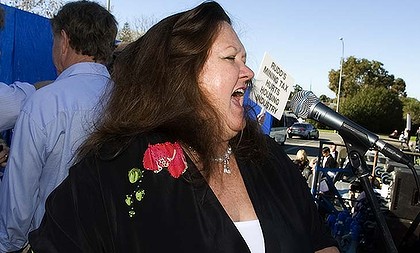
I remember the image on TV, these billionaires chanting, sounding like, “Billionaires united, we’d never be defeated!!” with all these pathetic little people carrying pristine clean, fresh off the printing press placards supporting the billionaires. Unbelievable! Until you remember the same kind of images of Tea Partiers in the USA. The Tea Party, it would be OK if they used the word Tea to mean what it meant in the 1950’s, the street name for marijuana because it would be a joke. Alas, it doesn’t mean that and when they talk about the movement being a grass roots one, well, it has now been called an astroturf movement. The right wing in Australia has taken any lessons from the Tea Party and have imported them into the Australian context.

The truth has just come out via a video recording about what the Australian 1% really are planning. They want a Fox News kind of media that is a propaganda machine for the 1% super rich and right wing free market believers. In many ways they already have it in Australia with Murdoch owning over 70% of news outlets. However, this isn’t enough. They want to take over Fairfax which runs the Sydney Morning Herald, The Age and the Australian Financial Review. This means that the 1% (actually we are talking about mining magnates that are probably in the top 0.0000001%) will have ALL media outlets sympathetic to climate change denialists and billionaires who believe that corporations are people.

One of the most worrying aspects to all this is the following quote :

“Fascism should more properly be called corporatism because it is the merger of state and corporate power.” — Benito Mussolini

This is happening in the USA, UK and now most of Europe. In Australia it is beginning to do so in a big way and if the conservative Liberal/National Coalition wins the next election it will be done. Corporatism / Corporatocracy / Fascism does not necessarily have to embrace racism, though it does most of the time. As long as there is access to cheap labour, the transnational corporations are happy. This is why Gina Rhinehart and her buddies are keen to have temporary visa holder workers in their mines.

Watch the video below and see why Rhinehart is buying Fairfax shares. Watch it and make a vow that you will do whatever you can, in a peaceful way to stop them. Labor are you listening?

https://www.getup.org.au/campaigns/mining/monckton/monckton-speaks-to-mining-industry-share-this-video

Gina Rhinhart at the Billionaires' Demo Against the Mining Super Profit Tax

Billionaires United Will Never Be Defeated!!! Mining Tax Rally in Perth, Western Australia


Standing at the Gate – Haruki Murakami

February 3, 2012

I’m having issues with my writing. In particular with the novel I’ve been working on. Haruki Murakami’s quote below reminds me that I am always a beginner, in a Zen way when I write. The quote below also reminds me that whatever comes out of me, if it is a genuine expression of my deeper nature, will always have an unknown and magical quality.

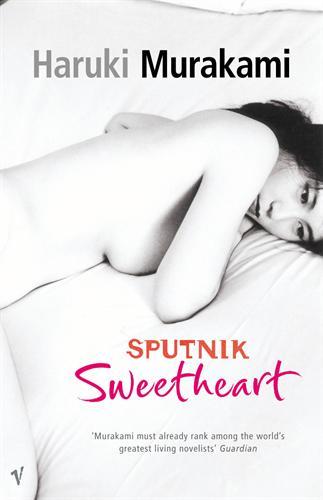
“…in China today there are lots of wonderful gates still standing. Do you know how the Chinese built these gates? People would take carts out to old battlefields and gather the bleached bones that were buried there or lay scattered about. China’s a pretty ancient country– lots of old battlegrounds– so they never had to search far. At the entrance to the city they’d construct a huge gate and seal the bones up inside. They hoped that by commemorating the dead soldiers in this way they would continue to guard their town. There’s more. When the gate was finished they’d bring several dogs over to it, slit their throats, and sprinkle their blood on the gate. Only by mixing fresh blood with the dried-out bones would the ancient souls of the dead magically revive. At least that was the idea.     Writing novels is much the same. You gather up bones and make your gate, but no matter how wonderful the gate might be, that alone doesn’t make it a living, breathing novel. A story is not something of this world. A real story requires a kind of magical baptism to link the world on this side with the world on the *other* side.”

Haruki Murakami, from Sputnik Sweetheart


4 days to freeze Mubarak’s billions!

February 16, 2011

I don’t normally send a message asking you to respond by email for any organisation. However, I’m doing so now because it sickens me that a dictator who has been receiving billions of dollars of aid from the USA has used it to line his own pockets rather than help his own people. Yes, I’m talking about Mubarak.

Please sign the following petition below and we may find that he has all his funds frozen. With any luck he may even be charged with corruption.

==============================================================

Dear friends,

Mubarak may have stolen $70 billion from Egyptians — one third of their national income! The new Egyptian government is calling on the world to get it back. Sign the emergency petition for world leaders to immediately freeze his assets before the funds disappear, and then forward this message!

Egypt’s people have forced Mubarak out, but he may take unimaginable wealth out with him. Estimates of his stolen fortune range as high as $70 billion, more than a third of the annual Egyptian national income!

The new government is calling on the world to immediately freeze his assets in foreign banks, and a new UN Convention requires that stolen funds be returned to the country. Switzerland has already frozen his finances, and some EU leaders have offered to help — but only a massive outcry will get all governments to stop the Mubarak billions from vanishing into a maze of obscure bank accounts.

The G20 finance ministers meet this weekend — that gives us 4 days to call on leaders to freeze the accounts and ensure that Egypt’s money is returned to the people. If we reach 500,000 signatures by Friday, the petition will be delivered in Paris — sign now and spread the word!

http://www.avaaz.org/en/freeze_mubaraks_stolen_fortune/?vl

Millions of Egyptians live on less than $2US per day — yet experts say that corruption costs Egypt more than $6 billion in public money per year. The Mubaraks themselves have benefited massively from a web of business deals, crony-capitalist privatization schemes, and state-guaranteed investments throughout Mubarak’s 30 years as president. Estimates of their wealth run from a “mere” $2-3 billion to the staggering $70 billion figure, which would make Hosni Mubarak the world’s richest man. And 25 senior government officials are already under investigation for amassing fortunes while serving under him.

But the days may finally be over when corrupt rulers can escape with their fortunes intact. The new United Nations Convention Against Corruption explicitly calls for the return of corruptly-gained assets to the countries of origin, and Egypt’s military government has already asked European Union governments to freeze Mubarak’s fortune. The key question now is whether action will come fast enough: all the laws in the world won’t help if the Mubarak billions are shuffled out of sight before authorities can seize them.

Our voices as citizens can help the people of Egypt make good on the promise of their revolution. Join the call for Egyptian wealth to go back to the people of Egypt:

http://www.avaaz.org/en/freeze_mubaraks_stolen_fortune/?vl

As millions of Egyptians risked — and even gave — their lives for democracy, there was little that we around the world could do beyond send our hopes and solidarity. But now, in the aftermath of Mubarak’s ouster, we have a special responsibility: to ensure that our banks do not profit from the corruption of Mubarak’s government, and to do our utmost to restore the national property stolen by a dictatorship that our own governments tolerated for far too long. The people of Egypt are ready now to build a new nation. Let’s play our part to see to it that they regain the resources that were once taken from them, as they create the future that few dared to dream possible.

With hope,

Ben, Alex, Ricken, Mia, Rewan, David, and the whole Avaaz team

SOURCES

Washington Post: “Egyptians focus their attention on recovering the nation’s money”
http://www.washingtonpost.com/wp-dyn/content/article/2011/02/12/AR2011021203767.html

Egypt’s Mubarak Likely to Retain Vast Wealth; Mubarak Family May Have as Much as $70 Billion Stashed Away, Experts Estimate
http://abcnews.go.com/Business/egypt-mubarak-family-accumulated-wealth-days-military/story?id=12821073

Seize Money Stolen by Mubarak and Return it to Egypt
http://www.aljazeerah.info/Opinion%20Editorials/2011/February/15%20o/Seize%20Money%20Stolen%20by%20Mubarak%20and%20Return%20it%20to%20Egypt%20By%20Paul%20Dunk.htm

EU looking to freeze assets of Egyptian regime
http://euobserver.com/?aid=31805

The United Nations Convention Against Corruption
http://www.unodc.org/unodc/en/treaties/CAC/convention-highlights.html#Asset_recovery

Support the Avaaz community! We’re entirely funded by donations and receive no money from governments or corporations. Our dedicated team ensures even the smallest contributions go a long way — donate here.


Lost in Damascus, Syria….

June 17, 2010

A month after leaving Mount Athos in Greece (May, 2000) I arrived in Damascus, Syria. I left my bag in the hotel and found my way to the Jordan Embassy. I needed a visa to get across the border to Jordan and I arrived five minutes late. The embassy officer was adamant I had to return the next day before 11.00AM. I was frustrated and irritated but I decided rather than give vent to my negativity I’d just walk in any direction to see what happened.

I walked streets with only Arabic signs and scripts.

My travel guide book gave the street names in English only. I walked by houses with concrete veneers and gardens on terraces, vines entwining telephone polls and wires across a lane making an arch of leaves, palm trees swaying in the dry breeze rooted in concrete pavements, lurid red and blue posters of the latest film shows on billboards and walls. I kept walking sensing the Syrian sun on my face and discovering I had no marker, no point of direction back to my hotel.

I was lost in the streets of Damascus.

There were flashes of deja vu, definite sensations and feelings I had been there before – a familiarity on the tip of the tongue. Maybe I was here in a previous life. I was lost in a place that felt like a long forgotten home. My stomach rumbled and I saw a restaurant with vats and tables outside on the street. I went in and found a seat at a table with four other men, one much older sat beside me. He began speaking to me in Arabic. When I replied, “Yunan, English” meaning Greek or English he spoke even louder so that others from tables nearby turned their heads towards us. I repeated, “La (no) Arabic – Yunan (Greek), English” pointing to my mouth. The old man had a short white beard that seemed to brighten when he shook his head. The others around our table stared at me.

I said, “I’m Australian – Australos – English or Greek – Yunan.”

A few tables away a man with a black moustache called out, “You from Australia?”

I said, “Yes”.

“Then why this?” He pointed to his face and drew a circle around it in the air and then pointed at me. Shrugging his shoulders he extended his arms in front of him.

He was saying in hand talk, “How come you look Syrian but claim to be Australian?”

I said, cradling an imaginary baby in my arms, “Baba, Yunanistan,” then I made my fingers walk in the air saying, “Australia.” I went to Australia as a baby from Greece. The others in the restaurant, even the owner were watching this exchange. They smiled and the man who asked the questions said, “Hey, I come and be with you.”

He was in his late thirties, slim with a certain earnestness about him as he walked towards my table. He squeezed between the two men sitting opposite me. By now his presence had made my table invisible again.

He said, “You from Australia? I know a little English.” I told him about my trip from Greece via Turkey, to Egypt and that I’d be leaving very soon for Jordan.

He asked,

“Where are you going now?”

“The old souq (market). I have lost my way and stopped to eat here.”

“Ah, good. I’m going to a library and the souq is on the way. I will show you where to go.”

There was a certain radiance about him, as if there was a tiny grain of the sun burning in his chest. He nodded, “I understand much better in English than I speak.” Something in the way he said “understand” touched me.

For no apparent reason I said, “One of my wishes while travelling through your land is to meet someone who is wise in the way of the Sufi,” I paused and in the silence I added, “I visited Rumi’s tomb in Konya, Turkey, how I dearly wish to visit Ibn Arabi’s tomb in Syria.”

“You know Ibn Arabi?” he asked surprised, “you know of our saints?”

“Yes, only a very little. I have read about Ibn Arabi in English. What little I know of him has touched my heart. I wish to pay him my respects.”

He said, “Come, let’s go. I want to take you to a special place, a surprise place for you.”

There was this instant trust between us. As we walked under a concrete bridge near a busy intersection he said, “You’re not a tourist just going click, click, click with a camera. You know something of my culture. Islam?”

The way he said “Islam” prompted me to reply, “I’m a Christian and I believe that all religions speak of one truth but in different tongues and styles. I’m searching for truth and anywhere I can find it I value it.”

“I will take you to Ibn Arabi’s tomb.”

“What here in Damascus?”

“Yes, just around the corner. You must not speak. Just copy everything I do. You look Syrian, only your tongue gives you away.”

I wondered why I had to pretend to be Syrian and not speak when we arrived at the saint’s tomb. I figured that it was a very small price to pay – to be silent. We passed some men sitting on wooden boxes playing backgammon on a small table. One of the players smiled at me revealing a toothless mouth. The streets of Damascus are mostly narrow and crooked. Saint Paul lived on Straight Street near where we were. We turned a corner going down a narrow lane and finally arrived at a small door in a stone wall of a mosque. As we entered we  climbed down some narrow stairs that lead to a silver cage enclosing a small tomb. It looked like a big beautiful bird cage on the floor.

Others already there were prostrating on their knees and lifting their torsos up while silently moving their lips to prayer. My friend indicated that I stay beside him and as he went down on his knees I copied his movements. I bowed and touched the floor near Ibn Arabi’s body. I was amazed that I was there in front of his tomb, a tomb that has been there for hundreds of years.

Muhyiddin Ibn Arabi (1165 – 1240) was at the centre of an extraordinary flourishing and cross fertilization of Jewish, Christian and Islamic thought in the Moorish culture of Andalusian Spain. He was a Spanish mystic who had a huge and subtle influence on both East and West. In his early childhood he was recognized and taught by two women saints, Yasmin of Marchena and Fatima of Cordoba. Dante’s “Divine Comedy” was influenced by Ibn Arabi’s work.

As I looked through the cage, the more I saw, the less I knew. Who am I? Why am I here? I smelt a delicate fragrance in the swirls of prayer around me. After about a quarter of an hour we arose and left. While climbing the stairs I took one final look at the small tomb of a great man. I felt my own smallness and my own limitations as a “man”. Somehow, even though his body had lay there for so long I felt something emanating from the space that contained Ibn Arabi’s remains. I wondered whether it was his own emanations that remained there or if the people who came to offer their respects and prayers left “soul stuff” that gradually accreted over the years so that one could feel a palpable presence in this small space. Maybe it was both and was it the same in other sacred places?

Mahmoud told me that it was Ibn Arabi’s special mission to scatter Sufi seeds onto diverse contemporary fields of learning accepted by the people so that they would come to recognise the One Love behind everything.

“Now, let us go to the special place I promised I will show you,” Mahmoud said with a grin.

“I thought Ibn Arabi’s tomb was the special place.”

“Yes, it is special and this other place is special in a different way. I won’t go to the library today, it can wait. I will spend time with you.”

I was curious as to what special place he had in mind. As we walked we mentioned various authors and books to each other and we were amazed that we recognised each other’s references. The theme was the search for truth and the miraculous. I was excited by the prospect of meeting a Damascus local who may have contact with people who understood the inner essence of Islam and who could sense or know the same essence in Christianity.

After a while he said, “You know that Christians, Moslems and Jews are cousins? Abraham was our common ancestor, our common source.”

We were at the large courtyard of the Omayyad Mosque. Mahmoud said,”It is interesting that this mosque was built on land that was sacred before Mohammed. It was used as a place of worship 3,000 years ago by the ancient Syrians. Then it was a pagan temple for Jupiter during the Roman era. Then it was… no, wait for the surprise.”

Omayyad Mosque, Damascus, Syria

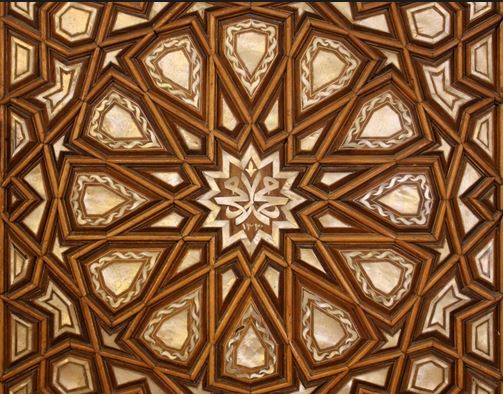
We walked on beautiful geometric patterned tiles. These patterns were repeated on some of the façade and walls. The doors also had hand carved patterns that looked like they were lifted from crystal reflections. I felt as if I walked into a world of lattices, a net of lines, a web of relationships numerical in kind and geometric in shape. I took my shoes off and entered the main door. Inside was a cavernous space, Mahmoud pointed out a section of the wall with mosaic panels made of coloured and gilded glass. He told me that all the walls were decorated like this centuries ago. The prayer hall had a small domed shrine near where we stood.

Lost in Damascus Umayyad Mosque geometric

Omayyed Mosque

Approaching the shrine, Mahmoud said, “This is the surprise. The shrine contains St John the Baptist’s head and maybe his body!” Surrounding the shrine were Moslem people bowing and praying. I asked, ”Why the prayers for St John the Baptist? Why is his tomb here in a mosque?” Mahmoud delighted, said, ”Yes, I knew it would surprise you. This place of worship many centuries ago had divine services for both Christians and Moslems. The Christians worshipped in one half of the space and Moslems worshipped in the other half. Together Christians and Moslems worshipped under this same roof.”

I paid my respects to St John the Baptist, this time crossing myself the Greek Orthodox way. No one took exception to me for doing so and as we left I felt a real connection between our two faiths. Mahmoud explained to me that Jesus was a prophet and Mary his mother was revered in Islam. He told me that St John the Baptist was revered by Moslems as a saint. Mahmoud was right, this place was a special place and that it would surprise me. He invited me to his home which meant that we had to catch one of the many small service taxis (mini buses) that were everywhere on Damascus roads. Road rules didn’t seem to count here as our bus swerved in and out of lanes with no indication and turned corners without slowing down. While our bodies moved this way and that in concert with the bus I was curious as to how Mahmoud would take my experience at Rumi’s tomb in Konya, Turkey.

I said, “While I was visiting Rumi’s tomb I felt that I could only pay my respects as an Orthodox Christian but could only do this in a hidden way. I couldn’t externally pray like the Moslems around because I’m not Moslem and at the same time I couldn’t pray as a Christian outwardly because I did not want to offend those around me. So I held my hands together in front of me and inwardly I imagined my right hand making the shape of a cross. In my faith, the thumb stands for the Father, the index for the Son and the next finger, the Holy Spirit – the Holy Trinity. My ring finger curled into my palm signifies the divine nature of Christ and the little finger is the human nature.” I showed him the tripod of fingertips and my curling fingers. I continued, “So, in a manner of speaking my hand reflects the whole of my faith. I move my right hand with the thumb and my first two fingers joined together. Firstly to my forehead, then to my belly, then to the right of my heart and then to the left of my heart – three times. I did this inwardly while silently chanting a prayer. Outwardly I was standing with my head bowed and hands together but inwardly I was actively praying in the Christian way. Tell me Mahmoud, did I do the right thing for Rumi?”

We jolted forward as the bus swerved around another corner. Mahmoud said, “My friend it is obvious to me that your intentions were pure. You were in pure heart and so whatever you do in such a state is pure. You can do what you will and it would not be wrong because of your state of mind and heart. So, you did the right thing.” He stopped and looked at me eye ball to eye ball.

“By the way,” he said,”did you know that Sufis, the People of the Path are also called esoteric Christians?”

“No,” I said, “What of our cousins the Jews?”

“Rabbi Jesus is also revered by Jews in touch with the hidden stream.” He smiled and gently touched my hand, “You and I are seekers of truth and as such we are not caught in the literal meanings of scripture and sacred texts. It is these literal, fundamental meanings, dogmas that create misunderstanding between our religions and ways of being in the world.”

I couldn’t agree more but this didn’t mean that individual and unique differences that make up a particular set of beliefs were obliterated. No, it seems to me that seeking the essential truth behind the formal, literal truths was a way of freeing one self from narrow mindedness and the razor wire of fundamentalism. And I don’t just mean religious. To name a few – scientific, economic, political, psychological, philosophical, artistic ….in fact, name an activity and it can be done and thought of in a fundamentalist way.

Mahmoud lived in one of the many concrete and cement apartments in down town Damascus, right under the arc traced by missiles from Israel. He was very lucky he told me because he had a ground floor apartment with some earth for plants. A wooden door from the street set in a large wall was the entrance to his home.

He introduced me to his wife and two daughters, his father and mother and his brother as “Stavros from Australia”. His wife Jamil brought some tea in glass tumblers and sat next to me. She said, “Pleased to meet you and welcome. I want to show you a book. I am learning English.” I was touched by the effort she put in saying this to me in English.

We were sitting around a wooden table in the enclosed area behind the wall facing the street. Mahmoud pointed to a fountain and pool, the size of a bathtub on our right . He said,”I and my brother made this fountain.” It was made of cement with inlaid patterns of shells, coral and pebbles. The shape was more like a cumulus cloud than rigid lines of concrete blocks. The water spouted from a bowl in the centre while the spirals, circles, squares and triangles of the fountain’s container looked on with mosaic eyes. I walked over to it and admired the detail of their work.

Meanwhile Mahmoud’s father, mother and brother brought cucumbers, tomatoes, shallots, radishes, cheese, bread and boiled eggs to the table. Soon after, falafals, humous, fried eggplant, cinnamon beans and dips were added to the table. Everybody sat around the table with the young girls at one corner each. We each had a plate on which we placed what we wanted from the dishes before us. Everybody was interested in this stranger from the other side of the planet – Australia. In my shoulder bag I carried postcards of Australia to give to new friends. I pulled some out and passed them around – pictures of kangaroos, koalas, Sydney Opera House, Uluru and Sydney Harbour Bridge. Everybody recognised the kangaroos.

Jamil brought over a book on the English language. She was studying English on her own using this book and some tapes. Her husband Mahmoud helped when he could but he was not fluent in English either. She said,” Please, may I read and you tell me if sounds true? Please?” She read some dialogue between two people. One was asking for directions and the other answered. The only thing missing in her delivery was confidence.

As I sat there with this Syrian family I thought about philoxenia, “Friend of the Stranger” the Greek word for “hospitality” which in the original denotes something sacred and more open than “hospitality”. It is mentioned in Homer’s “The Odyssey” where Odysseus experienced philoxenia often in his travels. My new friends expressed philoxenia in such a way that it brought tears to my eyes. I was a stranger in their midst and they offered me friendship, food and comfort. A bond grew between us that had its strength in our common humanity and the fact that everyone is a stranger away from home. Mahmoud and his brother asked me what hotel I was staying at and then phoned for a taxi to take me there.

While waiting for the taxi Mahmoud said, “I want you to have this.” In his hand were some worry beads. I showed him the worry beads my uncle gave me in Greece. The Greek ones I had were more solid and heavier with round beads. Mahmoud’s were smaller and the beads were like long brown rice grains. We compared them.

He smiled, “Well you now have Syrian worries to keep your Greek ones company!”

Mahmoud and his brother rode with me to my hotel in the taxi. They would not allow me to pay for the fare. They just wanted to make sure that I was taken to the right place.

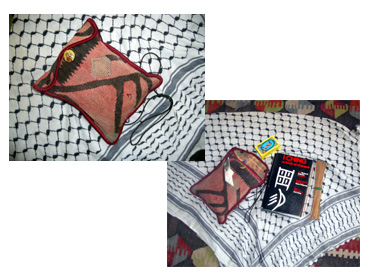
In Damascus, Syria, I found true philoxenia not xenophobia. Now I had a paper boat from the Holy Mountain and a set of worry beads from the Middle East to take with me back to Australia. When I returned to Australia I put these in a special bag where I kept other important things like hand made amulets, pellets of rose incense, a smooth stone from Dodona, crystals, a small wooden cross from Jerusalem, a tiny rock from Mt Sinai, a stone from an Aboriginal Elder in Australia and some holy oil from a small monastery of nuns near the birthplace of my father in Greece.

The bag, made of an old Turkish rug remnant was wrapped in a Palestinian keffiyeh from Bethlehem, along with the Chinese “Book of Changes” – the I Ching and Tarot cards. These four items were my psychic technology backup; just knowing they were there helped me on my journey to Nauru four years later. When we returned from Nauru the last item to be put into my special bag was the frayed remainder of the Southern Cross flag that flew on Eureka, the boat I sailed on. It was placed on top of the other things soon after we left South Bellona Reef on our way to Nauru.

My Spiritual Kit Bag with psychic technological backups, to be used in case of emergency sailing to Nauru!

A  few days later I visited Palmyra, about 100 miles east of Damascus, near the border of Iraq. Palmyra has the best preserved Roman ruins in the world. The stone buildings all have a rose tint and you feel like you are entering a Roman city with rose tinted sunglasses on.

Here’s a picture or two of what I saw. Another time, another story.
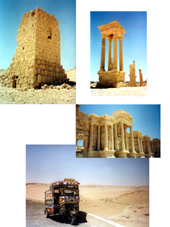
Palmyra, Syria. That little taxi takes you everywhere.

Submissions for current Refugee Issues UNHCR >> Dadaab Refugee Camp

May 27, 2010

Hi

I received this today. Those who can please send in a submission for the Dadaab refugees.

Below the reminder is the document and submission form.

stavros

============================================================

A reminder that the Australian Refugee Rights Alliance (ARRA) is calling for brief submissions from individuals and refugee community groups regarding current issues of concern to refugee populations in and from the Asia Pacific, Middle East and Africa regions.

The due date for submissions is 31 May. Please see the attached information sheet for further details on making a submission. Feel free to distribute this information to your networks. If you have any queries, please feel free to contact me as per the details below.

We look forward to receiving your submissions!

Kind regards, Lucy Morgan Information & Membership Officer Refugee Council of Australia

Suite 4A6, 410 Elizabeth Street Surry Hills NSW 2010 Phone: 61 2 9211 9333 Fax: 61 2 9211 9288 email: info@refugeecouncil.org.au

www.refugeecouncil.org.au

====================================================

INVITATION FOR SUBMISSIONS

TO THE UNHCR- NGO CONSULTATIONS

The Australian Refugee Rights Alliance (ARRA) is calling for brief submissions from individuals and refugee community groups regarding current issues of concern to refugee populations in and from the Asia Pacific, Middle East and Africa regions.

ARRA is a coalition of Australian NGOs, refugee advocates and academics. Organisations involved in ARRA include the Centre for Refugee Research of University of NSW, Refugee Council of Australia, Amnesty International and Act for Peace (National Council of Churches).  Each year, representatives from ARRA travel to Geneva to participate in the United Nations High Commissioner for Refugees’ NGO consultations.

Prior to the UNHCR meetings, the group prepares a comprehensive set of documents addressing policy issues of shared concern. This process enables more effective advocacy at the meetings by ensuring coordinated and targeted action by the Australian delegation. In 2010, the meetings will occur in late June.

Individuals and refugee community groups are invited to make submissions on issues they would like to recommend that ARRA put forward during the meetings with UNHCR.

ARRA is particularly interested in current issues of concern to refugee populations in the Asia Pacific, Middle East and Africa regions, however issues of concern to refugee populations in other regions of the world are also invited.

 Some possible themes you may choose to use include:

  • Women at Risk
  • Protracted Refugee Situations
  • Xenophobia/Racism 
  • Families at Risk
  • Urban Refugee Policy

 How Can I Contribute to the UNHCR NGO Consultations?

You can submit a brief submission to us, focusing on any current issue, but it should be limited to one page in length.  We will then read your submission contact you for more information if required and do our best to include your issues in our papers for discussion at the UNHCR in late June. 

 Please return submission application form with your submission to Lucy Morgan at the Refugee Council of Australia (RCOA).

 All submissions must be received by 31 May.

Submissions must be received by 31 MayVia post or email:  
ATT: Lucy MorganRefugee Council of Australia (RCOA)  
Suite 4A6, 410 Elizabeth Street,Surry Hills NSW 2010

Tel: 02 9211 9333

Fax: 02 9211 9288

 
Email: info@refugeecouncil.org.au  


Submission Form        


Name:  
Organisation (if applicable):  


Contact Information:


Address:  
Email:  
Contact Phone Number:  
Country of Origin:  


Topic of Submission:


Regional Focus (Asia, Africa, Middle East, other)  
Country Focus:  


Issues Covered in Submission:
1.2

3.

4.

Recommendations to UNHCR  
1.2.

3


* * Please Attach your 1-page Submission


21st Century – Baptism in Electromagnetic Mist?

May 22, 2010


If anything the twentieth century will be remembered as the century that matter disappeared according to our high priests of Science. Twentieth Century physics has dematerialised matter before our eyes and under our touch. Further it has given a pattern of nothing as the source of the dematerialised matter. When I write “nothing” I’m referring to “no thing”. While we prang our dematerialised cars and battle over dematerialised resources nature continues to create and make life with her templates. These templates aren’t material, unless you consider subatomic vibrations matter. These templates are more like magnetic resonances – wavicles, perhaps, that influence and direct the exteriorization of the tree, the flower and the emu. These morphic resonances, as Rupert Sheldrake calls them, operate in the region of no matter, inside nothing.

As we witness the shift from a material world to the immaterial world we are also experiencing a fracturing of the idea of specific location in space – telecommunications in all its diversity is bringing the globe to one’s home. Video conferencing in virtual rooms with participants from all over the world are a reality now. The next step is to produce a lifesize holographic moving image – holographic TV – with global video conferencing capabilities. Chat Rooms on the internet screen will change to Chat Rooms in your living room with cyber holographic avators for company. The idea that you can’t be in two places at once will be even more untrue.

So, we have one trend that is dematerialising and another that compresses distance.

We also have the trend that the above two is potentially true only for a small proportion of humanity and practically true only for a smaller proportion of this group. This double small proportion of humanity who has access to this knowledge and technology also uses up most of the planet’s resources while the greater majority of humanity is undernourished and living in poverty. In this case we have the trend of concentration of power in the hands of the few and the dematerialisation – the dying of the many.

This is true from a global view.

The global nervous system (that is in one of its foetal stages) of telecommunications has connected all continents and every square inch of the earth’s surface has been traced by geostationary satellites. Google is photographing every street and house being used as locations on their Global Map. GPS enabled mobile phones and in car mapping shows that we are now immersed in an electromagnetic mist of data.

If earth is denser than water, and water is denser than air, and air is more dense than heat, then it is easy to see that heat and air are more dense than the electrographic data that is now sparking through the global nervous electrographic system.

We walk on earth, we drink water, breathe air, need the heat of the Sun – what is the experience of electrographic data ( telephone, TV, internet, GPS, satellite communications etc) ? We don’t eat it, drink it or breathe it and yet it is an element of our experience and it is permeating our being more everyday. What are the implications of our immersion in this “matter”.

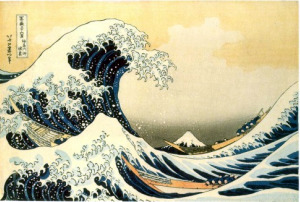
Hokusai

There is baptism by water and by fire. What is this baptism in electronic – data mist?

stavros


Turning Inwards

April 27, 2010


This is a transcript of a talk I gave in Darlinghurst, Sydney quite a few years ago. It is my understanding of the need for Self Observation and Self Remembering which can only truly begin when we turn inwards.  Everything written below is based on my understanding of the Gurdjieff Work. I gave the talk as part of the Sydney Group.

Stavros

=============================================================================

 We always imagine ourselves to be much higher than we actually are. We take it for granted that we are individuals, that we have consciousness and that we can ‘DO’. But there are moments in our life when events and situations might shock us into recognition that we do not know where we are going and that our own efforts to control and direct our lives have been in vain. In these moments we feel an emptiness, a void which cannot be filled by social position, friends or wealth.

It is in moments like these that we are given an opportunity to re-evaluate our so called individuality, consciousness and will, in other words, to re-evaluate the image we have of ourselves. If we are sincere in these moments we recognise that the image we have of ourselves is not us at all but rather a mask which we very rarely see through. Life through our sincerity has brought us to the question of ourselves. If we are not individuals with the power to be conscious of our actions and thus direct our lives, then who and what are we? Who am I? What is my place in the scheme of existence? In the face of such questions, we realise that we have a need to know ourselves for ourselves and through ourselves.

 If I wish to know myself and through this knowledge to know the real world, how do I begin? How do I make the right effort to turn inwards to myself and what is the right effort? It is at this point of our own search that we recognise the necessity to study the methods of self-study, which lead to understanding and eventually knowledge of ourselves. Whether alone or with others we have found ourselves in unfamiliar territory. In this region of the unknown we may hope that the forces active on this level will send us the help we need.

To have any chance of reaching our goal of self-knowledge without losing ourselves we need a guide. Here, as elsewhere, we must learn from those who know and accept to be guided by those who have already trodden the same path.

The guide cannot walk our journey for us, the guide cannot turn my attention inwards to myself. All that the guide may do is to point out the pitfalls and obstacles which lie along our path and whether we understand the methods of self-study. On this path understanding is our only currency and our only means by which we may pay for the help we need. The understanding spoken of here is completely different to the intellectual knowledge which our modern science has accustomed us to. It is for this reason that real self-knowledge requires a school. It cannot be found in books, which can give only theoretical data, mere information, leaving the whole of the real work still to be done – to turn inwards towards our own inner experience and transform information into understanding through consciously living what we are.

 If the turning we are speaking of is not only of the mind, but the whole of us, and if we realise that we are not the image we have of ourselves then what can the words ‘the whole of us’ mean? Here we come across our own doubts, confusion and resistance. The words come easy but the turning required is not as easy as hearing and saying the words. We listen, we speak, but over and over again we are taken by the disorder of outer activity and find ourselves falling prey to doubts, fantasies and sterile words. This is the beginning. It is this awareness which will provide the experience of a real wish to resolve this inner confusion.

When we try to observe ourselves we see that we have to remain attentive both to ourselves and to a particular aspect of ourselves. We realise that this turning is not given to us spontaneously and that the attempt to turn with the whole of ourselves is dependent up the participation of three factors or forces. These are ‘I’ who observe face to face with what ‘I’ observe within myself and the third factor which connects the two – our attention.

Taking these three factors into consideration we will speak firstly about attention. Our usual state of attention is one in which we lose our identity in some activity – be it reading a book, talking to a friend, listening to music, hammering a nail, or just simply daydreaming. This is known as identification. Identification has different ways of manifesting within ourselves depending upon the activity. One of these ways is when we drift from object to object, from sight to sound to thought to a sensation with no apparent aim, no apparent direction: it is automatic. Or, our attention is attracted by something which exercises a strong hold – an argument, a beautiful face, a memory of some place or person. In this way we are drawn by our interest and the situation takes over ourselves. Another way in which our attention is spent is when we direct it by a simple effort for a certain time intentionally – making something, studying, playing a musical instrument, cooking, sewing. The common element we find in each of these ways of paying attention is that we are aware only of one thing at a time. This is our ordinary state. We can be aware either of the person we are talking to, or of our own words, of a pain in my body, of a scene, or of my thoughts about the scene. But, except on very rare occasions, we are not aware simultaneously of our own words and the person we are addressing, of my own pain and someone else’s, of a scene and my thoughts about it, of my situation and my feelings of it. The attention which is needed to turn inwards so that a self study may begin is such a divided attention.

 Divided attention is from another level within ourselves. It is the attention which at the same time of observation takes into account everything we are. This two way attention requires an attitude very different from our usual one. When we first make the effort to turn inwards our attention goes one way, then another, sometimes towards what I observe in myself, alternating at a faster or slower speed. This happens as easily in one direction as another. Though this attention is not given to us naturally, the attempt to observe oneself generates the energy for divided attention artificially. This very attempt is an exercise which develops the needed attention and makes it possible so that it can grow to the point where self-study may begin. In the beginning there is no stable support on which our attention can be based. Real self-observation appears to us to depend as much on this support as on the attention itself. From this we understand that the three forces that must be present are closely interdependent.

The second factor is “who” observes. We said earlier that self-observation requires “the whole of ourselves” and not just our analytical mind and we realise that with our usual attention and attitude we become identified with the situation at hand. When we are identified we are not present to the situation. We become totally attached and there is no space for the sense of myself. With our normal attention there is no ‘I’ which is the stable support to observe particular aspects of my life. For real self-observation to be possible ‘I’ must be present while the observation is going on. The sense of ‘all of me’ is the ‘I’ which is able to take into account in the field of attention directed toward myself a greater number of elements. The ‘I’ who observes has a field of vision analogous to that seen through a fish eye lens which has a more global perspective when compared to the normal natural view.

When ‘I’ is not present (which is our normal state) we forget ourselves almost uninterruptedly. In us things do themselves – speaking, laughing, feeling, acting – but they do it automatically and we ourselves are not there to witness. One part of ourselves laughs, another speaks, another acts.

There is no feeling that: I speak, I laugh, I act, I observe. Nothing that is done in this way can be integrated into a whole. Life lives itself through us and we are not there to partake of it. From this we understand that what we truly seek is more abundant life.

If our usual state is one of forgetting ourselves then the need to have a stable presence of ‘I’ may be fulfilled by trying to remember ourselves.

 This stable presence is not given to us by merely knowing about it. It can be acquired after long work on ourselves but even now we can have a relative degree of presence, a certain coherence of all that we can collect in ourselves.

Self-remembering is the attempt to have global awareness of oneself. It is the state where I am conscious that I am here in these surroundings and feel a connection with the surroundings around me in the overall presence of something higher. This sense of something higher is connected with the valuation of our own essential question. It may be our own aim in the light of our search, it may be the Sun from which all life on this planet has its on-gen, it may be our own meaning of God, or our own teacher. What is important in this effort to remember oneself is that it must be attempted by the sense of “the whole of ourselves and not just thought about. It is only when we try to make this effort that real self-observation can begin. When we try it we discover that without it we are constantly changing, constantly taken by events both within and without. We discover that all that we have gathered within ourselves is dispersed at the slightest distraction. We also find that in practice nothing is more difficult for us than to be there with enough stability for an observation.

The third factor which is needed to turn inwards is the object of our ob¬servation – the elements of ourselves, what we are. These elements constantly change and escape us altogether.Though the elements are in constant change the field in which these elements move is always there. When we notice other people we see their external behaviour which we all perform as a response to the demands of life. This external behaviour is directed by the functional structures comprising the field towards which our attention is directed. These functional structures are the same in all circumstances and are the result of what we are and what life has made of them. We see through our eyes and hear through our ears, we don’t see through our ears or hear through our eyes. The seeing and hearing are the functional structures of our eyes and ears respectively. Likewise, within ourselves certain behaviours, such as thinking, emotionalising and moving, are possible due to the functional structures which allow them to happen. However, the way things take place in us, the interaction of our functions and the manner in which they associate to produce our personalities and responses, all this goes on in the dark with out our knowing it. So, to observe the elements of ourselves we must do something special to make them visible.

When we strike a match against the chemically treated part of a matchbox the friction between the two creates a spark which becomes a flame, and we have light. For us to see the elements of ourselves we must likewise have friction between the ‘I’ who observes and the field which contains the elements.This inner friction is the struggle against the automatic aspects of ourselves: those moment by moment personages which are always there. The struggle is against the habits which give us the false image of ourselves.

 This struggle arouses the light of double attention which we need and forces us to confront those habits which keep us asleep, automated and engulfed in constant self-forgetfulness.

Self-forgetfulness, sleep, is our lot without struggle with our automatic selves. Mechanicalness and dreams replace our true birthright of freedom and reality. What am I saying?

I will illustrate with an example. I find myself waiting for a bus to take me to the bank. After buying the bus ticket my hands begin fidgeting. Soon my fingers begin to fold the ticket over, and over again, until it is a tiny cube like they have done hundreds of times before in the same manner. My head and left arm, in perfect synchronisation, move to the exact spot where my eyes can see the time on my watch. There is no real need to know the time since a moment earlier this same action was performed. My head is full of associations which whirl by in a random manner – a half-eaten memory of words exchanged over the breakfast table, an image of a television commercial, a song picked up from, I don’t know where, provides the background muzak. The bus arrives. Find my self at the middle of the bus bumping a man who grunts at me. Anger rises – there is no rebuke in words but my posture and face express it all the same. Sitting down, the realisation dawns that the bus ticket is no longer in my hand. My hands search my pockets, my eyes search the floor directly beneath my feet, my body is in all sorts of positions looking for the bus ticket. Simultaneously, the thoughts and emotions race through to the tune of “What will I say if the ticket inspector boards this bus?” No ticket. Soon memories float by and that time on the beach in North Queensland returns. While daydreaming I miss my stop because I find myself two blocks further than the bank which was my original destination. The button is pressed and the bus stops.

The above is what is meant by mechanicalness and sleep. This is how we are living most of our lives, and this state of consciousness which we call ‘normal’, is what we have sold our birthright for. Where is the man here? Where is the ‘I’ which if present and active would make my life real? Below is a description of what struggle with oneself may be.

I find myself on the street. I begin walking back towards the bank, I remember what happened on the bus. From somewhere within me the feeling ari¬ses that there is something wrong with myself. I, who can create grandiose plans for my future life, even to the place beyond the grave, can’t even re¬member to get off the bus in time. The words of Gurdjieff cut through my as¬sociations, ‘Life is Real Only Then When I Am.’ It is remembered with my mind that it is possible to turn inwards so that I may live and be present to my life. I see that I am not present but I know that I can be present. What I am can be remembered by who I am. The matchbox can be struck by the match. Oh! But it is so pleasant, so easy, to remain within my automatic nature, fully asleep to myself and the world. The effort required to struggle with myself is something more than the effort to earn my physical livelihood. Besides, it is an effort not required for my physical survival so why should I bother. Let me sleep on. And yet, if there is no effort, no struggle, to be . I am dead and only an automaton of flesh, bones and memory exists. I wish to live. I – the all of me – wish to be. The emptiness of what I am is passive – it is easily comforted with illusions and imagination that already I am and that I can do.

I long for life but where this longing stems from I don’t know and what this ‘life’ is which is longed for, I don’t know. This longing, this yearning for something which is unknown draws a part of my attention away from the surface associations and for a moment the heat of the sun is sensed on my face and hands. I have a body which is real, concrete and here and now. My body is the anchor of my longing. It is possible to turn inwards. The walking continues back to the bank. The longing for life is now expressed by a wish to see through my own eyes, to sense with my own skin, to hear through my own ears, to feel the ground beneath my own feet. I wish to move with my own whole body.

 It is remembered that the easiest functional structure to attempt to study is the moving part of myself. I wish to be, I wish to struggle with myself, I wish to slow down my walking pace so that the walking part of myself can be seen. My hand reaches for my coat pocket searching for a cigarette. That part of myself which longs for life gives the strength to say no to my hand but I promise a cigarette later if it allows presence to fill it. My mind is once again occupied with associations which pass through it automatically. I struggle to place in my mind a conscious image of myself being fully present at the entrance of the bank. My walking becomes faster. To be present at the entrance of the bank my walking pace must slow down again. Intimations of the shoe around my foot, sensation of heel touching ground, then the front part of shoe, slight pressure of my trousers around my knee as it bends, the sensation of my collar around my neck comes and goes, a breeze returns my face to myself via sensation. My pace is slower. Emotion arises – it is connected with what happened on the bus – anger with myself. My mind reminds me a little later that the only way to struggle with emotions at first is not to express negative ones. Associations arise with this thought, my mind continues in its deviation from the conscious image of myself being present at the bank’s entrance but the awareness of my walking and the growing sensation of my body keeps some attention on the elements of what I am.

 My body reminds me of the Sun for its heat is once again sensed on my hands and face. The longing, the wish to be, now evokes a decision to try with the whole of myself, with the awareness of my walking, with the denial of the cigarette, with the struggle against self-pity and anger, with the effort to control my thoughts, I now try with the whole of myself to place and feel myself and the immediate surroundings of the street under the Sun. For a split second time slows down and something which connects me and the external world opens and within the traffic noise, within the milk bar sandwich sign, within the garbage bin beside me, within the shop windows displaying goods and the people around me, within my footsteps and the body that senses the clothes on it, within the associations running through the mind, within it all the sense of another realm, a realm which seems to give Life to life enters and the question “Who am I?” echoes back to myself. This sense leaves me with the memory of an otherness and I find myself at the entrance of the bank understanding that I know nothing when it comes to the Real World.

With this effort of struggling with our habitual nature we must remember that the original aim for making the effort is so that the elements of what we are become visible. This is of fundamental importance because at this point lies one of the biggest obstacles on the path of return to ourselves. For something to become visible means that it becomes seen and nothing more. So with turning inwards all that is required at the beginning is that we see ourselves and simply record what we see and nothing more. Within the more lies the obstacle and this more is manifested within us when we try to analyse what we see. This analysis is the deviation of our attention from the whole of ourselves towards the relatively small part of ourselves we call the mind. Once we begin to analyse what we see we cease to observe and begin to imagine that we are observing.

We must also be careful that in hearing about the process of turning inwards and the methods of self-study that we do not fall into the trap of the rational, logical mind and reduce the real meaning of the words self-study, self-observation and self-remembering to mere psychologising. These words are signs on the path back to ourselves and since we do not know who we are, have meaning which goes beyond what contemporary psychology may imbue them with. It is for this reason that Vaysse in his Towards Awakening calls self-observation the secret ally. In a similar vein Don Juan tells Carlos Castaneda that the warrior who follows the path of the heart has an ally which is a power a man could bring into his life to help him and give him the strength necessary to perform certain actions. This ally, Don Juan says will make a man see and understand things about which no human being could possibly enlighten him.

At the beginning of this talk we saw that life through certain circumstances brought about a shock which forced us into recognising the futility of living from a false image of ourselves. We have seen that by making certain efforts we may turn inwards consciously. This turning inwards is dependent upon our own essential need and longing for our true home. Sincerity is the key which unlocks the door to ourselves and this door becomes visible through turning inwards. By turning inwards we see what we are and through this seeing we are given the help with which the search for who we are may begin anew with renewed strength and real hope.

 I finish this talk with the words of Rene Daumal which, I believe trace the journey from the false image of ourselves towards the values of our real self:

 I am dead because I lack desire

I lack desire because I think I possess

 I think I possess because I do not try to give

In trying to give, you see that you have nothing

Seeing you have nothing, you try to give of yourself

 Trying to give of yourself, you see you are nothing

Seeing you are nothing, you desire to become

In desiring to become, you begin to live.

stavros

PS Check out the 3 pointed attention idea in my post on Kites and Attention

https://dodona777.wordpress.com/?s=kites+attention


George Orwell >> Notes on the Way

April 16, 2010

Notes on the Way – George Orwell

Reading Mr Malcolm Muggeridge’s brilliant and depressing book, The Thirties, I thought of a rather cruel trick I once played on a wasp. He was sucking jam on my plate, and I cut him in half. He paid no attention, merely went on with his meal, while a tiny stream of jam trickled out of his severed œsophagus. Only when he tried to fly away did he grasp the dreadful thing that had happened to him. It is the same with modern man. The thing that has been cut away is his soul, and there was a period — twenty years, perhaps — during which he did not notice it. 

George Orwell

It was absolutely necessary that the soul should be cut away. Religious belief, in the form in which we had known it, had to be abandoned. By the nineteenth century it was already in essence a lie, a semi-conscious device for keeping the rich rich and the poor poor. The poor were to be contented with their poverty, because it would all be made up to them in the world beyound the grave, usually pictured as something mid-way between Kew gardens and a jeweller’s shop. Ten thousand a year for me, two pounds a week for you, but we are all the children of God. And through the whole fabric of capitalist society there ran a similar lie, which it was absolutely necessary to rip out. 

Consequently there was a long period during which nearly every thinking man was in some sense a rebel, and usually a quite irresponsible rebel. Literature was largely the literature of revolt or of disintegration. Gibbon, Voltaire, Rousseau, Shelley, Byron, Dickens, Stendhal, Samuel Butler, Ibsen, Zola, Flaubert, Shaw, Joyce — in one way or another they are all of them destroyers, wreckers, saboteurs. For two hundred years we had sawed and sawed and sawed at the branch we were sitting on. And in the end, much more suddenly than anyone had foreseen, our efforts were rewarded, and down we came. But unfortunately there had been a little mistake. The thing at the bottom was not a bed of roses after all, it was a cesspool full of barbed wire. 

It is as though in the space of ten years we had slid back into the Stone Age. Human types supposedly extinct for centuries, the dancing dervish, the robber chieftain, the Grand Inquisitor, have suddenly reappeared, not as inmates of lunatic asylums, but as the masters of the world. Mechanization and a collective economy seemingly aren’t enough. By themselves they lead merely to the nightmare we are now enduring: endless war and endless underfeeding for the sake of war, slave populations toiling behind barbed wire, women dragged shrieking to the block, cork-lined cellars where the executioner blows your brains out from behind. So it appears that amputation of the soul isn’t just a simple surgical job, like having your appendix out. The wound has a tendency to go septic. 

The gist of Mr Muggeridge’s book is contained in two texts from Ecclesiastes: ‘Vanity of vanities, saith the preacher; all is vanity’ and ‘Fear God, and keep His comandments: for this is the whole duty of man’. It is a viewpoint that has gained a lot of ground lately, among people who would have laughed at it only a few years ago. We are living in a nightmare precisely because we have tried to set up an earthly paradise. We have believed in ‘progress’. Trusted to human leadership, rendered unto Caesar the things that are God’s — that approximately is the line of thought. 

Unfortunately Mr Muggeridge shows no sign of believing in God himself. Or at least he seems to take it for granted that this belief is vanishing from the human mind. There is not much doubt that he is right there, and if one assumes that no sanction can ever be effective except the supernatural one, it is clear what follows. There is no wisdom except in the fear of God; but nobody fears God; there fore there is no wisdom. Man’s history reduces itself to the rise and fall of material civilizations, one Tower of Babal after another. In that case we can be pretty certain what is ahead of us. Wars and yet more wars, revolutions and counter-revolutions, Hitlers and super-Hitlers — and so downwards into abysses which are horrible to contemplate, though I rather suspect Mr Muggeridge of enjoying the prospect. 

It must be about thirty years since Mr Hilaire Belloc, in his book The Servile Sate, foretold with astonishing accuracy the things that are happening now. But unfortunately he had no remedy to offer. He could conceive nothing between slavery and a return to small-ownership, which is obviously not going to happen and in fact cannot happen. There is [little] question now of averting a collectivist society. The only question is whether it is to be founded on willing cooperation or on the machine-gun. The Kingdom of Heaven, old style, has definitely failed, but on the other hand ‘Marxist realism’ has also failed, whatever it may achieve materially. Seemingly there is no alternative except the thing that Mr Muggeridge and Mr F.A. Voigt, and the others who think like them, so earnestly warn us against: the much-derided ‘Kingdom of Earth’, the concept of a society in which men know that they are mortal and are nevertheless willing to act as brothers. 

Brotherhood implies a common father. Therefore it is often argued that men can never develop the sense of a community unless they believe in God. The answer is that in a half-conscious way most of them have developed it already. Man is not an individual, he is only a cell in an everlasting body, and he is dimly aware of it. There is no other way of explaining why it is that men will die in battle. It is nonsense to say that they do it only because they are driven. If whole armies had to be coerced, no war could ever be fought. Men die in battle — not gladly, of course, but at any rate voluntarily — because of abstractions called ‘honour’, ‘duty’, ‘patriotism’ and so forth. 

All that this really means is that they are aware of some organism greater than themselves, stretching into the future and the past, within which they feel themselves to be immortal. ‘Who dies if England live?’ sounds like a piece of bombast, but if you alter ‘England’ to whatever you prefer, you can see that it expresses one of the main motives of human conduct. People sacrifice themselves for the sake of fragmentary communities — nation, race, creed, class — and only become aware that they are not individuals in the very moment when they are facing bullets. A very slight increase of consciousness and their sense of loyalty could be transferred to humanity itself, which is not an abstraction. 

Mr Aldous Huxley’s Brave New World was a good caricature of the hedonistic Utopia, the kind of thing that seemed possible and even imminent before Hitler appeared, but it had no relation to the actual future. What we are moving towards at this moment is something more like the Spanish Inquisition, and probably far worse, thanks to the radio and the secret police. There is very little chance of escaping it unless we can reinstate the belief in human brotherhood without the need for a ‘next world’ to give it meaning. It is this that leads innocent people like the Dean of Canterbury to imagine that they have discovered true Christianity in Soviet Russia. No doubt they are only the dupes of propaganda, but what makes them so willing to be deceived is their knowledge that the Kingdom of Heaven has somehow got to be brought on to the surface of the earth. We have not to be the children of God, even though the God of the Prayer Book no longer exists. 

The very people who have dynamited our civilization have sometimes been aware of this, Marx’s famous saying that ‘religion is the opium of the people’ is habitually wrenched out of its context and given a meaning subtly but appreciably different from the one he gave it. Marx did not say, at any rate in that place, that religion is merely a dope handed out from above; he said that it is something the people create for themselves to supply a need that he recognized to be a real one. ‘Religion is the sigh of the soul in a soulless world. Religion is the opium of the people.’ What is he saying except that man does not live by bread alone, that hatred is not enough, that a world worth living in cannot be founded on ‘realism’ and machine-guns? If he had foreseen how great his intellectual influence would be, perhaps he would have said it more often and more loudly. 

1940 

THE END 

____BD____
George Orwell: ‘Notes on the Way’
First published: Time and Tide. — GB, London. — March 30 and April 6, 1940.  

Reprinted:
— ‘The Collected Essays, Journalism and Letters of George Orwell’. — 1968.