Ink and Invitation

October 31, 2025

“We call things into being long before we realise what we have invited.”

Some people will say I’m strange for noticing this — but lately I’ve been unsettled by how many walk the streets carrying death and darkness on their skin.
Skulls grinning from shoulders.
Demons curled along arms.
Faces twisted in torment inked into chests and backs.

They remind me of some very bad acid trips I had in the early 1970s — when the veil tore too far, and I didn’t know how to close it again.

People say, “It’s just art.”
But I’ve lived long enough to know symbols aren’t neutral.
They call. They invite. They open doors.

I’m always reminded, when I see rebellious young Greeks covered in tattoos, that in ancient Greece these stigmata were not marks of identity or defiance.
They were punishments — burned or cut into criminals, slaves, and prisoners of war. A permanent sign of ownership — of being claimed.
Our ancestors believed that what was carved into the skin also carved its meaning into the soul.

For thousands of years, humans carried symbols for blessing — crosses, icons, beads, prayers folded into pockets, saints’ names whispered under breath.
We understood that what we placed close to the body had power.
We understood to be careful.

I carry a cross given to me by my mother when I was a child.
She told me it held a tiny splinter of the real cross Jesus was crucified on.
She warned me never to open the locket because the splinter was so fine my breath might blow it away.
So I never opened it.
And I wear it every day.

People ask if I was never curious.
But if it was real — and I breathed it away — what then?

Wearing a cross around the neck is not the same as inscribing a cross into the skin.

I’m not judging anyone.
I’ve walked my own shadowed paths.
I know what it is to open a door without realising what enters with it.
So when I say these images feel like invitations to something dark — I say it softly, from remembering, not from any desire to be right.

Some will disagree. Some will shake their heads.
That’s fine.

But I won’t place an image alongside these words.
I have no wish to give those symbols more room than they already take.
To show them would be to help them travel.

So I speak quietly here, without pictures:

There are forces we forget at our own cost.
And disbelief does not protect us from what we call forth.

No argument here — only a feeling I could not ignore.

That is all.


Near Shore, Far Out

October 1, 2025

I keep reading about experienced sailors dying close to shore. Not in the middle of the Pacific, not after months at sea — but within sight of land. And each time, something stirs uneasily inside me.

Because I once sailed four thousand kilometres there and back to Nauru. And I had no experience. None. No yachtmaster’s ticket, no decades at the helm. Just a call, a cause, and an instinct that said: go.

I wasn’t alone, though — I joined experienced skippers and crew who knew the sea far better than I did. My leap was into their world, not a solo crossing.

At the time, it felt like courage, or maybe necessity. Looking back now, it feels different. It feels like standing on the edge of a cliff without knowing if the parachute on my back would open. I tremble at the thought. I used Astrology for both my horoscope and the horoscope of the Flotillas of Hope to justify the decision to send the Call to Action to Nauru. To justify my, now in retrospect – my need, to stretch my ‘being’.

But here’s the truth: trembling in hindsight is not the same as folly at the time. What we see later is always coloured by what we know now. Back then, I lived as I always have — by leaps. Leaps into the unknown, trusting that my Guardian Angel working behind the scenes of life would catch me.

Others trained, charted, prepared. I leapt. And somehow, I survived. Not because I was wise, not because I was skilled, but because something — call it fate, protection, or really that Angel — carried me through.

Now, when I hear of sailors lost near shore, my heart aches. It reminds me that the sea has no favourites, and that my survival was never guaranteed. It humbles me. It makes me bow my head, not boast.

But it also tells me something else: my life has always been this way. Not straight, not cautious, but here, there and anywhere. Risk and recovery, fall and renewal. And even the trembling I feel now is part of the me that survived — the deepening that comes after the leap.


Why Don’t People Choose to Heal?

May 16, 2025

At 73, I’ve kept Type 2 diabetes in remission for over three years—through walking, simple food, and resistance exercises at home.

Sometimes I wonder why more people don’t walk the way I do. Not just physically — but deliberately, with purpose, with rhythm. Not for medals, not for watches or metrics, but to come home to themselves. To turn toward health, rather than away from it. To heal.

You’d think the instinct to live would be enough. You’d think the desire to feel good, move well, and age gracefully would drive people to act. But often, it doesn’t.

I think I know part of the reason why.

We live in a time where wellness has been commercialised — sold back to us by fitness influencers, gym chains, and self-styled “health gurus.”

There’s always a hack, a supplement, a challenge, a subscription. And behind it all, almost always, is the same tired motive: money.

The industry promises shortcuts, biohacks, six-packs, detoxes. But very little of it teaches people how to truly listen to their own body. Very little of it says: Walk the same path every day, in silence, and see what grows.

I didn’t pay for a program.

I didn’t join a gym.

I didn’t buy expensive equipment.

I walked. I changed how I ate — simplified my meals, removed the refined sugar and processed foods, honoured the basics.

And I began doing resistance exercises at home using my own bodyweight: push-ups, squats, step-ups, planks, curls with light dumbbells.

No machines. No mirrors. Just daily practice, spread across the hours of an ordinary day.

Over time, my blood glucose dropped, my weight settled, and my resting heart rate sank—to the level of an endurance athlete’s.

Not because I’m extraordinary. But because I showed up for my own life, one quiet effort at a time.

What astounds me is that this happened to me.

That at 73, after a lifetime of ordinary habits and imperfections — after years of smoking, struggle, and neglect — my body responded with such grace. That it could still heal. Still strengthen. Still find its rhythm.

I never expected this.

Discipline isn’t punishment.

Routine isn’t boring. And consistency isn’t obsession. They’re the quiet architecture of a life well lived.

I wish I could bottle what I’ve found and pass it around like water. But the truth is, you have to taste it yourself.

You have to take the first step — not for likes, not for a fitness tracker, not for anyone else — but because something in you remembers: you are still alive.

And you are still free to begin.

A note from the heart:
I share this not to suggest that my path is a cure-all. I know that remission isn’t possible for everyone, even with great effort. Our bodies are different. Our lives are different. What worked for me may not work for someone else — or not in the same way, or not at the same time. I honour those who are doing their best, every day, under circumstances we can’t always see. This is just my story — and I share it in case it offers hope, not judgment.

Postscript

What still astounds me is how far the body can come back when you listen to it.

At 73, my VO₂ max is estimated at 46–50, and my resting heart rate stays between 48–52 bpm — on par with fit men in their 30s to early 40s.

No gym. No guru. No plan.

Just walking.
Simple food.
Daily resistance.

That’s what worked.

📷 For images from my daily walks—the place where this journey unfolded:
https://dodona777.com/photos-from-a-river-bank-a-flood-plain/


The Shirt That Waited

May 10, 2025

A quiet moment in a thrift shop became a luminous sign—folded in cotton, stitched with meaning. A forgotten shirt reminded me that even in doubt, the path whispers back: keep going.

Today, a whisper found its way to me in cotton.

I took a turn I hadn’t planned. Missed another I thought I meant to take. My car drifted like a leaf on invisible currents, nudging me gently toward a thrift shop I’d never noticed before. I wasn’t looking for anything. Just drifting.

Inside, beneath the soft hum of fluorescent light and the faint scent of other people’s lives, I browsed without seeing—until I did.

A shirt.

Ordinary, almost.

Except for the words:

Found in a $10 bin. Delivered like a prophecy.

Never underestimate an old man who graduated from the Univeristy of Sydney.

I stood still.

The sentence blinked softly, like an old friend in disguise.

I’m an old man.

I’m a Sydney Uni graduate.

And lately… I’ve been adrift. Writing, yes—but shadowed by that quiet ache of doubt, that question: Who do you think you are?

The shirt didn’t answer. It just waited. As if it had been waiting a long time.

I’ve never seen such a message on any piece of clothing. Not in a shop. Not in a dream. Not in a life filled with signs and silences.

And where did I find it? Among a rack of forgotten clothes, a sale bin really—three garments for ten dollars. Almost thrown away, as if its worth were negligible. But value has its own strange gravity.

So I listened.

I bought the shirt, not to wear, but to honour the moment. Folded it like a relic. A thread in the quiet tapestry that tells me: Keep going. Your words matter. You are not to be underestimated—even by yourself.

Sometimes the universe speaks in lightning.

Sometimes, in shirts.

And no, this wasn’t random.

Not this precise. Not this poetic. Not on a day when I needed it most. There is a language beneath the visible, and sometimes it breaks the surface. This message wasn’t waiting in the shop. It was waiting for me. A quiet benediction disguised as cloth, gently reminding me that my path still holds light—and voice—and that even the doubting steps are part of the dance.

I didn’t expect to write this. I just followed a feeling, like I did that day in the shop. If it resonated with you, I’m glad. Sometimes the smallest signs are the ones we carry the longest.


Why I Walk the Way I Do

May 5, 2025

I don’t walk to train. I don’t walk for records, medals, or to impress anyone. I walk because it steadies me. It carries my thoughts, my breath, my prayers. It opens the body and quiets the mind. It’s the simplest thing I can do every day to remember who I am.

In September 2021, I was diagnosed with Type 2 diabetes. The numbers were clear, the warnings louder. I was offered medication—but something in me wanted to try another path first. I chose to walk. To eat differently. To live more deliberately.

Since then, I’ve walked almost every day—briskly, with intention, usually around 5 kilometres. I changed what I ate. I simplified. I gave my body a rhythm it could rely on. Over time, without medication, my blood glucose stabilised. I lost 18 kilograms, dropping from 88kg to 70kg, and I’ve now been in constant remission for over three years.

Alongside walking, I began doing simple resistance exercises — bodyweight movements like push-ups, squats, step-ups, planks, and curls with light dumbbells. I spread them throughout the day. No gym, no machines, no memberships. Just consistent effort in my own time and space. It’s nothing fancy — but it’s steady, and it works.

Recently, I discovered something else: my resting heart rate is 47 beats per minute — a number typically found in elite endurance athletes. For comparison, the average resting heart rate for a man in his 70s is around 70–75 bpm. Mine has averaged between 47 and 50 over the past year.

I’m 73. I’ve never run a marathon. I smoked in my youth. I’ve lived an ordinary, frugal, imperfect life. And yet, my heart beats like someone who trained for gold.

I don’t share this to boast. I share it because I find it mysterious. Beautiful. A quiet reward I never aimed for.

Most afternoons, I walk along the riverbank near where I live. Over the years, I’ve taken hundreds of photos — of the sky, the water, the shifting moods of light, and the quiet animals I encounter along the way: water dragons, ibises, ducks, and others. I share some of these images on my Bluesky account, and many are gathered here:

Photos from a River Bank & a Flood Plain:
https://dodona777.com/photos-from-a-river-bank-a-flood-plain/

It’s become a kind of visual journal of stillness in motion.

I walk because walking helps me listen. I walk with purpose, with rhythm, sometimes with prayer. I walk west in the afternoons, as the sun leans into shadow. There is a place along the path where I stop to breathe and pray. Then I return east—to the place of beginning, where the sun rises. It’s not exercise. It’s something older than that.

I believe the body remembers truth. And perhaps, over time, it reshapes itself around that truth. My heart doesn’t beat slower because I’m extraordinary. It beats slower because I made space for stillness every day, for years.

That’s why I walk the way I do.

This reflection came to me not while walking, but while lying still, listening—on a day I chose to rest.


The Road of My Life

November 13, 2024

Autumn leaves scatter over sandstone steps, each one a memory resting in the quiet folds of yesterday. I walk back through these moments—your fingers brushing against mine, faint traces of our names etched on time’s walls, words pulsing beneath our skin like heartbeats, unsaid, waiting. We were young, hearts held in delicate cages, eager and hesitant to be known, felt, and understood. But we let the leaves fall, let the silence stretch across seasons, sighs slipping from our lips like quiet farewells.

Now, the flowers that once reached the sky fall in the fields of memory. In some way, everything that blossomed has gone to seed. Petals drift to the earth, an offering to the silent universe. Your embrace, now an emptiness woven from starlight, holds me in a kind of nothingness that somehow feels like everything—a cosmic tapestry threading through flesh and bone.

Man shapes, a woman breathes; we exist within this cradle of creation, where time unfolds like a flower climbing eternity. It’s a quiet dance of moments becoming years, the steady mountain above and the singing brook below. Listen—do you hear it? The song beneath the song, the hum that makes everything feel so real yet intangible. I fall into it, the marrow of it all, with you. And my words, as heavy as stones, fall with me, drawn by gravity into a place beyond words.

You hold me in the palm of your mind, a single breath echoing with all that might have been said or might never need saying. Maybe it’s wrong to speak like this, caught in someone else’s story, someone else’s time. Let’s light a candle; let shadows play in their necessary darkness. After all, what is revealed without the blessing of shadow, without the weight of night?

Eternity waits around the corner, buried in dusty books and whispered memories. The ghost of your father stirs in your gaze, his secrets deep-rooted, buried in the hay of memory. And yet, here we are, stranded in the mud of our own lives. Hold me, just hold me. Let these layers—the days, the skins we wear—dissolve. What does it matter if we’re a mistake? Our fingers have already found each other; our hearts are stitched together in the dark, understanding one another without needing to speak. Our song isn’t made of words; it’s an ache living in our bones, a quiet refrain only we can hear.

Trust, and the door will open. Trust and the ladder to the stars will appear before us. Open our hearts, and suffering shrinks to a single dewdrop on a blade of grass. Look into each other’s eyes, and there—yes, there—is the kingdom we’ve been seeking. Hold my hand, and we’ll never die. Listen to the silence between us, and you’ll know me as deeply as anything can be known.

What we are can’t be held in a word, a sound, a shape, or a shadow. What we are is beyond naming, beyond showing, beyond grasping. We are the emptiness that holds everything, a No-Thing birthing all things.

Give me the road again—not the mapped highway with rigid lines, but the open, untamed spaces of the unknown. Let me wander back to where my heart first learned to roam, to those early fires and wild, unbroken skies. I want to walk those paths again, not with my feet, but with the quiet longing of my soul, letting memory rise like smoke in the evening air.

Let me laugh, unguarded, and weep without fear. Let me reach for the stars as I once did, not with hands, but with the open ache of my heart. I want to sit by the fire, tell stories in the warmth of the night, and rest in the cool shade of day. To live simply, fully, in all the ways that once felt impossible.

And when the time comes—when I am nothing but ash scattered to the winds—let me settle here, in this place where we once stood together, in the quiet soil beneath the autumn leaves. Let me dissolve into the earth, and let love rise again, whispered through the leaves on these old sandstone steps.


Unlocking the Mysteries: Pavlos’s Surprising Transformation in His Grandfather’s Study

July 27, 2024

Pavlos sat alone in his grandfather’s study, a place steeped in memories and the faint scent of old books and leather. The room was his sanctuary, a haven where he found solace among familiar objects: the fruit bowl on the side table, the worn chair, and the portrait of his grandfather gazing down from the wall. The dim light filtered through the dusty curtains, casting an ethereal glow on the room. But today, something was different.

The call—he couldn’t think of a better name for it—began as a subtle warmth in his palms. It grew, radiating from the center of his hands to the base of his fingers, eventually reaching the tips. The warmth transformed into a quivering tingle, like millions of tiny feathers stroking under his skin. Startled, Pavlos looked around the room, his eyes landing on the picture of his grandfather. The warmth in his hands faded as he focused on the portrait, but when he redirected his attention back to his hands, the warmth returned.

Intrigued and a bit unnerved, Pavlos decided to experiment. Could he maintain the warmth in his hands while being aware of something outside himself? He chose the picture of his grandfather as his focal point. As he concentrated, a surge of energy raced up from the soles of his feet, halting abruptly near his navel. The energy solidified into a powerful sense of centeredness and balance, filling the emptiness within his chest with a newfound strength.

The sensation intensified, spreading through his body until he felt as though he were aflame from within. Strange symbols and geometric shapes, hieroglyphics, and formulas began to rise in his mind like smoke. His body blazed with a profound understanding that transcended mere thought. “This must be what religious sighs are about,” a voice said. Was it his own thought or something external? Pavlos could no longer distinguish between inner and outer reality. The posture of his body, the position of the furniture, and the entire ambience of the room reverberated through his nervous system, tingling with a new sense of expectation.

Pavlos’s heart raced, his mind spinning with questions. What was this sensation? Why was it happening now? The study had always been a place of comfort, but now it felt like a portal to another dimension, charged with an electric anticipation that made his skin prickle.

The sense of expectation coiled upwards from the base of his spine like a neon curl, sparking into his body’s nerve circuits a shock of recognition. Pavlos felt a connection to something greater, something ancient and wise. The room seemed to pulse with life, as if it held secrets waiting to be discovered. He could hear the faint ticking of the old clock on the mantle, each second amplifying the intensity of his experience.

He closed his eyes, allowing the sensations to guide him. His breath deepened, and he felt as if he were floating in a sea of energy. The warmth, the symbols, the voice—they all merged into a single, harmonious experience. When he finally opened his eyes, the room looked the same, yet everything had changed. He felt more alive, more attuned to his surroundings and to himself.

Pavlos realized that the call was an invitation to explore deeper aspects of his consciousness, to unlock potentials he had never known existed. A wave of emotions washed over him—curiosity, excitement, and a bit of fear. With a sense of purpose and curiosity, he embraced this new journey, eager to see where it would lead. The study, once a place of solace and memories, had become a gateway to a realm of profound discovery and self-awareness. As he stood up, the portrait of his grandfather seemed to smile down at him, as if approving of the path Pavlos was about to embark on.

The adventure had just begun.


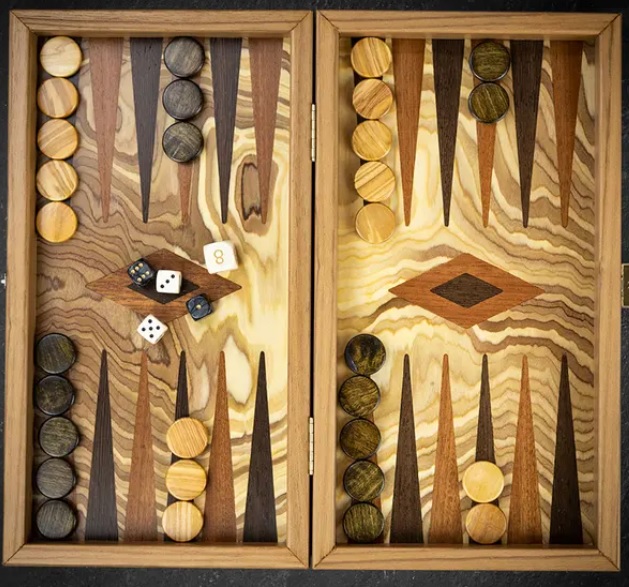
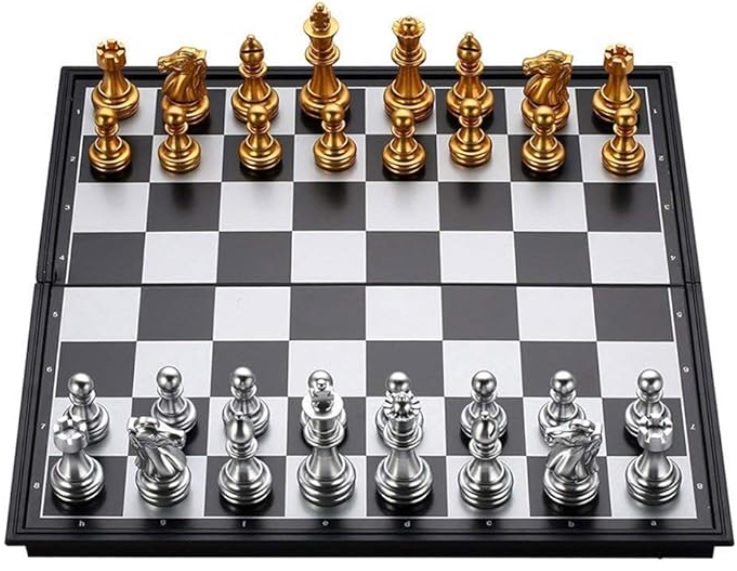
Life – Backgammon or Chess?

April 20, 2024

Which game truly mirrors our experience of life? While chess is a formidable contender, Backgammon emerges as the superior choice. Backgammon, with its inherent element of chance, resonates more closely with life itself. As the poet aptly put it, even the most meticulous plans can veer off course. A shrewd backgammon player, much like a strategist in life, anticipates all possible outcomes of the dice. Which move would secure the best position, regardless of how the dice may fall? In Backgammon, you’re not just pitted against your opponent, but also against the capricious nature of the dice, adding a layer of complexity and strategy that is truly engaging.

Some think Backgammon is just luck from one game to the next. But matches are many games long. With the doubling cube, the better player will win the match even after losing some single games. It is like Napoleon beating a general despite losing some battles.

Life, much like Backgammon, is a game of resilience. The dice may sometimes roll in your favour, but chance can just as easily disrupt your plans. It’s about adapting to your current position and the possibilities that lie ahead, even when the universe seems to conspire against you. It’s about making your moves, knowing that even if you lose today, there’s always another day to try again. It’s a lesson in perseverance that both Backgammon and life teach us.

When facing uncertainties in life, I often consult the I Ching. The ancient Book of Changes reveals insights through chance that crystallise into 64 hexagrams. I toss the coins, or if I feel more meditative, I shuffle the yarrow stalks. The resulting hexagram offers wisdom for my situation. I may gain a more appropriate strategy if I’m sensitive enough to such meaningful coincidences. The I Ching helps prepare me for how fortune’s dice may tumble. I follow its advice to better navigate life’s changing tides.


Portal of Enigmatic Shapes

December 29, 2023

The room was dimly lit, the only source of illumination being the soft glow of the street lights filtering through the half-closed blinds. A man sat at a cluttered desk, his fingers dancing with a pen over a blank page. At first, the shapes that came from his fingers were geometrical doodles, spirals that began anticlockwise but ended up snaking clockwise. Now a triangle that grew into a star. The shapes flowed from his pen as if the pen itself inscribed the signs. Still, the scribble continued, now over half the page from the center was filled with shapes and lines.

The stars on the page weren’t even noticeable, only the light blue of the sky ran down the page making a huge teardrop. As he picked up the page with the letterhead, he noticed that the stars had grown a little brighter. He held the piece of paper up to face the window, as he did light streamed through the stars as if they were holes. He touched the spot where a star was, and he knew that it wasn’t a hole. The star, in fact, seemed to radiate more heat. Leaving it on the desk, he picks up the phone and calls Tony. No answer.

He sat down and began to scribble on a piece of paper he found on the shelf. It’s not as if he had a message for anyone in particular. In fact, he didn’t even know how he came to be in this room. The scribbles continued, forming a maze of lines and shapes that seemed to have a life of their own. The room, now filled with a quiet tension, held the secrets of the man at the desk and the enigmatic symbols he was creating. Tony walked in, the door creaking slightly as it opened.

“What’s going on, Joe?” Tony asked, eyeing the chaotic patterns on the paper.

“I don’t know, Tony. It just started. The shapes, the symbols. They won’t stop,” Joe replied, his eyes fixed on the mesmerizing dance of ink on paper.

Tony took a moment to study the page, then looked around the room. “It’s like you’ve opened a portal to another world in here.”

“Yeah, a world of shapes and lines,” Joe mumbled, almost to himself.

The two men sat in silence, watching as the scribbles unfolded. Joe pulled the blinds open. The stars outside the window seemed to pulse with an otherworldly energy, casting an ethereal glow on the room. The air was charged with mystery, and the wall between reality and imagination blurred.

As the night deepened, Joe continued to sketch, and Tony remained, captivated by the unfolding spectacle. The shapes on the paper seemed to tell a story, a story that transcended the boundaries of ordinary existence. The room became a sanctuary of creativity, a realm where the ordinary transformed into the extraordinary.

And so, in the dimly lit room, surrounded by the enigmatic symbols and the soft hum of the city outside, Joe and Tony witnessed the birth of something beyond comprehension, that defied the constraints of the mundane.


Honey Bees about to become extinct

March 26, 2009

Honey Bee

Below is an entry from “The Herder Symbol Dictionary” on what the humble honey bee signifies. Then follows an article about the possible extinction of the honey bee.

I believe that events in life may also be symbolic of portending events. OK, I’m talking about omens and signs. Now, if honey bees face extinction, what does it mean for us?

stavros

Bee:

It is an insect that primarily symbolizes diligence, social organization, and cleanliness (since it avoids everything dirty and lives from the fragrance of flowers).

In Chaldea and imperial France, the bee was a regal symbol (for a long time the queen bee was thought to be a king); it is possible that the fleur-de-lis of the House of Bourbon developed from the bee symbol.

In Egypt the bee and the sun were associated, and the bee was considered to be a symbol of the soul.

In Greece it was considered a priestly creature (the priestesses of Eleusis and Ephesus were called bees, probably with reference to the virginity of the worker bees).

The bee, which appears to die in winter and return in spring, is sometimes a symbol of death and rebirth (e.g., of Persephone, Christ).

 Because of  its untiring work, the bee is a Christian symbol of hope. For Bernard of Clairvaux the bee signifies the Holy Ghost. The bee is a Christ symbol as well. Its HONEY represents Christ’s gentleness and compassion; its stinger symbolizes Christ as judge of the world.

Since according to ancient tradition bees do not hatch their own young but collect them from blossoms, bees were symbols in the Middle Ages of the Immaculate Conception.

The bee is also symbolic of honey-sweet eloquence, intelligence, and poetry.


Honey bees in US facing extinction
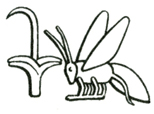
The rush and the bee, hieroglyphs from the royal title signifying King of Upper and Lower Egypt.

The rush and the bee, hieroglyphs from the royal title signifying King of Upper and Lower Egypt.


Albert Einstein once predicted that if bees were to disappear, man would follow only a few years later.

That hypothesis could soon be put to the test, as a mysterious condition that has wiped half of the honey bee population the United States over the last 35 years appears to be repeating itself in Europe.

Experts are at a loss to explain the fall in honey bee populations in America, with fears of that a new disease, the effects of pollution or the increased use of pesticides could be to blame for “colony collapse disorder”. From 1971 to 2006 approximately one half of the US honey bee colonies have vanished.

Now in Spain, hundreds of thousands of colonies have been lost and beekeepers in northern Croatia estimated that five million bees had died in just 48 hours this week. In Poland, the Swietokrzyskie beekeeper association has estimated that up to 40 per cent of bees were wiped out last year. Greece, Switzerland, Italy and Portugal have also reported heavy losses.

The depopulation of bees could have a huge impact on the environment, which is reliant on the insects for pollination. If taken to the extreme, crops, fodder – and therefore livestock – could die off if there are no pollinating insects left.

In France in 2004, the government banned the pesticide Fipronil after beekeepers in the south-west blamed it for huge losses of hives. The manufacturers denied their products were harmful to bees. Polish beekeeper associations claimed that the losses in their country could be connected to cheap sugar substitutes used in mass honey production.

However, experts at the largest honey bee health company in the world, Vita, based in Basingstoke, said the cause was still unknown, and therefore neither was the cure.

The company’s technical director, Dr Max Watkins, said: “If it turns out to be a disease we will probably find a cure. But if it turns out to be something different, like environmental pollution, then I do not know what can be done.

“At the moment, all we know is colonies are dying and we simply don’t know why. It could be a new disease or a combination of factors. And of course it could turn out what we are seeing here in Europe is different to what has been reported in America, although at the moment they look very, very similar.”

Dennis van Engelsdorp, of the Pennsylvania Department of Agriculture, said: “Preliminary work has identified several likely factors that could be causing or contributing to CCD. Among them are mites and associated diseases, some unknown pathogenic disease and pesticide contamination or poisoning.”

Initial studies of dying colonies in America revealed a large number of disease organisms present, with no one disease being identified as the culprit, van Engelsdorp added.

German bee expert Professor Joergen Tautz from Wurzburg University said: “Bees are vital to bio diversity. There are 130,000 plants for example for which bees are essential to pollination, from melons to pumpkins, raspberries and all kind of fruit trees – as well as animal fodder – like clover.

“Bees are more important than poultry in terms of human nutrition. Bees from one hive can visit a million flowers within a 400 square kilometre area in just one day.

“It is not a sudden problem, I has been happening for a few years now. Five years ago in Germany there were a million hives, now there are less than 800,000. If that continues there will eventually be no bees.”

“Bees are not only working for our welfare, they are also perfect indicators of the state of the environment. We should take note.”

By Michael Leidig in Vienna