Disorderly genius: How chaos drives the brain

September 27, 2009

This is an interesting article that made me feel better about my messy desk and my generally chaotic thinking processes. Sure, it all looks so smooth and organised here on the screen with a blog and its “machinery” to make it all look so “together”. The reality is that I put this stuff up here so that it doesn’t get lost in my personal chaos I call my study. The computer helps a lot to make things seem so organised but I can assure you that what appears pre planned and strategically placed to direct your thinking in a certain way, is purely “chance”….well, you know if you’ve been reading my posts here that I don’t believe in chance but rather in synchronicity.

Anyway, read this article and you who are as chaotic as me and have a messy exterior like me may crack a smile and feel a little better about yourself. Even if you are kidding yourself, because the article is about all human brains 🙂

Oh yeh, the reason I’ve put the text of the article here on my blog is because I just want it contextualised with the other stuff I have here. In other words, I’m using the blog’s  “machinery” to organise my chaos…cool huh? If you click on the link, the New Scientist page will show you videos and all sorts of interesting add ons.

Disorderly genius: How chaos drives the brain
New Scientist 29 June 2009 by David Robson

HAVE you ever experienced that eerie feeling of a thought popping into your head as if from nowhere, with no clue as to why you had that particular idea at that particular time? You may think that such fleeting thoughts, however random they seem, must be the product of predictable and rational processes. After all, the brain cannot be random, can it? Surely it processes information using ordered, logical operations, like a powerful computer?

Actually, no. In reality, your brain operates on the edge of chaos. Though much of the time it runs in an orderly and stable way, every now and again it suddenly and unpredictably lurches into a blizzard of noise.

Neuroscientists have long suspected as much. Only recently, however, have they come up with proof that brains work this way. Now they are trying to work out why. Some believe that near-chaotic states may be crucial to memory, and could explain why some people are smarter than others.

In technical terms, systems on the edge of chaos are said to be in a state of “self-organised criticality”. These systems are right on the boundary between stable, orderly behaviour – such as a swinging pendulum – and the unpredictable world of chaos, as exemplified by turbulence.

The quintessential example of self-organised criticality is a growing sand pile. As grains build up, the pile grows in a predictable way until, suddenly and without warning, it hits a critical point and collapses. These “sand avalanches” occur spontaneously and are almost impossible to predict, so the system is said to be both critical and self-organising. Earthquakes, avalanches and wildfires are also thought to behave like this, with periods of stability followed by catastrophic periods of instability that rearrange the system into a new, temporarily stable state.

Self-organised criticality has another defining feature: even though individual sand avalanches are impossible to predict, their overall distribution is regular. The avalanches are “scale invariant”, which means that avalanches of all possible sizes occur. They also follow a “power law” distribution, which means bigger avalanches happen less often than smaller avalanches, according to a strict mathematical ratio. Earthquakes offer the best real-world example. Quakes of magnitude 5.0 on the Richter scale happen 10 times as often as quakes of magnitude 6.0, and 100 times as often as quakes of magnitude 7.0.

These are purely physical systems, but the brain has much in common with them. Networks of brain cells alternate between periods of calm and periods of instability – “avalanches” of electrical activity that cascade through the neurons. Like real avalanches, exactly how these cascades occur and the resulting state of the brain are unpredictable.

It might seem precarious to have a brain that plunges randomly into periods of instability, but the disorder is actually essential to the brain’s ability to transmit information and solve problems. “Lying at the critical point allows the brain to rapidly adapt to new circumstances,” says Andreas Meyer-Lindenberg from the Central Institute of Mental Health in Mannheim, Germany.

Disorder is essential to the brain’s ability to transmit information and solve problems. The idea that the brain might be fundamentally disordered in some way first emerged in the late 1980s, when physicists working on chaos theory – then a relatively new branch of science – suggested it might help explain how the brain works.

The focus at that time was something called deterministic chaos, in which a small perturbation can lead to a huge change in the system – the famous “butterfly effect”. That would make the brain unpredictable but not actually random, because the butterfly effect is a phenomenon of physical laws that do not depend on chance. Researchers built elaborate computational models to test the idea, but unfortunately they did not behave like real brains. “Although the results were beautiful and elegant, models based on deterministic chaos just didn’t seem applicable when looking at the human brain,” says Karl Friston, a neuroscientist at University College London.

In the 1990s, it emerged that the brain generates random noise, and hence cannot be described by deterministic chaos. When neuroscientists incorporated this randomness into their models, they found that it created systems on the border between order and disorder – self-organised criticality.

More recently, experiments have confirmed that these models accurately describe what real brain tissue does. They build on the observation that when a single neuron fires, it can trigger its neighbours to fire too, causing a cascade or avalanche of activity that can propagate across small networks of brain cells. This results in alternating periods of quiescence and activity – remarkably like the build-up and collapse of a sand pile.

Neural avalanches
In 2003, John Beggs of Indiana University in Bloomington began investigating spontaneous electrical activity in thin slices of rat brain tissue. He found that these neural avalanches are scale invariant and that their size obeys a power law. Importantly, the ratio of large to small avalanches fit the predictions of the computational models that had first suggested that the brain might be in a state of self-organised criticality (The Journal of Neuroscience, vol 23, p 11167).

To investigate further, Beggs’s team measured how many other neurons a single cell in a slice of rat brain activates, on average, when it fires. They followed this line of enquiry because another property of self-organised criticality is that each event, on average, triggers only one other. In forest fires, for example, each burning tree sets alight one other tree on average – that’s why fires keep going, but also why whole forests don’t catch fire all at once.

Sure enough, the team found that each neuron triggered on average only one other. A value much greater than one would lead to a chaotic system, because any small perturbations in the electrical activity would soon be amplified, as in the butterfly effect. “It would be the equivalent of an epileptic seizure,” says Beggs. If the value was much lower than one, on the other hand, the avalanche would soon die out.

Beggs’s work provides good evidence that self-organised criticality is important on the level of small networks of neurons. But what about on a larger scale? More recently, it has become clear that brain activity also shows signs of self-organised criticality on a larger scale.

As it processes information, the brain often synchronises large groups of neurons to fire at the same frequency, a process called “phase-locking”. Like broadcasting different radio stations at different frequencies, this allows different “task forces” of neurons to communicate among themselves without interference from others.

The brain also constantly reorganises its task forces, so the stable periods of phase-locking are interspersed with unstable periods in which the neurons fire out of sync in a blizzard of activity. This, again, is reminiscent of a sand pile. Could it be another example of self-organised criticality in the brain?

In 2006, Meyer-Lindenberg and his team made the first stab at answering that question. They used brain scans to map the connections between regions of the human brain and discovered that they form a “small-world network” – exactly the right architecture to support self-organised criticality.

Small-world networks lie somewhere between regular networks, where each node is connected to its nearest neighbours, and random networks, which have no regular structure but many long-distance connections between nodes at opposite sides of the network (see diagram). Small-world networks take the most useful aspects of both systems. In places, the nodes have many connections with their neighbours, but the network also contains random and often long links between nodes that are very far away from one another.

For the brain, it’s the perfect compromise. One of the characteristics of small-world networks is that you can communicate to any other part of the network through just a few nodes – the “six degrees of separation” reputed to link any two people in the world. In the brain, the number is 13.

Meyer-Lindenberg created a computer simulation of a small-world network with 13 degrees of separation. Each node was represented by an electrical oscillator that approximated a neuron’s activity. The results confirmed that the brain has just the right architecture for its activity to sit on the tipping point between order and disorder, although the team didn’t measure neural activity itself (Proceedings of the National Academy of Sciences, vol 103, p 19518).

That clinching evidence arrived earlier this year, when Ed Bullmore of the University of Cambridge and his team used brain scanners to record neural activity in 19 human volunteers. They looked at the entire range of brainwave frequencies, from 0.05 hertz all the way up to 125 hertz, across 200 different regions of the brain.

Power laws again

The team found that the duration both of phase-locking and unstable resynchronisation periods followed a power-law distribution. Crucially, this was true at all frequencies, which means the phenomenon is scale invariant – the other key criterion for self-organised criticality.

What’s more, when the team tried to reproduce the activity they saw in the volunteers’ brains in computer models, they found that they could only do so if the models were in a state of self-organised criticality (PLoS Computational Biology, vol 5, p e1000314). “The models only showed similar patterns of synchronisation to the brain when they were in the critical state,” says Bullmore.

The work of Bullmore’s team is compelling evidence that self-organised criticality is an essential property of brain activity, says neuroscientist David Liley at Swinburne University of Technology in Melbourne, Australia, who has worked on computational models of chaos in the brain.

But why should that be? Perhaps because self-organised criticality is the perfect starting point for many of the brain’s functions.

The neuronal avalanches that Beggs investigated, for example, are perfect for transmitting information across the brain. If the brain was in a more stable state, these avalanches would die out before the message had been transmitted. If it was chaotic, each avalanche could swamp the brain.

At the critical point, however, you get maximum transmission with minimum risk of descending into chaos. “One of the advantages of self-organised criticality is that the avalanches can propagate over many links,” says Beggs. “You can have very long chains that won’t blow up on you.”

Self-organised criticality also appears to allow the brain to adapt to new situations, by quickly rearranging which neurons are synchronised to a particular frequency. “The closer we get to the boundary of instability, the more quickly a particular stimulus will send the brain into a new state,” says Liley.

It may also play a role in memory. Beggs’s team noticed that certain chains of neurons would fire repeatedly in avalanches, sometimes over several hours (The Journal of Neuroscience, vol 24, p 5216). Because an entire chain can be triggered by the firing of one neuron, these chains could be the stuff of memory, argues Beggs: memories may come to mind unexpectedly because a neuron fires randomly or could be triggered unpredictably by a neuronal avalanche.

The balance between phase-locking and instability within the brain has also been linked to intelligence – at least, to IQ. Last year, Robert Thatcher from the University of South Florida in Tampa made EEG measurements of 17 children, aged between 5 and 17 years, who also performed an IQ test.

The balance between stability and instability in the brain has been linked with intelligence, at least as measured by scores on an IQ test. He found that the length of time the children’s brains spent in both the stable phase-locked states and the unstable phase-shifting states correlated with their IQ scores. For example, phase shifts typically last 55 milliseconds, but an additional 1 millisecond seemed to add as many as 20 points to the child’s IQ. A shorter time in the stable phase-locked state also corresponded with greater intelligence – with a difference of 1 millisecond adding 4.6 IQ points to a child’s score (NeuroImage, vol 42, p 1639).

Thatcher says this is because a longer phase shift allows the brain to recruit many more neurons for the problem at hand. “It’s like casting a net and capturing as many neurons as possible at any one time,” he says. The result is a greater overall processing power that contributes to higher intelligence.

Hovering on the edge of chaos provides brains with their amazing capacity to process information and rapidly adapt to our ever-changing environment, but what happens if we stray either side of the boundary? The most obvious assumption would be that all of us are a short step away from mental illness. Meyer-Lindenberg suggests that schizophrenia may be caused by parts of the brain straying away from the critical point. However, for now that is purely speculative.

Thatcher, meanwhile, has found that certain regions in the brains of people with autism spend less time than average in the unstable, phase-shifting states. These abnormalities reduce the capacity to process information and, suggestively, are found only in the regions associated with social behaviour. “These regions have shifted from chaos to more stable activity,” he says. The work might also help us understand epilepsy better: in an epileptic fit, the brain has a tendency to suddenly fire synchronously, and deviation from the critical point could explain this.

“They say it’s a fine line between genius and madness,” says Liley. “Maybe we’re finally beginning to understand the wisdom of this statement.”

David Robson is a junior editor at New Scientist


As I write this ……

September 17, 2009

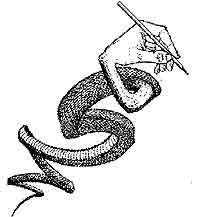
twitter-snake-handAs I write this and you consider the meaning of what I write I doubt that you will take the factual, scientific way to understand what I write.
The scientific “objective” way dictates that you look at only the empirically observable and measurable to ascertain meaning. This means, taking it “literally” (and this is the only scientific way to take it) that you will look at the scribbles or the type, analyze the chemical constituents of the ink, the angle of pressure of the scribble or the level of impact pressure of the fonts, consider the type of ball point pen, fountain pen, pencil or printer or screen. If you are considering a hand written piece, you will consider the forces that pushed the pen, the fingers attached to the hand. You may perhaps even analyse the skin and the temperature which surrounded the hand when the writing occurred.

In short, you would have looked at all the physically observable items and still would not get to the MEANING. I write, “The sky is blue.” You can verify the statement only after understanding its meaning by looking up at the sky. However, if you only analysed the ink, my fingers and room temperature, you would not get the MEANING.

Now, taking this one step or leap further, perhaps our life is a kind of writing, a kind of story written in flesh and blood and its MEANING is not measured with scientific rulers and scales but something else. Perhaps the lineaments of meaning are drawn between synchronous events, which may be called chance or even coincidence. When does chance, coincidence become synchronicity? It does so when we put in our own individual subjective feeling / understanding to it ie our MEANING.

Science has no place in this sacred space of MAKING MEANING.

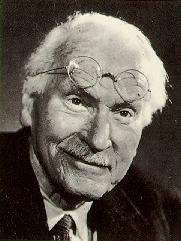
Carl G Jung originally wrote the "philosophical" understanding of synchronicity.

Carl G Jung originally wrote the “philosophical” understanding of synchronicity.


Guerilla Ontology – Robert Anton Wilson

September 12, 2009

A great quote:

Robert Anton Wilson (1932 - 2007)

Robert Anton Wilson (1932 – 2007)

‘I don’t trust the people as much as anarchists do.” He states that all Belief Systems are just that: BS:

“The Western World has been brainwashed by Aristotle for the last 2,500 years. The unconscious, not quite articulate, belief of most Occidentals is that there is one map which adequately represents reality. By sheer good luck, every Occidental thinks he or she has the map that fits. Guerrilla ontology, to me, involves shaking up that certainty. I use what in modern physics is called the “multi-model” approach, which is the idea that there is more than one model to cover a given set of facts. As I’ve said, novel writing involves learning to think like other people. My novels are written so as to force the reader to see things through different reality grids rather than through a single grid. It’s important to abolish the unconscious dogmatism that makes people think their way of looking at reality is the only sane way of viewing the world. My goal is to try to get people into a state of generalized agnosticism, not agnosticism about God alone, but agnosticism about everything. If one can only see things according to one’s own belief system, one is destined to become virtually deaf, dumb, and blind. It’s only possible to see people when one is able to see the world as others see it. That’s what guerilla ontology is — breaking down this one-model view and giving people a multi-model perspective.”

Robert Anton Wilson


Time Body

August 23, 2009

 “Being in the timeless moment without the coercion of time is to dream, while lacking any sense of the timeless is to be only a machine.” Anthony Blake, “A Seminar on Time”

spiral clock-animated-gif-18

I have been long thinking about the Time Body since I turned 40. My interest in this was not only aroused by my entering the 40’s Chamber but also because I have read in the esoteric / occult tradition that the Path of Initiation cannot truly begin until the aspirant is at least 40 years old. So, all the Sufi practices, all the Gurdjieff exercises, all the attempts at the Jesus Prayer in Rhythm to the Breath, all the quiet desperation in a cube, all the immobility of mind, “Stopping the World” and the sacred wish arousing in the Heart….all of these things and more are only a preparation. Note, however, that when we speak of 40’s we are speaking of 4 to a number of degrees. Four is not 40 but shares attributes of four-ness with 40 as does 400 and 0.04 and 0.4.

Preparation for what? For the next phase of one’s life – the 40’s and the next few decades left in the mortal coil of three score and ten and beyond. Let’s remember that women, generally go through menapause in their 40’s, and men go through a “midlife crisis”. Why then? There’s something happening to us, just as powerful as puberty but this time it is the “puberty of old age”. What I mean by this is if I live to be 84 (a good number to work with because of the 12 X 7 connection), then 42 is the mid point (6 X 7). During the period of the 40’s we are laying the foundation (if we wish to) for a healthy, vibrant old age – my 60’s and the rest.
So, who is it that sees someone in the mirror that isn’t them? It’s me and all of us who are in mid life. In me there is a cry for the youth that I was and a fear of what I may be in old age. I have decided that this decade will and is the decade of consolidation. Actually, this is pompous. I didn’t decide anything, it’s more that there is a period of consolidation in one’s Time Body. The Time Body is the body of your mortal coil, it is the moment of your birth, like an Ourbouros, eating the moment of your death..this whole picture of one’s life/body is spatially perceived as 0 – 84 years long.

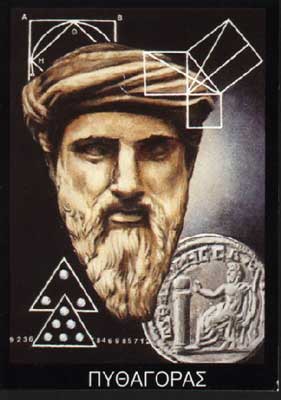
Pythagoras

Pythagoras

Taking the Time Body as 84 and working with a hint from Schwaller de Lubicz’s insight into Ancient Egyptian understanding we will enter a realm of geometrical/numerological correspondences. Though one is inclined in this Age of Techno-Scientism to use words like “mathematics” to denote a respectable regard for dead abstractions, I like to think that the magico-mythico-Pythagoro Number is where I’m working from. Status quo respectability, when it comes to such life and death considerations such as,  “Where am I going? Why am I here on this Earth? Who am I? Is there Life after Death?” can go in the dustbin of history. The danger of leaving the table of consensus reality – the current technoscience rationalism, is that you may end up sitting alone at  the table of insanity. An unbending intent, a purity of heart and a constant need to grow will at least provide some assurance that one’s understanding may not be crazy, but just the way things are if we live in an onion layered world.

Let’s get back to de Lubicz’s hint.  His insight is to consider that at every 7 years of one’s life a “life” has been and a new 7 year lot is coming up. Like layers of skin, each layer 7 years thick is a time-onion-skin where each skin is a period of 7 years. Consider that at 7 years old – the Church and Institutionalised understanding has it that a child has reason. Let’s go to 14 – puberty ….21 adulthood…..
A few clues: get Dane Rudyar’s  “Astrology of Personality” and read about The Dial of Life. It is interesting because he considers the language of Astrology as the Algebra of Life. Read P D Ouspensky’s account of the Enneagram in In Search of the Miraculous. Also Ouspensky’s “Tertium Organum”, a classic book which gives some semblence of “rationality” to the mystic vision and his other classic “A New Model of the Universe” where he introduces the idea of Eternal Recurrence (not the same as Nietzsche’s concept). My account of the onion skin layers of time is dependent on all of the above and a generous helping of experience.
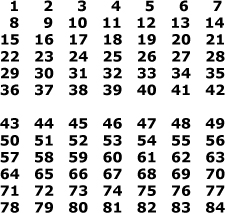
Try this as an experiment:  Write out in 7 year lots X 7 a table like this:

time body table

To make it “user friendly” you can include the year of the age eg 1(1962)   2(1963)   3(1964)   4(65)……etc
As you write the number and year beginning from your birth year try to notice any images/memories arising and what year they pertain to. These memories as they arise become “key symbols”, they become in a very personal sense the x,y,z and the a,b,c ‘s of one’s own algebra of life. If focussed enough you create your own memory body. Now, look at your “algebra of life” through the prism of your meaning/memory. Like, what happened to you when you were 7,14, 21, 28, 35, 42 ? Looking across and down the table: what happened at 4,11,18, 25, 32, 39, 46 ? You will find that there is a corresponding change in “motion” for each layer of 7. With each lot of 7 years there is a noticeable change and experience that suggest layers of octave experience. Each year is a note in the scale Do Re Mi Fa Sol La Si Do. What is interesting is that there is a discernible signature for each octave period. Later on you can then put the table of years onto the Enneagram.

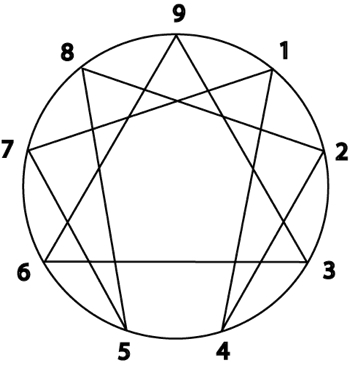
Enneagram

Enneagram

The Circle depicts daily life, the life of the diary - sequential time.

The Circle depicts daily life, the life of the diary – sequential time.

The inner movement 1-4-2-8-5-7 depicts the "notebook", the method and know how, the Sadhana. In the events of one's life, this is where synchronicity resides.

The inner movement 1-4-2-8-5-7 depicts the “notebook”, the method and know how, the Sadhana. In the events of one’s life, this is where synchronicity resides.

The Triangle depicts the idea of a creed, one's faith. It is Timelessness.

The Triangle depicts the idea of a creed, one’s faith. It is Timelessness.

The Enneagram with all three aspects of one's experience together as a whole. See A G E Blake's "The Intelligent Enneagram" for a detailed discussion of this symbol.

The Enneagram with all three aspects of one’s experience together as a whole. See A G E Blake’s “The Intelligent Enneagram” for a detailed discussion of this symbol.

I have done all this and more with my own life numbers. If you are astrologically inclined, do the Solar Returns of each year and see what you find. The whole purpose of this is to focus the mind onto one’s own life stream. This focussing is not analytical, indeed, the process abhors analysis. It is the realm of imagining and then self remembering – or at least a preparation for this. The exercise itself is another version of “Recapitulation” which Carlos Castaneda refers to. Indeed, you will, if you delve a little deeper in what I’ve just given above,  find not only clues to the notion of Fate but also clues to one’s Destiny. These clues are not uttered in any way by me, but rather by the very simplicity of the gods – Numbers. The Ancient Egyptian concept of Neter is close in meaning to the Pythagorean concept of Number.

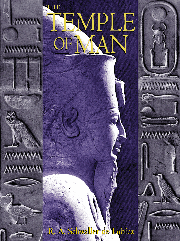
The cover of R A Schwaller de Lubicz's magnum opus "Temple of Man"

The cover of R A Schwaller de Lubicz’s magnum opus “Temple of Man”

What are you looking for in the numbers of the years of your life? Just a few hints that can help name the years. Maybe then, your heart will play around with mystic circles and triangles with the Numbers of Life turning off and on like a  light show.
All this may sound weird, but I can assure you, if you try this experiment, you will be pleasantly surprised by the octave “correspondence” you will see in your life experience. It will be as if there is a pattern, unknown to you, unfolding in a manner totally unexpected. A kind of music of your life, a hidden melody that you were not able to hear notes of until this moment. At times you may experience a déjà vu  , the feeling that you have been here before,and this is interpreted exactly as that through the Great Idea of Eternal Recurrence as expressed through P D Ouspensky in his “A New Model of the Universe”. A good summary of this idea & its connection with Nietzche’s and Steiner’s take on it is here.

I’ve been influenced much by the 4th Way – through Gurdjieff and other teachings. Is it any wonder that I have become a middle aged Gnostic seeker carrying the lantern of wonder?

Try it  and see if it isn’t true. You will find a pattern that will truly spook you. If you follow the clues and hints you will see the synchronicity of events

and

maybe the big question will arise:

WHOSE SHOW IS THIS ANYWAY?

Now clock animated


Communicating with Alien Intelligence

August 21, 2009

 I am sometimes mystified how people always seem to connect alien intelligence with Extra Terrestials (ET’s) as if there aren’t
enough alien intelligences on Earth when you compare our human intelligence with other forms. OK – we have the obvious differences between us and monkeys and dolphins and dogs and cats and snails and snakes etc but when we move away from
so called “sentient” beings into the realm of plants and minerals, most people assume that intelligence is non existent. Peter Tompkins wrote a book called “The Secret Life of Plants” where he showed plants having feelings and that they communicate
these feelings.  Secret-life-plants-coverNow, I can’t remember whether it was Terence McKenna who pointed this out or someone else, I do know that it didn’t spring from my forehead, that one can look at communication across species in a unique way.

We know that bees communicate by dancing in the air, that octopii (or is that octopussies 🙂 communicate visually with colour changes in their skin; that whales through singing – now, this is communication amongst themselves. How would communication occur between two very different orders of life eg humans and plants? Well, someone (I can’t remember who), wrote that communication between plants and humans happens when humans ingest either by eating or smoking, plants. The
altered state of consciousness that occurs by this act is the plant itself communicating with humans!!

So, from this point of view an alien intelligence communicates eloquently with human intelligence by the pharmocological exchange within our being. Way beyond words and images something occurs in our consciousness which is a communion with the Earth via the “priestly” mediation of sacred plants.

Food of the gods indeed!


Cognitive Imperialism

August 21, 2009

In “Archaic Revival”, Terence McKenna explores consciousness, civilization, and the profound effects of magic mushrooms. He provocatively suggests that the ingestion of psilocybin—a compound found in certain mushrooms—may have played a critical role in the development of human language. McKenna bases this argument on the idea that, once humans domesticated cattle, mushrooms containing psilocybin proliferated in their dung. This theory isn’t isolated to McKenna; for instance, the 5,000-year-old Ötzi the Iceman, discovered in the Alps, was found with mushrooms in his possession, suggesting their medicinal or hallucinogenic use.

It’s important to clarify that I’m not advocating the use of magic mushrooms. However, maintaining an open mind about the more significant questions concerning consciousness is essential. If experimenting with entheogens—a term meaning “god-revealing substances”—can open doors to alternate dimensions of reality, we should not be quick to close our minds and hearts to these possibilities. The term “entheogen” is gaining traction today, possibly as a way to ‘cleanse’ the image of these substances, previously known as psychedelics. A comprehensive resource on this topic can be found at [this link](http://deoxy.org/index.htm).

Reflecting on my own experiences, I recall how my understanding of reality was transformed after reading Aldous Huxley’s “The Doors of Perception” and other works from the psychedelic era. A few personal experiments with mushrooms significantly altered my perception, challenging the boundaries of what is considered ‘real.’

Over time, I became convinced that just as geopolitical imperialism exists, there is also a form of cognitive imperialism. This concept refers to the dominance of a particular worldview over others, often marginalizing alternative perspectives. I now believe that many of humanity’s political issues stem from the narrow ‘reality tunnels’ we navigate—tunnels shaped and reinforced by cognitive imperialism.

This cognitive domination, or the enslavement of awareness, permeates our entire culture. Take, for example, the Inuit people, who have over 20 different words to describe various types of snow, while in the West, we only use the word “snow” because that is all we perceive. Similarly, the Aboriginal peoples of Australia have numerous words to describe “sand,” recognizing its many forms, yet we see only “sand.” These examples may seem trivial, but they illustrate the broader point: our language and perception are limited by our cultural and cognitive frameworks.

When we venture beyond the so-called “real” 3-D world, we enter a domain where words become almost useless. In these realms, symbolism takes precedence. Symbols are multivalent entities, not confined to a single linear meaning. For example, a triangle or cross symbol does not possess just one sense. Entheogens have the potential to reveal multiple levels of meaning simultaneously, akin to a window or door opening to the light. Plato’s analogy of the cave, where people are chained to chairs facing a wall on which shadows are cast, represents this closed realm of Darkness. In his story, one person frees himself, turns to see the source of the shadows—a candle—and then notices a glimmer of light from another direction. As his eyes adjust, he steps outside the cave, initially blinded by the Sun’s intense light. However, as his vision acclimates, he discovers a world of colour and life. When he returns to the cave to inform his fellow prisoners, they consider him delusional, unable to free themselves from their cognitive slavery.

The cave in Plato’s analogy is the Consensus Reality, its truth dictated by the Great Bell Curve, often cited by statisticians as the realm of reality. However, physics and mathematics point us toward a new direction, away from this shadow world. While I’m neither a physicist nor a mathematician, the little I do understand reveals a world vastly different from the one Isaac Newton experienced when the proverbial apple struck his head. Today, that apple could be perceived in three distinct ways, each as accurate as the other while appearing identical. Firstly, there is the 3-D apple Newton felt on his head. Secondly, the apple of subatomic physics, which Newton would not recognize as familiar. Thirdly, an apple would attract the earth towards it rather than simply falling. Each perspective is “real,” depending on our operating paradigm.

Whether Carlos Castaneda’s Don Juan existed or not, the Yaqui Indian sorcerer’s notion of different descriptions of the world, each real in its own way, holds true.

Science seems to find “evidence” of a Global Mind—a concept that shamans, mystics, magicians, and saints have intuitively understood for millennia. The entheogenic experience opens these Doors of Perception, leaving us to walk through and perceive multiple worlds simultaneously without necessarily being under the influence of these substances. As William Blake expressed in “The Marriage of Heaven and Hell”, “If the doors of perception were cleansed, everything would appear to man as it is, infinite. For man has closed himself up till he sees all things through narrow chinks of his cavern.” This sentiment, from which Huxley derived the title of his book and which inspired the name of the rock band “The Doors”, closely mirrors Plato’s vision as he emerged from the cave.

Cognitive imperialism is the enemy we must overcome. To become Spirit Warriors, we must shift from the imperialism of the mind to the wisdom of the Heart. From the Heart, we can empathize with the suffering of others, and our actions can be fueled by compassion. The Heart of humanity is deeply connected with the Heart of Gaia, the Sun, and the cosmos. Our struggle against the forces of Darkness—the Masters of War, the Keepers of Concentration Camps, the Greed Kings who keep the poor shackled with hunger—is a struggle of the Global Mind and Gaia’s Heart against those who remain blind and deaf to the Light and the Word. The challenge is that those blind and deaf to the Light and the Word currently hold material power.

Yet, I believe that more of us will emerge from the shadows in these times. As we adjust our vision to the world of Gaia’s Heart/Mind, we may indeed usher in an era of peace.

A Reflective Note on Entheogens

Jonathan Ott offers a compelling critique of the Christian enmity towards entheogens:

“The Christian enmity [towards entheogens] is easy to explain. Since the Christians were promulgating a religion in which the core mystery, the holy sacrament itself, was conspicuous by its absence, later transmogrified by the smoke and mirrors of the Doctrine of Transubstantiation into a specious symbol, an inert substance, a placebo entheogen, the imposture would be all-too-evident to anyone who had known the blessing of ecstasy, who had access to personal religious experiences. Thus a concerted attack on the use of sacred inebriants was mounted, and the supreme heresy was to presume to have any direct experience of the divine, not mediated by an increasingly corrupt and politicized priesthood. The Pharmacratic Inquisition was the answer of the Catholic Church to the embarrassing fact that it had taken all the religion out of religion, leaving an empty and hollow shell with no intrinsic value or attraction to humankind, which could only be maintained by hectoring, guilt-mongering and plain brute force.”
Jonathan Ott

Effective Knowledge = Direct Knowledge

August 9, 2009

A shaman in a desert may be more effective in the  world than a scientist in a laboratory. By more effective I mean more in connection with real knowledge….direct knowledge….direct perception of the flow and the numbering that crystallizes into the geometry of our perception. This knowledge because it doesn’t fit into the categories of accepted consensus reality is more often than not ridiculed as mere myth…the myth of an invisible world closed to our senses five….so, a Tibetan guide in Nepal who can use telepathy to communicate  may have access to technology of which we in the West are blind to.

buddha

I believe that there is the possibility of psychic technology…technology of the psyche …which cannot only send messages between two living beings but can also carry messages from the dead and the not- yet- born…from the past and the future. (See the post “Is Consciousness a Function of the Brain or Vice Versa” in this blog for further discussion on this.)

You know as I am writing this I can sense my need to stand tall and declare myself a true believer in magic. This is not to say that the products of science are relegated to the bottom drawer. They are
different responses to the universe each with their place and time and usefulness. If I was  sick, I’d go to my local doctor AND pray.

The visit to the GP is the language that my conditioned self wrapped in the body recognises as a potent and powerful healing agent … the doctor in white is the witch doctor of our culture. The rituals and the drama of visiting your local GP and then having to go under the knife while in the twilight regions of anaesthetised sleep..all these are the expressions of the Consensus Reality we share.

The praying is directed to some other unknown dimension. It doesn’t matter what we call this ” otherness” because whatever we call it the word is never ” it”. This other realm has its own laws and practices.

The point is, it is not what I direct my energy to but whether I AM, or just automatizing my mortality. The more I AM is experienced the more opportunities there are for me to participate in the REAL world…the inverse world to the dominant paradigm.

The internet experience will provide an excellent analogue for the dynamics of psychic space, just as the hologram provided the analogue for the WHOLE as the ONE. The hologram gives us a static metaphor for the ONE – internet experience gives us a process metaphor for the movement of psychic energy. For a more detailed look at this possibility please see my post “Internet as Analogue of Akashic Mirror”. Internet experience will alter one’s conception of time and space. Whether this will be translated into the general overall consciousness of an individual I don’t know. My feelings are that only the individual part of us that wishes to trancend the familiar will have the chance to do so. The rest of us will sleep and automatize mortality. Our only hope is that more humans will wish to be online with the ONE.

As Teilhard de Chardin  (1881 – 1955) said,

“We are not human beings having a spiritual experience, but spiritual beings having a human experience.”

M C Escher - "Ambidextrous Peeled Faces"

M C Escher - "Ambidextrous Peeled Faces"


Excerpt from an Interview with Basarab Nicolescu

July 26, 2009

I first came across Basarab Nicolescu in “In the Valley of Astonishment, an interview with Basarab Nicolescu” by Jean Biès, in Parabola, Vol.XXII, No.4, Winter 1997, New York. Parabola is one of those magazines / journals which have the power to connect one with ideas that go beyond the “daily times”.  Since then, I read an essay of his in Gurdjieff: Essays and Reflections on the Man and His Teachings, called “Gurdjieff’s Philosophy of Nature.”

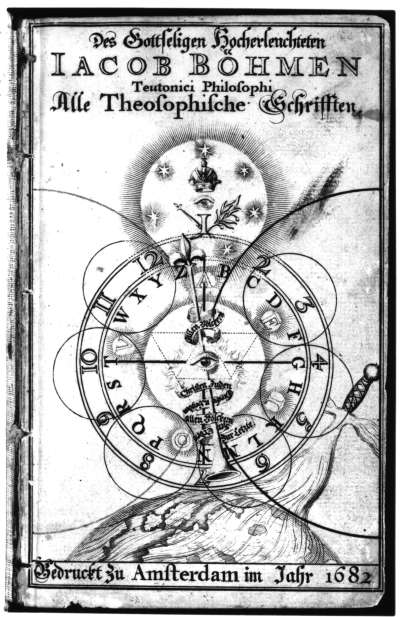
I find him an incredibly interesting thinker who is both a scientist and (he may not like this word) “mystic”. In fact, I am now waiting on delivery of his book titled “Science, Meaning, & Evolution: The Cosmology of Jacob Boehme”. (I can’t believe that I just bought thtreasure040-3is book for 0.01 cents at Amazon, but the postage was $12.50…. still an amazing bargain!)  Jacob Boehme was a German Christian mystic who was considered an original thinker within the Lutheran tradition. He is also a true “theosophist” from the Greek “theosophia” – knowledge of things divine.

The following interview excerpts I have included in “Journeys and Star Gazing” because he touches on the “journey” from specificity…the specialised field of knowledge to the world of transdisciplinarity. I work as an educator in the field of Multicultural Education (see my article A Ganma Odyssey). Nicolescu’s answer to a question on Education below gives, to my eyes, a crucial insight into how to work in the incredibly complex field of teaching non literate African refugees the English language.

Anyway, I hope the teachers which I have emailed with this link find it useful.  I did.

stavros

An Excerpt from an Interview with Basarab Nicolescu

From Ad Astra – Young Romanian Scientists’ Journal 2002  www.ad-astra.ro

Basarab Nicolescu

Basarab Nicolescu

Liviu Giosan: Dr. Nicolescu, your name cannot be easily dissociated from the concept of  “transdisciplinarity”.  Let us start by citing from the Moral Project of the International Center for Transdisciplinary Research (http://perso.club-internet.fr/nicol/ciret/) that you co-founded in 1987: “its principal task is the elaboration of a new language, a new logic, and new concepts to permit the emergence of a real dialogue between the specialists in the different domains of knowledge…”. What was the trajectory that led you from physics to transdisciplinarity? Did your background as a scientist educated in a repressive communist society play any role in imagining and developing this project?

Basarab Nicolescu: When I was a student, I followed the debates between the fathers of quantum mechanics: Werner Heisenberg, Wolfgang Pauli, Niels Bohr, Max Planck. It was then that I learned that in fact most metaphysical questions are not disconnected from scientific research. First I read their books and articles. After some years I discovered that their correspondence was much more down-to-earth than the published scientific works. It is there that one can follow the genesis of their ideas. Strikingly, there is an incredible link between the quantum world and our day-to-day, macrophysical world, although they might seem disconnected.

For a physicist, the quantum world is a real world; I work inside it and I know that we can test it, we can experiment with it. So my first big intuition, only a long time after I arrived at a certain formalization of it, was the idea of the discontinuity between general concepts in quantum mechanics, or I would say, by extension, in quantum physics, and classical physics. Discontinuity does not mean contradiction. It means simply that different laws are at work in each domain, in such a way that you cannot move in continuity, in
the mathematical sense of the word, from the laws of quantum mechanics to the laws of classical mechanics. Now, of course, this was at the heart of the physicists’ quest at the beginning of the last century. In a sense, it is quite astonishing that almost all great personalities in physics were cultured people and they always tried to incorporate information from physics into their philosophical beliefs. Early in my career, around 1975, I began to realize that science contributes new information to philosophy,
but perhaps there is no philosophy that can integrate all new scientific ideas. Only by using concepts from various philosophical systems could you describe science. In this, I am in accordance with Bohr, Pauli, and Heisenberg’s ideas, expressed clearly in the latter’s Manuscript of 1942, that the main assumption of modern metaphysics is not valid in quantum physics. It is applicable in classical physics however. I use the word “metaphysics” in its academic sense, meaning the complete separation between subject and object. In the quantum world, we cannot reduce our study to either the subject or the object because we are faced with an interaction between the two. This idea is shared by philosophers like Husserl, Heidegger, or Cassirer. It is this interaction that leads us to the question of regions or levels of reality that are united through the coherence of our world. It might be called unity, but I prefer to use the word “coherence”. The coherence laws are not of a mathematical nature, that is the point. They are not quantitative, but law-like in the symbolic sense. Science alone is unable to describe this relationship due to the scientific methodology. Exact science by itself is imitation, it deals with that which can be replicated. It concerns not individual events but collective ones, large number of individual events that can be described probabilistically.

Humanistic sciences on the other hand deal with individual events. Unfortunately, contemporary humanistic sciences try to mimic exact science, and here is where they fail. This does not necessarily mean that science has limitations in itself, but there is a limitation of methodology. And this is normal, because exact science describes a well-defined region of reality. This region is accessible through this type of
methodology, but others might not be. To believe that exact science can describe everything is equivalent to saying that what we think today was always thought in the same way!

Transdisciplinarity is imagined as a solution to these types of problems, because it is able to describe the relationship between fields, or levels, or disciplines, as a whole. We use the term “transdisciplinarity” as an attempt to provide a very general framework for discussing the relationship between these various discontinuous parts of our experience, and indeed of reality itself. The idea of levels of reality can be a pillar of this new type of knowledge, a starting point for any attempt at unifying different fields. The other
principles include a new, non-classical logic and the principle of complexity. These three principles can be expressed as follows: 1. There are in Nature, and in our knowledge of Nature, different levels of Reality, and, correspondingly, different levels of perception; 2. The passage from one level of Reality to another is insured by the logic of the included middle; 3. The structure of the totality of levels of Reality or perception is a complex structure: every level is what it is, because all the levels exist at the same time. These three principles correspond to Galileo’s postulates for the modern science approach: 1. There are universal laws of a mathematical character; 2. These laws could be discovered by scientific experiment; 3. Such experiments could be perfectly replicated.

Coming to the second part of your question, I could say that indeed being educated in a repressive society influenced the development of my ideas. Repression generates a desire for transgression. And in fact, transdisciplinarity is a kind of generalized transgression. More generally, it is obvious for me that all great Romanian creators such as Brancusi, Eliade, Lupasco, Cioran, Tzara, Gherasim Luca, Andrei Serban went beyond boundaries between domains of knowledge and between cultures. Psychoanalyzing the Romanian
soul is not the scope of our discussion, but I wonder if the cruelty of History did not push Romanians to “invent” a genius of transgression for settling the scores.

Razvan Florian: Is the concept of “transdisciplinarity” applicable in education? What would be itsbenefits over more “classical” teaching and learning methods? Could this concept be of use in the day-today scientific research as well?

Basarab Nicolescu: I studied this problem for a long time (see my “Manifesto of Transdisciplinarity”which will be published by SUNY Press in February 2002), and in spite of the vast diversity of the education systems from one country to another, the globalization of challenges in our times require global solutions for education problems. Periodic upheavals in education in various countries are symptoms of the same flaw: a disharmony that exists between values and realities of a planetary life in a process of change.

The UNESCO report of the “Commission internationale sur l’éducation pour le vingt et unième siècle”, chaired by Jacques Delors, underlined four principles that we could use to build a new kind of education upon: learning to know, learning to do, learning to live together with, and learning to be. In this context, a transdisciplinary approach could make important contributions to reforms in the educational system.
First of all, “learning to know” involves training people to distinguish the real from the illusory. This simple ability, if learned properly, will provide the student with intelligent access to the fabulous knowledge of our age. The scientific spirit, one of the most important characteristic of the human spirit, is indispensable in this venture. It is not the assimilation of an enormous mass of scientific knowledge which gives access to the scientific spirit, but the quality of the scientific information acquired by the student that
leads him or her into the very heart of the scientific approach: a permanent questioning in relation to facts, images, representations, and formalizations. “Learning to know” also includes learning the skill to build bridges – between different disciplines, between various meanings, and between all these and our inner abilities. A transdisciplinary approach is an indispensable complement to the disciplinary approach, because it leads to the emergence of continually connected human beings, that are able to adapt to changing demands of professional life, and who are endowed with flexibility in renewing their interior potential.

“Learning to do” certainly implies acquiring a profession, process which includes a phase of specialization. However, in our tumultuous world, where recent changes induced by the computer revolution are but the portent of large scale social changes to come, strict specialization can be dangerous. It could lead to unemployment, exclusion, or even to a debilitating alienation. If one truly wants to reconcile the demands of competition with the concern for equal opportunity, every profession should be woven into the whole of
human occupations. Of course, this is not simply a question of learning different skills at the same time. A flexible, knowledge core that could quickly facilitate reorientation to another occupation should be accepted as a teaching philosophy. In this context, the transdisciplinary approach is invaluable. In nuce, “learning to do” is an apprenticeship in creativity. The emergence of authentically transdisciplinary individuals requires a favorable environment for a maximal realization of their creative potentialities. The
social hierarchy, so frequently arbitrary and artificial, should be replaced by cooperation at new structural levels, for the advantage of personal creativity.

“To live together with” does not mean simply tolerating differences of opinion, skin color, and beliefs; submission to the exigencies of power; negotiating between the in’s and out’s of innumerable conflicts; definitively separating interior from exterior life. A transdisciplinary attitude can be learned, to the extent that each being possesses an innate, sacred, intangible core of transcultural, transreligious, transpolitical and transnational values. Yet, if this innate attitude is only potential, it can forever remain hidden, absent in act. To insure that community norms are respected, they must be validated by the interior experience of each being. In the end, the transdisciplinary attitude allows us to better understand our own culture, to better defend our national interests, to better respect our own religious or political convictions. As in all
relationships between Nature and Knowledge, open unity and complex plurality are not antagonistic.

At first, “learning to be” seems an insoluble enigma. We exist, but how can we learn to be? Understanding this principle involves discovering our conditioning, the harmony or disharmony between our individual and social lives, and testing the foundations of our convictions. In short, it means to always question everything. In this quest, the scientific spirit is again a precious guide. “Learning to be” presumes a permanent two-way communication where the teacher enlightens the student as much as the student
informs the teacher. Any training period inevitably passes through a transpersonal dimension and any disregard for this dimension goes a long way toward explaining the fundamental tension between the material and the spiritual realms, that is felt by our contemporaries.

There is one very obvious interrelation between the four principles of the new system of education: how to learn to do, while learning to know, and how to learn to be while learning to live together with? In the transdisciplinary view, there is a transrelation which connects the four principles. Any viable system of education should aim for an integral education that will activate all human potential and not just some of its components. At present, education favors the intellect relative to the body and sensibility. This was certainly fruitful in the past, leading to an upsurge in knowledge, but it cannot continue without sweeping us away in the mad logic of efficiency for efficiency’s sake that could lead to self-destruction.

Experiments performed by the Nobel Prize-winning physicist Leon Lederman with children from disadvantaged neighborhoods of Chicago demonstrate this point: knowledge is assimilated faster and better when intellect, body, and feelings are all simultaneously addressed. This is a prototype of the new education that our modern society could use to reconcile effectiveness and affectivity. It is quite obvious
that specific differences among knowledge fields and experiences call for a diversity of transdisciplinary methods. And because transdisciplinary education is a long-term, global process, it is important to establish institutions that will help initiate this process and insure its development. On the other hand, universal sharing of knowledge cannot be functional without the emergence of a new type of tolerance founded on a transdisciplinary attitude that implies an active use of the transcultural, transreligious,
transpolitic, and transnational vision. Of course, if only to perform our everyday science, we do not need transdisciplinarity. On the other hand, transdisciplinarity, even if not identified as such, has always been an essential condition for great discoveries, for unified theories.


Freedom from restriction.

April 21, 2009

Why do I always restrict myself? Why do I always lose courage in being myself?

The world eats me but I starve. I observe the world as a complex network of neural connections and intricate cultural, linguistic, and structural norms – the entire ‘catastrophe’.Do I need to adhere to the bars of so-called ‘adulthood’ and label myself a responsible and rational citizen? An answer emerges like a whisper of sacrificial smoke – release these bars and return to your true self.

Where is home? Where do I truly belong?

The restriction lies within the mind. The path to freedom lies in a different direction. Restriction and its opposite – expansion, in and out – the rhythm of life, the breath of life. The Way of the Heart is the gateway into and out of life.

I hear a voice within that seems to echo from the depths of my being, saying, “Become what you are, blossom from your stem. This blossoming is nothing other than the freedom you seek from restriction. The Heart is the Way to the centre of everything; follow it, and all the worlds will be yours because the centre of the Heart is All the Worlds.”


Kites and Consciousness

March 28, 2009


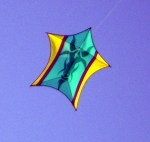
One the things that I love to do is fly kites. There is something so beautiful, peaceful and meditative when one is flying a kite against a blue sky. When the kite is high up in the sky and the kite string sings its low volumed but high pitched sound, you feel that you hold your quivering soul in your hands.

Sometimes, when the sky is clear and the wind constant, it feels like the reverse, that the soul holds my quivering body in its hands.

At rare moments, the string becomes an analogue of attention and instead of it being just one way, it is seen as being two way, the Kite holding me and “I” holding the Kite, simultaneously … double attention.

At even rarer moments, if I am centred and watching attentively, feeling the breeze on my face and arms, feeling the sensation of my body through the weight on my feet, a Third Attention arises. This Attention is the Attention of the Sky Above enveloping the double attention between Kite and “Me”. At moments like these, one feels the miniscule, tiny microscale of the Holy Trinity of Attention as expressed in one flying a kite under the sky.

One is reminded of a greater Holy Trinity of Attention which holds the World together – the Holy Trinity of Forces as expressed in many different traditions.

Check out the transcript of a talk I gave on “Turning Inwards” https://dodona777.wordpress.com/2010/04/27/turning-inwards/

If you click on the images below you will see a larger version of same.