At 73, I’ve kept Type 2 diabetes in remission for over three years—through walking, simple food, and resistance exercises at home.
Sometimes I wonder why more people don’t walk the way I do. Not just physically — but deliberately, with purpose, with rhythm. Not for medals, not for watches or metrics, but to come home to themselves. To turn toward health, rather than away from it. To heal.
You’d think the instinct to live would be enough. You’d think the desire to feel good, move well, and age gracefully would drive people to act. But often, it doesn’t.
I think I know part of the reason why.
We live in a time where wellness has been commercialised — sold back to us by fitness influencers, gym chains, and self-styled “health gurus.”
There’s always a hack, a supplement, a challenge, a subscription. And behind it all, almost always, is the same tired motive: money.
The industry promises shortcuts, biohacks, six-packs, detoxes. But very little of it teaches people how to truly listen to their own body. Very little of it says: Walk the same path every day, in silence, and see what grows.
I didn’t pay for a program.
I didn’t join a gym.
I didn’t buy expensive equipment.
I walked. I changed how I ate — simplified my meals, removed the refined sugar and processed foods, honoured the basics.
And I began doing resistance exercises at home using my own bodyweight: push-ups, squats, step-ups, planks, curls with light dumbbells.
No machines. No mirrors. Just daily practice, spread across the hours of an ordinary day.
Over time, my blood glucose dropped, my weight settled, and my resting heart rate sank—to the level of an endurance athlete’s.
Not because I’m extraordinary. But because I showed up for my own life, one quiet effort at a time.
What astounds me is that this happened to me.
That at 73, after a lifetime of ordinary habits and imperfections — after years of smoking, struggle, and neglect — my body responded with such grace. That it could still heal. Still strengthen. Still find its rhythm.
I never expected this.
Discipline isn’t punishment.
Routine isn’t boring. And consistency isn’t obsession. They’re the quiet architecture of a life well lived.
I wish I could bottle what I’ve found and pass it around like water. But the truth is, you have to taste it yourself.
You have to take the first step — not for likes, not for a fitness tracker, not for anyone else — but because something in you remembers: you are still alive.
And you are still free to begin.
A note from the heart: I share this not to suggest that my path is a cure-all. I know that remission isn’t possible for everyone, even with great effort. Our bodies are different. Our lives are different. What worked for me may not work for someone else — or not in the same way, or not at the same time. I honour those who are doing their best, every day, under circumstances we can’t always see. This is just my story — and I share it in case it offers hope, not judgment.
Postscript
What still astounds me is how far the body can come back when you listen to it.
At 73, my VO₂ max is estimated at 46–50, and my resting heart rate stays between 48–52 bpm — on par with fit men in their 30s to early 40s.
I don’t walk to train. I don’t walk for records, medals, or to impress anyone. I walk because it steadies me. It carries my thoughts, my breath, my prayers. It opens the body and quiets the mind. It’s the simplest thing I can do every day to remember who I am.
In September 2021, I was diagnosed with Type 2 diabetes. The numbers were clear, the warnings louder. I was offered medication—but something in me wanted to try another path first. I chose to walk. To eat differently. To live more deliberately.
Since then, I’ve walked almost every day—briskly, with intention, usually around 5 kilometres. I changed what I ate. I simplified. I gave my body a rhythm it could rely on. Over time, without medication, my blood glucose stabilised. I lost 18 kilograms, dropping from 88kg to 70kg, and I’ve now been in constant remission for over three years.
Alongside walking, I began doing simple resistance exercises — bodyweight movements like push-ups, squats, step-ups, planks, and curls with light dumbbells. I spread them throughout the day. No gym, no machines, no memberships. Just consistent effort in my own time and space. It’s nothing fancy — but it’s steady, and it works.
Recently, I discovered something else: my resting heart rate is 47 beats per minute — a number typically found in elite endurance athletes. For comparison, the average resting heart rate for a man in his 70s is around 70–75 bpm. Mine has averaged between 47 and 50 over the past year.
I’m 73. I’ve never run a marathon. I smoked in my youth. I’ve lived an ordinary, frugal, imperfect life. And yet, my heart beats like someone who trained for gold.
I don’t share this to boast. I share it because I find it mysterious. Beautiful. A quiet reward I never aimed for.
Most afternoons, I walk along the riverbank near where I live. Over the years, I’ve taken hundreds of photos — of the sky, the water, the shifting moods of light, and the quiet animals I encounter along the way: water dragons, ibises, ducks, and others. I share some of these images on my Bluesky account, and many are gathered here:
It’s become a kind of visual journal of stillness in motion.
I walk because walking helps me listen. I walk with purpose, with rhythm, sometimes with prayer. I walk west in the afternoons, as the sun leans into shadow. There is a place along the path where I stop to breathe and pray. Then I return east—to the place of beginning, where the sun rises. It’s not exercise. It’s something older than that.
I believe the body remembers truth. And perhaps, over time, it reshapes itself around that truth. My heart doesn’t beat slower because I’m extraordinary. It beats slower because I made space for stillness every day, for years.
That’s why I walk the way I do.
This reflection came to me not while walking, but while lying still, listening—on a day I chose to rest.
I didn’t set out to become fit, or to impress anyone. I just wanted to keep walking without falling, stay sharp enough to finish the books I’d started to write, and live each day without the fog that sometimes creeps in with age.
At 73, I’m not chasing youth – I’m cultivating presence.
Now, six days a week, I walk. I breathe with awareness. I chant silently at sacred spots on my path. And nine months ago, I added resistance training-push-ups, planks, step-ups, squats, rows-interspersed through the day. Just two months, I added short bursts of High-Intensity Interval Training (HIIT). I do them twice a week, guided by the terrain of my walk: downhill, uphill, then level. On Mondays I just do the downhill burst. Wednesdays, I do the full trio. It’s a ritual now. It makes me feel alive.
My balance has improved. My mind feels clearer. This is no longer ‘exercise’-it’s my ritual of self-respect.
My Weekly Flow
Monday: Full Resistance x 2 + Brisk Walk + Short HIIT (Downhill only)
Tuesday: Moderate Walk only
Wednesday: Brisk Walk with Full HIIT (Downhill > Uphill > Level)
Thursday: Resistance x 1 + Gentle Walk or Mobility
Friday: Full Resistance x 2 + Brisk Walk
Saturday: Moderate Walk + Spiritual Walk or Breathwork
Sunday: Full Rest – regeneration, stillness
Exercises I Do
Push-ups (standard & inclined) – upper body & core strength
Plank (1-minute) – core, posture, breath control
Step-ups – leg strength, joint health, mobility
Squats – total lower body strength
Toe-ups – calf & balance strength
Dumbbell Curls/Rows – arms and back
One-leg Balance – fall prevention
Farmers Carry – grip, core, posture
Ankle/Reaction Drills – agility and coordination
Spiritual walking – silent prayer or chanting during walks
Why Weekly Rhythm, Not Daily Routine?
“I train by the week, not by the day – each step a note in the symphony of staying.”
Recovery is sacred – Effort and stillness must dance together.
It builds sustainability – A weekly rhythm avoids burnout.
It respects cycles – Like moon phases or seasons.
It fosters joy, not guilt – Each day plays a role, even rest.
The other day I had a chat with my GP and he told me my blood sugar levels were normal. He also said that about six months ago. So, what’s the big deal? I was diagnosed as a Type 2 Diabetic one year ago, yes, September, 2021 so to find that I have normal blood sugar levels without meds is amazing! In fact, the GP was amazed too. He asked me what I did to have this happen. I told him I changed my diet and was walking 7 to 8 kilometres a day.
When I tweeted this result I was surprised by the response. I promised I’d write about my experience and hope that it may help others.
Just as there is diversity in our body shape, skin colour, eye shape, facial features – there is diversity amongst people diagnosed with Type 2 Diabetes. So, what may work for one person may not work for another. What I tell you about my experience is just that – MY experience. There should be no feelings of failure if you try what I describe and the results aren’t the same for you. Maybe something else will work for you.
My GP asked me to get a fasting blood test last year. He said I may be diabetic and a blood test will show if I am. I wasn’t surprised he’d suggest this because there is diabetes in my family. I didn’t eat takeaway food like Maccas or pizzas. I didn’t eat cakes nor lollies because I haven’t got a sweet tooth and I was careful not to eat fatty foods. I also ate only home cooked meals. I love fresh fruit and vegetables and I didn’t drink alcohol. So, how could I be diabetic? Well the results came back and I was diabetic – just crossed the indicator line.
Freak out time! Shock….what to do? The GP suggested I see a dietitian & a physiotherapist specialising in exercise. This was in Covid times so I didn’t see them face to face – just phone. The info the dietitian gave me I also found online & the exercise guy when he found out I was 69 asked me what did I want to do. I said walking would be great. So that was the end of that consultation.
I then researched diabetes and found the biggest myth about diet was that fat was the enemy. I found that my love of fruit was also contributing to my diabetes because of the sugar content. I thought I was a good little vegemite with my soups. I’d have an instant soup with noodles and add garlic, peas, cauliflower, spring onion, olive oil & a dash of lemon juice. The noodles are carbs and contribute to diabetes.
I took on board what the dietician said. I also read Michael Mosley on diabetes. Everything pointed to me losing weight and changing my diet along with some fasting.
I was brought up in a Greek Orthodox home with my mother ensuring we all followed the strict Orthodox fasting and dietary rules pertaining to holy days. I did this until I left home when I was 18. So the idea of fasting or eating particular foods on certain days wasn’t a big lifestyle program reset.
I’m telling you this so that you may get a glimpse as to why changing my diet wasn’t such a big deal for me because of my previous life experiences.
I need support to watch my diet and ensure that my exercise routine is beneficial to my aims. My aims? To lose weight and to bring my blood sugar levels down. My support comes from today’s incredible technology. I use a smart watch, a smart phone and the apps that go with them. The use of this technology helps me maintain the new routine by providing me with on time feedback concerning what I eat and what I physically do.
Technological Support
The 2 apps I use are Samsung Health and Lifesum. Both of these are connected to my smart watch through bluetooth. I can set my watch to automatically monitor my heart rate, speed of walking, number of steps and blood oxygen.
Samsung Health app helps me set goals and tracks my physical activity, sleep, weight, heart rate, and other vitals throughout the day.
Report on the app of my daily walk
Body Composition
The other amazing thing about the Samsung Watch is that it measures your body composition. This means that you can see how much is body fat and how much is muscle. Some say that the induction technology used is not very accurate. I don’t care. It’s better than nothing and all it needs for me to do is to place two fingers on the side of the watch and I see an estimation of what’s happening to my insides. I have noticed over the year the progressive loss of fat and increase in muscle.
Lifesum helps me track calorie intake and informs me of the nutritional content of the food I eat. I have chosen automatic tracking that’s connected to Samsung Health. This means that the calorie count is accurate because it subtracts the calories burnt during exercise from the amount eaten. It is still only based on what an average person burns during the day but it’s good enough for me to gauge what’s happening with my goals.
Brisk Walking
I found out it is best to walk briskly. Just to walk at an easy pace may be pleasant and familiar because that’s the everyday speed but it won’t help with burning calories. Then there is the moderate pace, the one we use when we’re late.
Brisk pace should feel like you’re just about to break into a jog. A brisk pace is relative to your fitness level and your level of exertion. For your pace to be considered brisk you need to raise your heart and breathing rate. You may feel slightly out of breath or sweaty when walking briskly. Just by picking up your pace you can burn 50 percent more calories! It gets your heart rate going and makes you breathe harder and faster and supports healthy blood flow. My watch informs me the speed I am walking at and a brisk pace is about 4.8 – 5.6 kph.
Best Time for Walking
I also walk in the afternoons just after 3.00PM because research has shown that this is the best time to exercise for both performance and building muscle. Research has also shown that lung function is best from 4.00PM – 5.00PM. This may help to reach a more vigorous intensity.
Other Exercise
Before I leave home for the walk I do one set of dumb bell exercises that I found on YouTube. When I reach the first kilometre I stop and meditate for about 15 minutes. During the walk there is a 1 km stretch that’s a walkway with fence posts on either side of the path. To increase my heart rate I do press ups against the larger posts. Since they are lean to press ups they are far easier than horizontal on the ground. I do 100 on the way out and 100 on the way back.
The Walkway
Now for the numbers
Walking about 8kms per day means you are walking just over 10,000 steps. This means that you are burning between 2 – 3,500 extra calories per week. One kilo of body fat is about 7,000 calories. So depending on your weight, goals and exercise intensity you could lose about 500 grams a week.
Walking 8 kms a day at a brisk speed means you can lose half a kilo per week.
I drink between 2.5 – 3 litres of water per day. It’s been found that drinking 500ml before a meal can help with losing weight.
Lifesum gives a variety of diets to follow and the one I use is the Mediterranean diet because it’s familiar to me. The app gives the approximate calories you need to eat each day. When you enter the foods the app calculates the numbers and during the day subtracts the calories burnt.
Meal entry on Lifesum
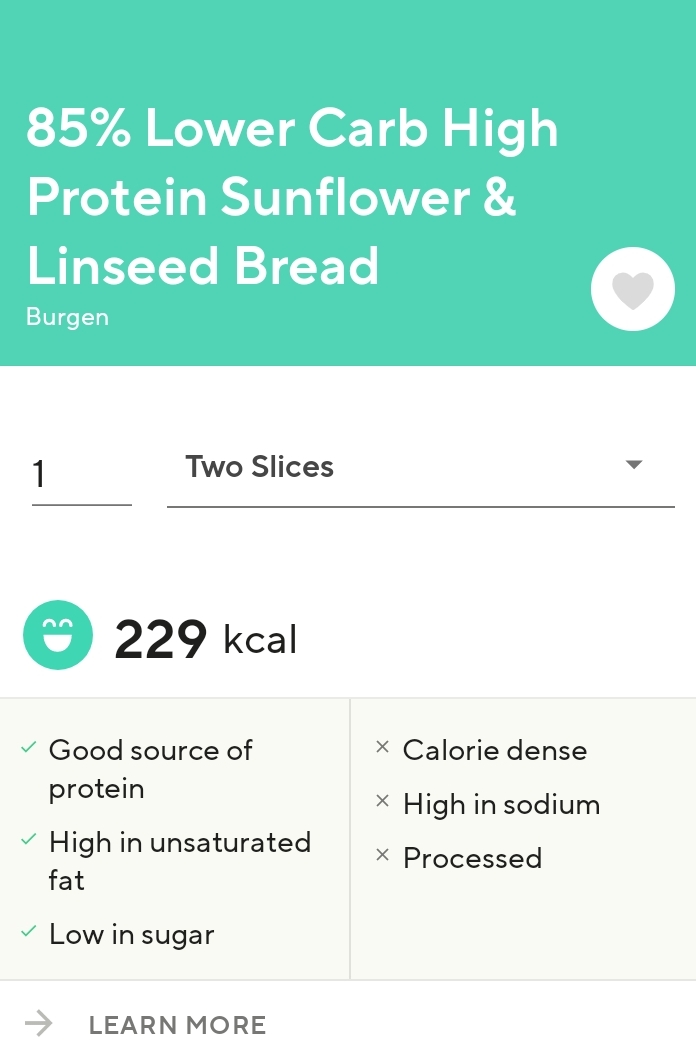
Another wonderful feature of Lifesum app is that you can scan the ID number of foods with your phone in the supermarket and it tells you if it’s OK according to the nutritional properties. I’ve found that even so called health foods, protein bars etc when scanned reveal that the attributes are not what the packaging claims.
The Scanner using your phone camera
Detailed analysis of food scanned
Detailed analysis of food scanned
When I started using the Lifesum app I weighed every bit of food I ate and entered the weight in the app. I did this for every meal. It became a ritual for me and it showed me the amounts of food and the calories associated with the food and the amount. I was also incredibly surprised that bacon and eggs was very good food as was peanut butter. I cut back on the amount of fruit with lots of sucrose and started eating more raw cauliflower and carrots.
Now, after one year and having lost 15 kgs with my blood sugar levels normal I have decided to not weigh and enter all my meal details into the Lifesum app. I am now doing a daily intermittent fast of 14 hours and 10 hour eating window. Since I have changed my diet I now just eat the appropriate food only during the eating window.
The daily walk has become a habit as has my new diet and intermittent fasting.
It is possible to have a remission of diabetes using exercise and diet. I also believe that it is possible to reverse diabetes and heal the pancreas after a couple of years doing what I am doing now. When this happens I have no plans to change my diet and exercise routine because I feel so much better doing it.
I hope this post helps you achieve your health aims. By the way I am NOT getting any commissions for citing the apps and the wearable technology. I cite them so that you know what I used. There are brands that can do the same as what I have shown here.
I’ve been reading “Mesmer – Between God and Devil” by James Wyckoff. It is a biography of a man who many say was behind hypnotism, the true father of modern psychiatry with the line passing from him through Braid, Liebault, Charcot and Freud. If alchemists were primitive chemists, Mesmerists were primitive psychologists. ( I don’t believe that alchemists were that but the analogy holds.) He was also known as a great charlaton who conned people with his eccentric ways. Indeed, the scientific and medical establishment of the time (late 1700’s) treated him as a heretic and a fake.
Franz Anton Mesmer
So, which was he? A man way ahead of his contemporaries and that was why he was misunderstood? A con man seeking fame and fortune using chicanery and fake rituals to make money out of his hapless victims? Or something completely different, something that our categories cannot box in…. Between God and Devil?
What I found interesting in this book is the idea that there is a psychosomatic continuum – a life force that is both in the body and mind and that this force is magnetic in nature. Magnetic? Visions of iron filings stuck like fine hair on a magnet, two small magnets repelling each other because they turned their faces to each other, moving a needle across the page with a magnet under it, making it seem that the needle moved on its own accord. This is magnetic from my experience. So, what does it mean that humans at core are magnetic beings? Why, when someone as well meaning as Mesmer, tries to tell people about this force and how to use it for good, do they get persecuted, at times burnt, hung and poisoned? The deeds of Mesmer were witnessed by all the power holders of the day – the academies, the politicians and royalty. Everyone who witnessed the actions had their own interpretations. This was more than seeing glass of water as half empty, half full. This was seeing clear water or poison.
Something similar happened to Wilhelm Reich in the 20th Century. He was another life force explorer who was treated as a quack outsider. I know that the life force exists. Reich called it orgone, Reichenbach called it od, ancient Chinese called it chi or qi, Indians – prana, Polynesians – mana. It is real and it can be “used” eg Acupuncture and Kahuna healing / magic.
Wilhelm Reich
What is this magnetic core within humans which extends outwards from the physical frame? What is this magnetism which is connected in some mysterious way to planetary forces? Has it something to do with Sheldrake‘s “morphic resonance”? Is it a more coarse aspect of the astral body?
Why is it when someone wishes to explore this life force and makes some very useful discoveries which can benefit humanity, they get incarcerated and treated as insane? Has it something to do with the medical – industrial – pharmaceutical – academic establishment that does not want to consider another alternative perspective? Is it because this different way of looking at things may make their dollar making / status hierarchy obsolete? I think it is this and far more.
Check out the links above and I will write another post about this later.
Welcome — I’m glad you’re here.
On this blog I share the paths I’ve walked: outward journeys across places and causes, and inward journeys through reflection and creativity. Expect stories, poems, photos, quotes, and occasional star-gazing — astrology, I Ching, alchemy, and other ways of seeing.
You’ll also find traces of the human rights campaigns I’ve been part of, offered here as part memory, part witness.
Above all, this space is for connection — I hope you enjoy exploring, and I’d love to hear from you in the comments. I also share thoughts on politics and ideas on X (Twitter) @dodona777
.


 Posted by stavr0s




 Welcome — I’m glad you’re here.
 Journeys and Star Gazing