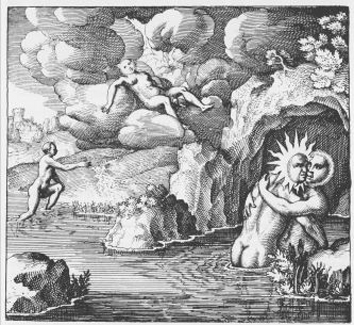
Freedom from restriction.

April 21, 2009

Why do I always restrict myself? Why do I always lose courage in being myself?

The world eats me but I starve. I observe the world as a complex network of neural connections and intricate cultural, linguistic, and structural norms – the entire ‘catastrophe’.Do I need to adhere to the bars of so-called ‘adulthood’ and label myself a responsible and rational citizen? An answer emerges like a whisper of sacrificial smoke – release these bars and return to your true self.

Where is home? Where do I truly belong?

The restriction lies within the mind. The path to freedom lies in a different direction. Restriction and its opposite – expansion, in and out – the rhythm of life, the breath of life. The Way of the Heart is the gateway into and out of life.

I hear a voice within that seems to echo from the depths of my being, saying, “Become what you are, blossom from your stem. This blossoming is nothing other than the freedom you seek from restriction. The Heart is the Way to the centre of everything; follow it, and all the worlds will be yours because the centre of the Heart is All the Worlds.”


Kites and Consciousness

March 28, 2009


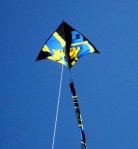
One the things that I love to do is fly kites. There is something so beautiful, peaceful and meditative when one is flying a kite against a blue sky. When the kite is high up in the sky and the kite string sings its low volumed but high pitched sound, you feel that you hold your quivering soul in your hands.

Sometimes, when the sky is clear and the wind constant, it feels like the reverse, that the soul holds my quivering body in its hands.

At rare moments, the string becomes an analogue of attention and instead of it being just one way, it is seen as being two way, the Kite holding me and “I” holding the Kite, simultaneously … double attention.

At even rarer moments, if I am centred and watching attentively, feeling the breeze on my face and arms, feeling the sensation of my body through the weight on my feet, a Third Attention arises. This Attention is the Attention of the Sky Above enveloping the double attention between Kite and “Me”. At moments like these, one feels the miniscule, tiny microscale of the Holy Trinity of Attention as expressed in one flying a kite under the sky.

One is reminded of a greater Holy Trinity of Attention which holds the World together – the Holy Trinity of Forces as expressed in many different traditions.

Check out the transcript of a talk I gave on “Turning Inwards” https://dodona777.wordpress.com/2010/04/27/turning-inwards/

If you click on the images below you will see a larger version of same.


A Ganma Odyssey

March 11, 2009


This is the title I used for an article published in  “Education Australia”  way back in 1998. I think it is still relevant in many ways, particularly now that Australia has had a change in goverment. Since it already is online I will just give you the link to it here  “A Ganma Odyssey” . If the link should ever become inactive I will upload it to this blog.

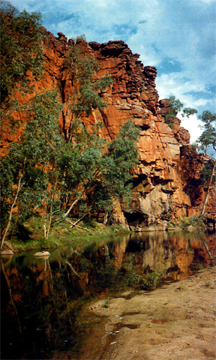
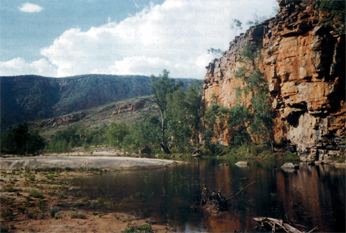
I chose this title to connect an Aboriginal word with my Greek heritage – the Odyssey. Ganma is an Aboriginal word from the Northern Territory which is the name for a waterhole that has fresh and salt water mixing together in a rock pool. One of the speakers at the conference (see below “The Ganma Metaphor”), suggested we use the word “ganma” to refer to a “multicultural space” as in a classroom. Anyway, read the article and you will see the full context. By using the word “odyssey” I alluded to my own Greek heritage and the fact that the journey to the Heart of Australia was also a journey to the centre of my own heart because I was retracing a journey I undertook about 25 years earlier as a young man on the road looking for truth . . . . my own naive version of a Dharma Bum.

The coloured text excerpts and photos, beneathe “The Ganma Metaphor” are scanned from the hard copy of “Education Australia” Issue 39, 1998. So, check the article out >> “A Ganma Odyssey”.

The Ganma Metaphor

“This metaphor I had learned during earlier visits to Yirrkala Community School in East Arnhem Land, on the coast of the northeast corner of the Northern Territory. Yirrkala has organised their curriculum and teaching around a metaphor of the contact zone where rivers meet the sea, named ganma in one of the local Aboriginal languages. Literally, ganma is where fresh and salt water meet. Metaphorically, ganma is where cultures meet: fresh water is indigenous Yolngu knowledge and practices; salt water is the white Balanda knowledge and practices; and one place where they meet is in school.

Flying in a small plane from Yirrkala west to Darwin after a visit in 1993, l could see clearly the swirls of different colors in the ganma waters: bluer from the sea, browner from the land. Manduwuy Yunupingu, who was principal of Yirrkala when I first visited in 1991, has also described the role of Yothu Yindi, his internationally known rock group, in the meeting place of popular culture in these same ganma terms (Shoemaker 1994).

At first thought, this ganma metaphor may seem to ignore the important power differential between dominant and nondominant cultures in institutions like schools. But if you think again about literal relationships between fresh water and salt, the potential threat of unequal power is there: salt water tides and typhoons can flood the land, while fresh water cannot seriously harm the ocean. But if the two can be kept in balance in the ganma space, then the rich nutrients that come together from the mix of different waters nourishes richly diverse forms of life-biologically in the literal situation, culturally and intellectually in the metaphorical.”

Courtney B. Cazden

Quote from ‘A Postscript from Alice Springs’, in Multiliteracies: Literacy learning and the design of social futures.
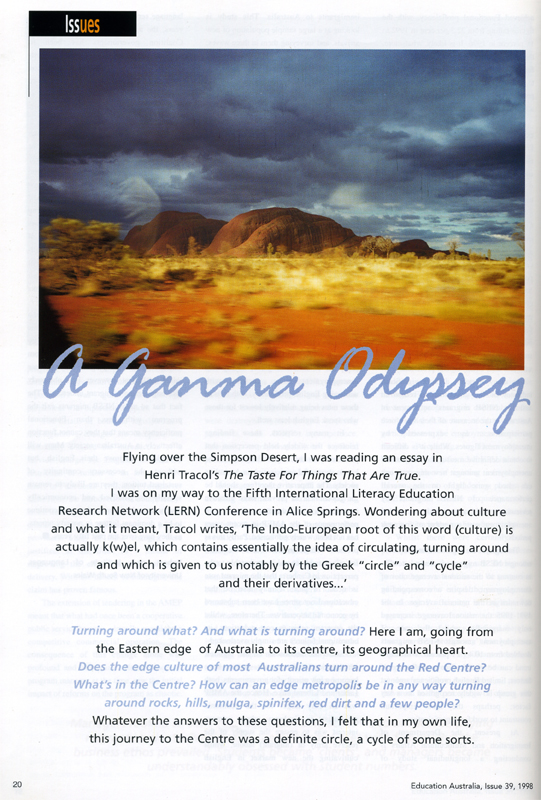
eductn-aust-ganma-odyssey-1

Here is an excerpt from the article :

It has been suggested that the human notion and definition of self has been through major shifts since the beginning of human consciousness (Julian Jaynes, “The Origin of Consciousness in the Breakdown of the Bicameral Mind”, Boston, Houghton Miffen, 1977 ). The closest to us historically, that may demonstrate this shift, is said to have occurred in Homer’s Greece.


According to this view, in Homer’s day, the people did not have the same sense of self as we may have. Their inner psychological organisation was different to what we take for granted. The voice of the mind was somehow perceived as a “god” speaking from outside themselves. It didn’t take too long before people started sussing out that there were a lot of “gods” running around in the temples and in the marketplaces saying contradictory things about how things were, that they saw the untruth of their “godhood”. Gradually this voice of the “gods” became established in the sense of self we call “ego”. What was there before the voice? Who and what was Ulysses’s “sense of self” on his Odyssey?

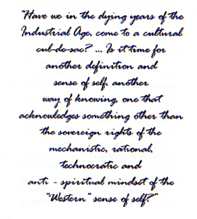
Have we in the dying years of the Industrial Age, come to a cultural cul-de-sac? Somehow, we have alienated ourselves from not only each other but also the common ground of experience – nature, the Earth. Is it time for another definition and sense of self, another way of knowing, one that acknowledges something other than the sovereign rights of the mechanistic, rational, technocratic and anti – spiritual mindset of the “Western” sense of self?

Edward de Bono in his “I Am Right, You Are Wrong”, thinks that this is the case. He suggests that a renaissance of thought and language patterns is needed so that humanity doesn’t self destruct. He proposes turning away from the “table top logic” of the traditional “Western” mindset in favour of developing a way of knowing that is based on perception. De Bono explains that recent developments in the understanding of self-organising systems and ideas from information theory, have given indications as to how the neural processes of the brain perform the activity of perception. Perception operates in nerve networks like a feature of a self-organising biological system, a living entity. Let’s call information that comes through our senses impressions. These impressions fall on the inner landscape of our mind like rain. The rain on the mind organises itself into tributaries, rivulets and streams of temporarily stable patterns. These patterns can subsequently flow into new sequences and patterns. According to de Bono, the perceptual mode of thinking encourages the mind to form multiple branching flow patterns; the sensory information is not boxed in by fixed linguistic concepts, generalities, and logic. Perceptual thought patterns follow the natural behaviour of neural networks; our present mode only plays back a recording of words and concepts provided by a preestablished cultural mindset.

Courtney Cazden during her paper on Ganma Space spoke of the necessity of getting rid of the margin and centre metaphor. This metaphor was based on the myth of terra nullius of students’ minds and being. Courtney told us that while she and Mary Kalantzis were flying to some school in the Northern Territory they noticed water holes that had fresh and salt water tributaries and other smaller rivulets all feeding the main space of the water hole. This, they found out was known as a ganma. The ganma looks like localised swirling spirals from the air. Courtney said that the mingling of brown, fresh and salt water in this space was analogous to the culturally diverse classroom. And in light of the process of perception is an apt image of the inner subjective world, our mind, our being.

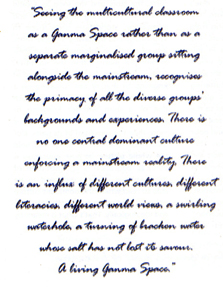
The multicultural classroom as a Ganma Space, this metaphor rather than create separate marginalised groups besides the mainstream, recognises the primacy of all the diverse groups’ backgrounds and experiences. There is no one central dominant culture enforcing a mainstream reality. There is an influx of different cultures, different literacies, different world views, a swirling waterhole, a turning of bracken water whose salt has not lost its savour.

A living Ganma Space.


Let’s go one step further and consider that in the industrially developed world there is the primacy of the head, (some localise it to the left hemisphere of the brain) and all the other ways of being and cognition – feelings, sensations and intuition have been marginalised. What do we have if we apply the ganma metaphor to our own inner world? In this ganma, head, heart, body and spirit all contribute equally, but differently, to our sense of the real. These parts of ourselves may all be cognitive in nature, they may be different tributaries of knowing, different source data. Ganma Space taken as psychological space, the internal world of our experience, would allow for the possibility to connect our known and unknown parts of ourselves. This opens the opportunity to connect with others by being able to include more of the “other” in one’s awareness.
Could the perceptual mode of thinking be a ganma way of knowing?

The taste I seek is a taste of being – not in the philosophical sense – a point of view to be debated, but rather an experience, an immersion through the background/underground of one’s chattering monkey mind – into the moment. We’ve seen that working from only a part of ourselves doesn’t work. The problems confronting all of us in this time of planetary transition are whole systems oriented. Now we see through Chaos theory, that a butterfly fluttering her wings in South Africa has global consequences. And when it comes to the ecological state of the Earth and the widening gap between the rich and poor across the planet, it is obvious that whole, global issues require an effort and a response that is from the whole of ourselves, the ganma of ourselves.

From “A Ganma Odyssey” published in Education Australia, 1998.

eductn-aust-ganma-odyssey-2eductn-aust-ganma-odyssey-3


eductn-aust-ganma-odyssey-4

eductn-aust-ganma-odyssey-5

eductn-aust-ganma-odyssey-6

eductn-aust-ganma-odyssey-8


eductn-aust-ganma-odyssey-7


eductn-aust-ganma-odyssey-9

eductn-aust-ganma-odyssey-10


Musings on a cube within a cube.

February 10, 2009

We are the laboratory where chemical transformations occur. As we work in an alchemical manner we are networking our total functional behaviour with a larger one making it a  possibility to influence even  blades of grass and the clouds above. One demonstration of this possibility is when a drought is ended by a shamanic rain dance. In a very real way we perceive the world inside out. The so called “outer” world, the world of the senses is really the inner world – like  a cave. The cave exists in a mountain or under the ground. The world of cars, trees, sun and planets, the world of telecommunications and the nervous system, the world of spices and jasmine flowers, cooking oil and garlic – the worlds of our senses are resident in this cave.

emblem_alchemy06


The temporal mode, our existential situation, this cubic measure of time-space, our cave is within a big mountain – Mount  Analogue. Or one can liken the place of the inner to the outer as a cube within a cube, a sphere within a sphere, a doll within a doll, human within Anthropos. The larger is the external and the smaller is the internal. Our being is embedded within a bigger being. The crossroads, the twilight of nervous excitation, the synaptic gap, the pause in the cycle of breath are all cracks between the worlds. Along these lightning cracks, Earth is imagining her self aiding  the quickening of the transformative next stage in her evolution. Do we work with her or against her, do our steps resonate with  Earth’s purpose? These questions are not metaphysical ones, they are very physical. Do our physical actions accord with the larger destiny open to all of us in human form? Are we aware of our breath, and the sensation of the breeze on our face, are we aware of the other and in some act of heart can be the other so that compassion replaces fear and alienation? If we move inwardly and see the much bigger world that is perpendicular to this one, not in outer space but within, we may be able to participate in a bigger life. This life is invisible in 3 D world, its results may extemporise into the visible realm or remain alive invisibly present.

alchemy_light

alchemical-marriage

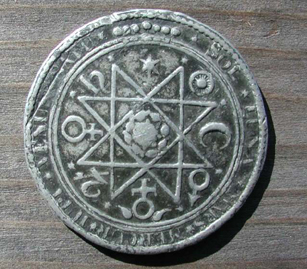
Alchemical Medal

Alchemical Medal


Caught up in a Duality – Within or Without Me?

January 3, 2009

 Below is something I wrote a few years ago after bumping into a friend I hadn’t seen for a long time. The feelings expressed, I think, are just as relevant today as they were then, when I, along with others, was preparing for the Woomera Action in Easter, 2002 with Hope Caravan.

 ~~~~~~~~~~~~~~~~~~~~~~~~~~~~~~~~~~~~~~~~~~~~~~~~~~~~~~~~~~~~

When I saw him yesterday, he seemed so at peace with himself. He was sitting in a half lotus, his bare feet crossing over each other on his sofa. The mandala tattoo above his ankle balanced the diamond-shaped crystal dangling from his neck. We shared some green tea, and he smiled as he closed the book before him. His calm demeanor was a stark contrast to my inner turmoil.
He was an old friend, someone I hadn’t seen for a long while, and in that time, our paths had diverged. He found spiritual bliss, and I found more reasons to struggle for peace. He found inner peace, so he told me, whereas I found inner warfare, so I told him. His holy war had been won, while mine had just started, as it had done so continuously for a long time.
“You are caught up in a duality,” he said, smiling with calculated humility, “You think that you can change the world, but all that you can change is yourself.”
He was referring to the fact that I had asked him to join me in action, an action to support those who cannot speak or act for themselves because of their current circumstances. I asked him to join me and others to act in support of the refugees imprisoned in the concentration camps of Australia. In particular, to join others in the Festival of Freedoms at Woomera in Easter 2002.
I replied, “But what if my self is larger than that circumscribed by my skin? What if I include the whole planet? When I see suffering and injustice outside my body, it is still within me.”
He laughed, “Well, in that case, your ego is bigger than mine!”
He adjusted his posture by letting go of his half lotus and allowing his leg to fall straight down over the side of the sofa. He leant forward, placing his elbows on his knees, and his dangling crystal swayed like a pendulum between us.  Incense smoke spiralled upwards from the joss stick on the coffee table before us.
I could see his point, but it still didn’t feel right. I said, “Big or small, ego will always be here. Tell me, what do you do if you see your neighbour’s house burning down? Do you say your house is OK, so why worry about your neighbour?”
“I would immediately help extinguish the fire. For me, the plight of refugees and wars on the other side of the planet are things I can’t do anything about. I aim for inner peace through my meditation, and this in itself will do far more for the refugees and war than anything your protests and actions will ever do. Why? Because I am changing myself, I recognise that all true change must start with myself. Your protests and actions add more ‘noise’ to the whole situation. Create an oasis of silence and peace within yourself. This will have far more impact than going out on the street or facing the razor wire of the camps. Change yourself – that’s all you need to do!”
He took another sip of his tea and stared me in the eyes. Or was he staring at the point between my eyes on my forehead, the so-called third eye? I couldn’t tell, except that I felt a certain intensity of effort from his gaze, that he was trying to change my perspective by using subliminal energies directed at me. Of course, he was kidding himself if he tried to do this.
Yes, our paths had diverged. While I saw that it is essential to work on oneself and recognise that what goes on inside, behind one’s eyes, affects what goes on outside oneself, I also felt that one could not just rest in one’s relaxed navel and allow others to suffer. Can one carry the “oasis of silence” found within to external places of sorrow and injustice to share the peace? I asked myself.
I met his gaze and then wondered if it was within or without me as I walked away.

Ouraboros resting on a relaxed navel.

Ouraboros resting on a relaxed navel.


stavros

“The darkest places in hell are reserved for those who remain neutral in times of moral crisis.” – Dante

“Our lives begin to end the day we become silent about things that matter.” Dr. Martin Luther King, Jr